
Stay ahead with our breaking stories and exclusive coverage prioritized on Google.
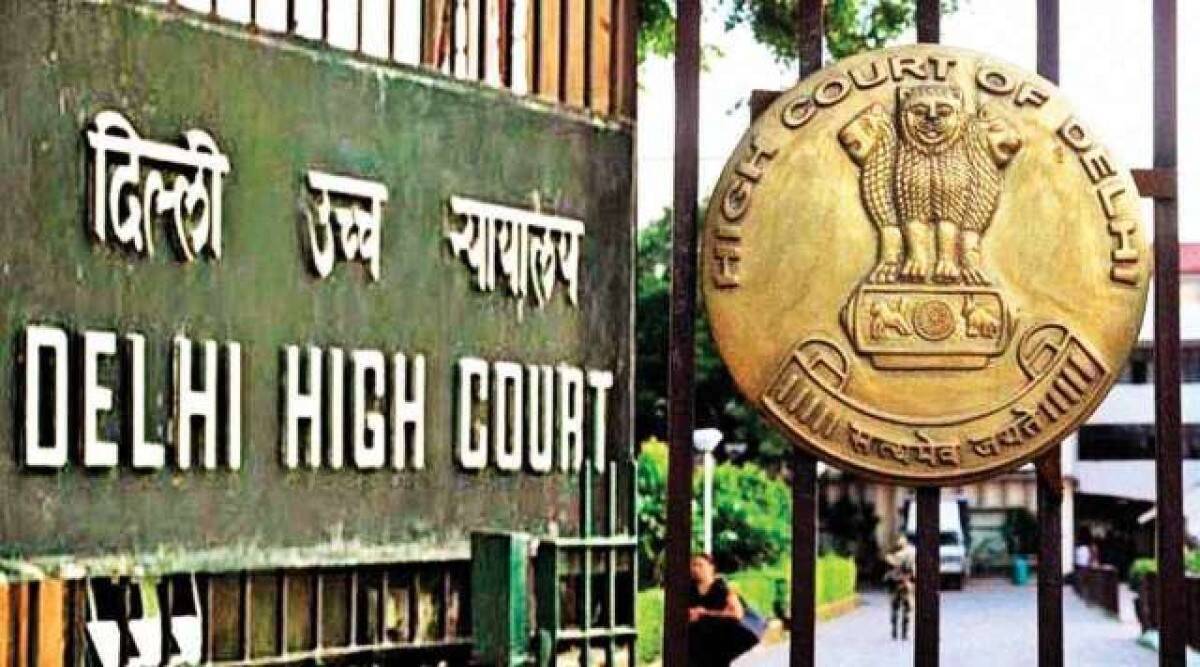
Add The420 on Google →New Delhi: The Delhi High Court has dismissed petitions filed by Rashtriya Janata Dal (RJD) chief Lalu Prasad Yadav, former Bihar chief minister Rabri Devi, and Bihar Leader of the Opposition Tejashwi Yadav challenging the framing of charges against them in the alleged IRCTC hotel scam case. A bench of Justice Swarana Kanta Sharma upheld the trial court’s earlier decision, stating that all petitions stand dismissed and the order framing charges will remain in effect. With this ruling, trial proceedings will now move forward against the three leaders and other co-accused.
Charges Framed by Trial Court in October 2025
The Rouse Avenue Court had originally ordered the framing of charges on October 13, 2025, against Lalu Prasad Yadav, Rabri Devi, Tejashwi Yadav, and other accused individuals for cheating, criminal conspiracy, and corruption. While the trial court order framed charges against nine individuals according to the main court report, separate details indicate that a total of 14 accused, including former union minister Prem Chand Gupta, Rakesh Saxena, Vinod Kumar Asthana, Bhupendra Kumar Agarwal, Sarla Gupta, Lara Projects LLP, and Sujata Hotels Private Limited, also had their pleas dismissed by the High Court.
Challenging the lower court’s ruling, the three RJD leaders had argued that the material presented by the investigating agency was insufficient to frame charges against them. Rabri Devi had also questioned the basis of the charges framed. The High Court rejected these arguments and refused to interfere with the trial court’s order. Legal observers note that upholding the framing of charges does not amount to a conviction, and the prosecution will still have to prove the allegations through evidence during the trial.
Allegations Linked to Railway Hotel Contracts
The roots of the case date back to 2004 and 2005 when Lalu Prasad Yadav served as the Union Minister of Railways. In March 2004, the management of two railway hotels was handed over to the Indian Railway Catering and Tourism Corporation (IRCTC). Following Lalu Prasad Yadav’s appointment as Railway Minister in May 2004, the tender process for operating the hotels moved forward.
According to the Central Bureau of Investigation (CBI), irregularities were allegedly committed during the 2005-06 tender process to award the maintenance and operation contracts of two BNR hotels in Ranchi and Puri to a private company, Sujata Hotels Private Limited. The agency alleged that tender conditions were manipulated to favor the private firm, controlled by the Kochhar brothers. In return for this alleged favor, prime land and shares were transferred at undervalued rates to companies linked to the Lalu family.
Patna Land Deal Central to CBI and ED Probes
Investigating agencies have identified a three-acre land parcel on Bailey Road in Patna as a crucial link between the hotel tenders and the alleged kickbacks. According to the CBI, the Kochhar brothers sold this land to Delight Marketing Company Limited (DMCL) on February 25, 2005, for Rs 1.47 crore, even though its estimated market value at the time was Rs 1.93 crore.
Between 2010 and 2014, the same land was allegedly transferred to Lara Projects, a company associated with the Lalu family, for just Rs 65 lakh, despite its market value running into several crores. The CBI alleged that this wide gap between the actual value of the land and the transaction amount formed the core of the quid pro quo.
Years after the transactions, the CBI registered a First Information Report (FIR) on July 7, 2017, against Lalu Prasad Yadav and others for alleged abuse of official position, criminal conspiracy, and tender irregularities, conducting raids across 12 locations. Following its investigation, the agency filed a chargesheet on April 16, 2018, naming Lalu Prasad Yadav, Rabri Devi, Tejashwi Yadav, and others. Based on the CBI’s FIR, the Enforcement Directorate (ED) initiated a parallel money laundering probe under the Prevention of Money Laundering Act (PMLA) and filed its own chargesheet in August 2018.