

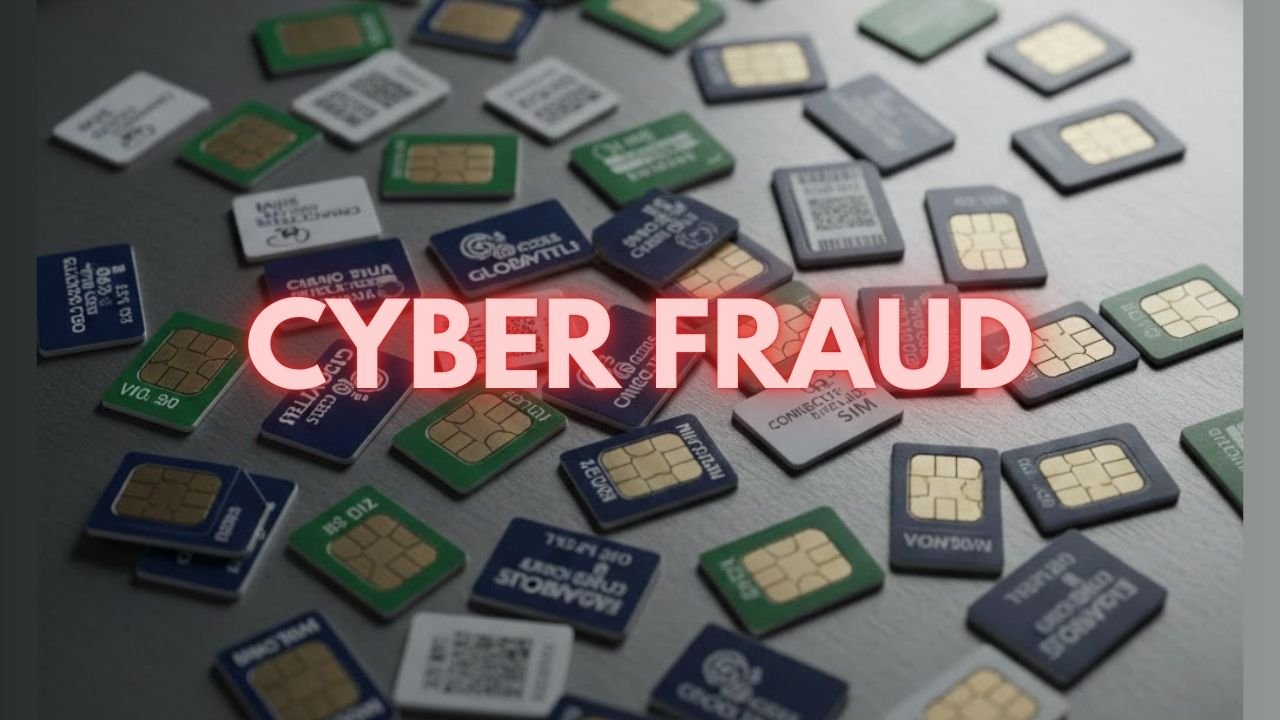

Darbhanga | A major international cyber fraud racket operating out of Bihar’s Darbhanga has been uncovered, exposing a network that used fake documents to activate mobile SIM cards and route them abroad for large-scale financial scams. Authorities have arrested the alleged mastermind, Vivek Kumar, who is believed to be at the centre of the operation.
During the crackdown, investigators recovered 36 blank SIM cards, two mobile phones, a biometric device, and multiple forged identity documents from the accused. Preliminary findings indicate that the network extended beyond India, making it a cross-border cybercrime operation with significant reach.
FCRF Academy Launches Premier Anti-Money Laundering Certification Program
According to investigators, the racket functioned in a highly organised manner. The accused allegedly used forged identity proofs to activate SIM cards under different names. These SIMs were then supplied through intermediaries and sent overseas, where cybercriminals used them to target Indian victims through calls, messages, and OTP-based fraud schemes.
One of the most startling revelations from the probe is that at least 34 SIM cards activated through this network were being operated in Cambodia and used in cyber fraud activities. This clearly points to an international dimension, suggesting coordination between domestic facilitators and overseas scam operators.
Further investigation has revealed the involvement of additional accused, including Abhishek Kumar and Raushan Jha. While Raushan Jha is already lodged in jail in connection with another case, Abhishek Kumar is currently absconding, and efforts are underway to trace and arrest him. Authorities believe the racket had a broader network with defined roles, including SIM activation, document procurement, and logistics.
The accused were reportedly running mobile shops and SIM distribution businesses as a front. Vivek Kumar, in particular, was associated with SIM activation services of a private telecom company and also operated a cyber café. Using these setups as a cover, he allegedly processed SIM activations using forged documents and then passed them on to intermediaries for international use.
The operation came to light following intelligence inputs from the Economic Offences Unit, which flagged suspicious SIM issuance activities in Darbhanga. Acting on this information, a raid was conducted at a mobile shop in the Kevti area, leading to the recovery of incriminating materials and exposure of the racket.
During the raid, authorities not only seized blank SIMs and electronic devices but also uncovered forged documents used to create fake identities for SIM activation. Based on this evidence, the main accused was taken into custody, and a formal case was registered.
Experts highlight that SIM cards are a critical component in cybercrime operations, as they enable fraudsters to execute calls, send messages, and intercept OTPs while masking their identity. When SIMs are issued on fake credentials, tracing the actual perpetrators becomes extremely difficult, complicating enforcement efforts.
Renowned cyber crime expert and former IPS officer Prof. Triveni Singh said, “Fake SIM-based cyber fraud networks are among the most dangerous threats today. These operations often function across borders, making them harder to track. Strengthening KYC systems and enforcing strict verification protocols is essential to curb such activities.”
Authorities are now working to map the entire network, identify additional suspects, and analyse financial and digital trails linked to the मामले. Efforts are also being made to determine whether similar SIM-based fraud operations have been conducted in other regions or countries using the same modus operandi.
This case underscores the evolving nature of cybercrime, which is no longer confined to localised operations but has become a global phenomenon. It also highlights the urgent need for stronger identity verification systems, better coordination between agencies, and heightened vigilance to prevent misuse of telecom infrastructure.
With the investigation still underway, officials expect more arrests and further revelations that could expose a larger international syndicate behind the racket.
