

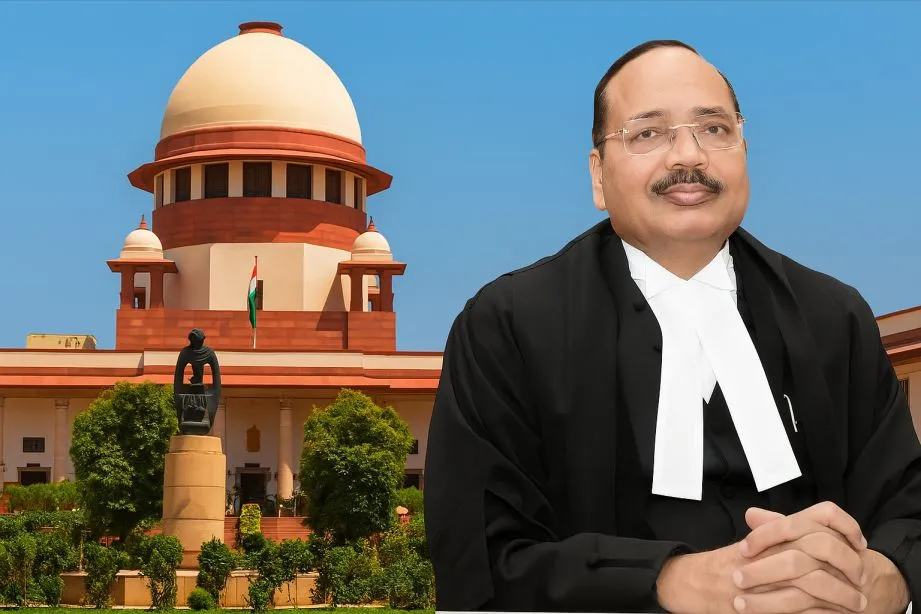
The Indian judiciary is responding proactively to emerging forms of fraud and does not necessarily wait for Parliament to enact a separate law every time a new threat emerges, Chief Justice of India Surya Kant said on Saturday.
Delivering the closing address at the 43rd International Symposium on Economic Crime in London, the CJI referred to the growing threat of digital arrest scams as an example of the judiciary’s response to evolving forms of economic and cybercrime.
He said the Supreme Court had recently taken suo motu cognisance of digital arrest scams, in which fraudsters impersonate police officers, judicial officials or bureaucrats and use video calls to intimidate and deceive citizens.
The CJI said the court had directed the Union and state governments to assess the extent of the problem. It had also called for the creation of a distinct offence with penalties proportionate to the harm caused by such fraudulent schemes.
Algoritha Security Launches ‘Make in India’ Cyber Lab for Educational Institutions
Judiciary Responding Without Waiting for New Laws
CJI Surya Kant said the Supreme Court’s intervention in digital arrest cases reflected a broader pattern in which the Indian judiciary responds to emerging fraudulent practices instead of waiting for Parliament to address every new form of crime through legislation.
He said India’s modern response to economic crime should not be viewed as a single statute. Instead, it has developed over several decades as a layered framework in which legislation, institutions and judicial doctrine perform distinct functions.
CJI Flags Concerns Over PMLA Process
The Chief Justice also referred to the Prevention of Money Laundering Act, 2002, and the Fugitive Economic Offenders Act, 2018. He said these mechanisms were not infallible and acknowledged that allegations had been made about misuse of the PMLA process by investigating authorities.
These allegations, he said, included arrests without adequately articulated reasons and prolonged custody that appeared disproportionate to the facts available in particular cases. According to the CJI, the judiciary had intervened in such situations to correct the process.
He also referred to the Supreme Court’s ruling that the grounds of arrest must be provided to an accused in writing rather than merely being read out.
Prolonged Pre-Trial Detention Cannot Become Punishment
CJI Surya Kant also referred to the Supreme Court’s decision in the Arvind Kejriwal versus Central Bureau of Investigation case. He said the court upheld the legality of the arrest but nevertheless granted bail, relying on the principle that prolonged pre-trial detention should not effectively become punishment.
He stressed that despite changes in law and technology, the Supreme Court’s approach has consistently been guided by due process, proportionality and the presumption of innocence.
Parallel Civil Recovery in Economic Offences
Referring to the Insolvency and Bankruptcy Code, 2016, the CJI said civil recovery proceedings can operate alongside criminal proceedings. He noted that the Indian justice system has increasingly become comfortable with permitting parallel civil recovery even when criminal trials take considerable time to conclude.
He said this approach reflects the need to ensure that the recovery of financial assets does not remain entirely dependent on the conclusion of lengthy criminal proceedings.
International Cooperation Key to Recovering Illicit Wealth
The Chief Justice also emphasised the importance of international cooperation in tackling economic crime and recovering illicit assets. He said Mutual Legal Assistance Treaties with other countries, despite their limitations, can provide a more reliable mechanism for bringing recovered assets back than extradition alone.
Illicit wealth, he observed, rarely remains in the jurisdiction where it was originally obtained. This makes cross-border cooperation essential for tracing, freezing and recovering proceeds of economic crime.
He also highlighted the enormous scale of global money laundering and the comparatively small proportion of illicit wealth that is ultimately recovered.
Reference to Kautilya’s ‘Arthashastra’
CJI Surya Kant placed the contemporary fight against economic crime in a historical context by referring to Kautilya’s ‘Arthashastra’. He said the ancient treatise on statecraft described different ways in which officials could siphon money from the state treasury.
He cited Kautilya’s comparison between an official handling state revenue and someone holding honey or poison on the tip of the tongue, suggesting how difficult it can be to resist the temptation to misuse public resources.
Concluding his address, the CJI said economic crime and illicit wealth do not respect national boundaries or sovereignty. He called for greater vigilance, international cooperation and adherence to the rule of law to counter fraud and economic crime.
He said the success of an international symposium should ultimately be measured not by the eloquence with which a problem is described, but by the seriousness with which participants act after returning to their respective jurisdictions to tackle it.
