


China is moving to inject and raise about $54 billion across major state-owned banks and insurers, as Beijing tries to strengthen financial institutions facing weak profitability, slowing credit demand and growing pressure to support the economy.
The coordinated recapitalisation covers some of the country’s largest lenders and insurance groups.
China Life Insurance Group will receive 35 billion yuan, while China Taiping Insurance Group will receive 7 billion yuan. China Export and Credit Insurance Corporation, known as Sinosure, will get another 10 billion yuan in core capital.
People’s Insurance Company of China, or PICC, separately plans to raise up to 15 billion yuan through a private placement of shares to the Ministry of Finance. China Reinsurance Group plans to raise another 3 billion yuan.
At the same time, three state-backed banks are set to receive a combined 290 billion yuan in fresh capital.
Proposal for Conducting Cyber Crisis Drill, Tabletop Exercise (TTEx) & CCMP Readiness Exercise
ICBC and Agricultural Bank Lead the Banking Recapitalisation
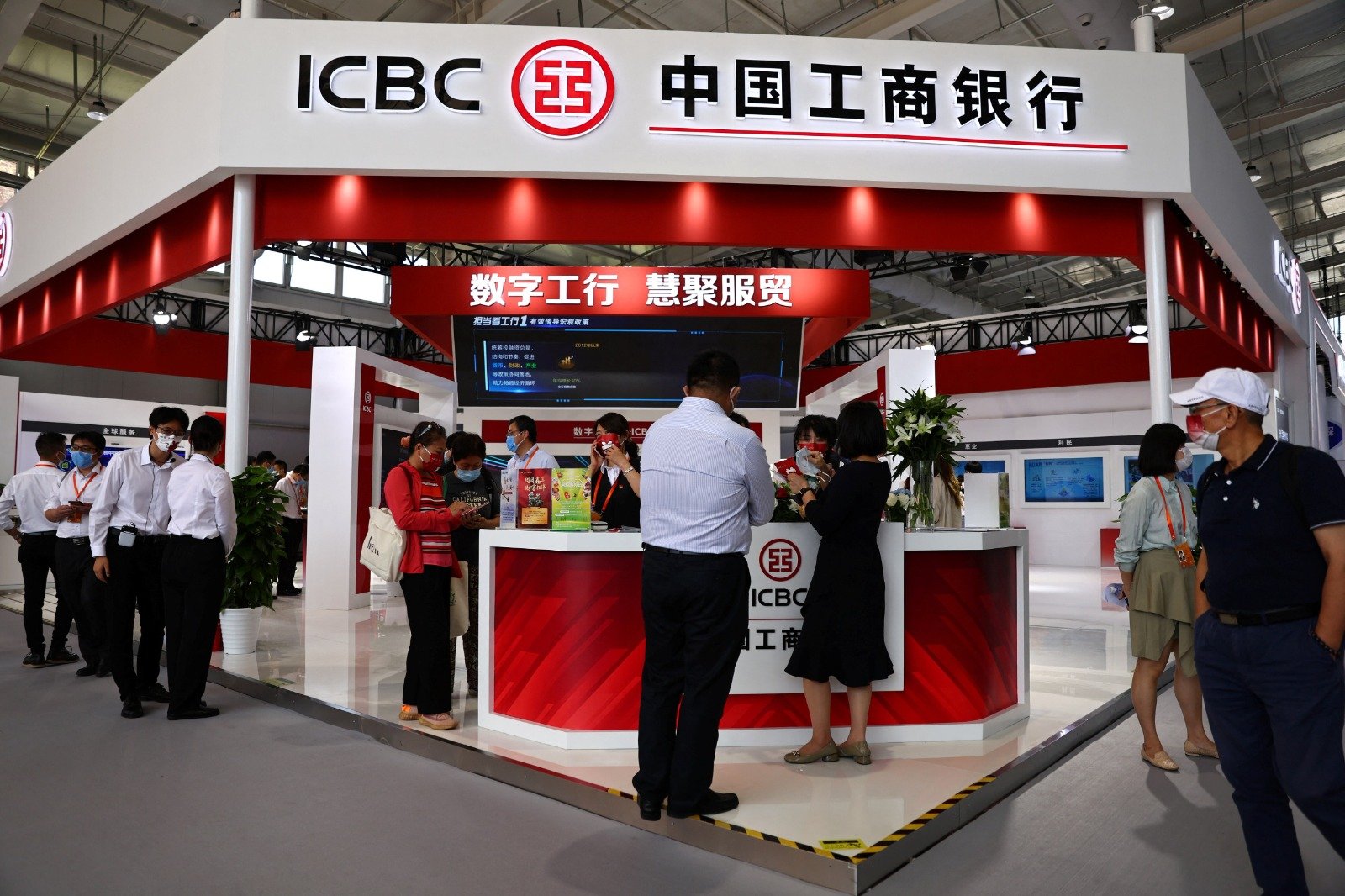
Agricultural Bank of China plans to raise as much as 160 billion yuan, while Industrial and Commercial Bank of China, or ICBC, plans to raise 100 billion yuan.
Both will use private placements of A-shares.
The investors include China’s Ministry of Finance, China National Tobacco Corporation and its subsidiaries. The banks have said the proceeds will be used entirely to replenish their core Tier 1 capital.
The Export-Import Bank of China will receive another 30 billion yuan directly from the Finance Ministry.
The banking recapitalisation plan itself is not completely new.
Beijing first announced the broader programme during its annual parliamentary meetings in March 2026. The September announcements provide more detail on which institutions will receive the capital and how much they intend to raise.
What Does Core Tier 1 Capital Actually Mean?
Core Tier 1 capital is essentially a bank’s strongest financial safety cushion.
It mainly consists of ordinary shareholder capital and retained earnings that can absorb losses while the bank continues operating.
Banks with stronger core capital have more room to lend, withstand bad loans and absorb financial shocks.
That is why Beijing is adding capital now.
China wants its largest state banks to continue lending to businesses and supporting economic activity. But loan demand has remained weak, while lower interest rates have squeezed the profits banks earn from the difference between lending and deposit rates.
More capital gives banks additional room to expand credit without weakening their regulatory buffers.
It does not, however, automatically create demand for those loans.
Why China’s Insurers Need Fresh Capital Too
The insurance side of the programme reflects a different set of pressures.
China’s insurers have been operating in a prolonged low-interest-rate environment.
Insurance companies collect premiums today and invest that money so they can meet future claims. When investment yields fall for long periods, maintaining profitability and solvency becomes harder.
Reuters reported that several small and mid-sized Chinese insurers have seen their solvency positions deteriorate.
Large state insurers also have a growing policy role.
Beijing has encouraged insurers to channel more medium and long-term money into the stock market. Stronger capital positions give them more capacity to absorb market volatility while continuing to perform that stabilising role.
Some large insurers could also become involved if regulators need to restructure or manage smaller institutions facing greater financial stress.
China Life said the injection would strengthen its ability to withstand risk and improve support for the real economy. China Taiping said its capital increase would improve solvency and other key financial indicators.
This Is Recapitalisation, Not a Conventional Bailout
The scale of the programme may make it look like an emergency bank bailout.
That description would be misleading.
Beijing is not announcing that these large institutions have failed or are insolvent.
Instead, the government is strengthening their balance sheets in advance so that they can continue lending, investing and absorbing financial risks while economic growth remains under pressure.
China’s state banks are central to Beijing’s economic policy because authorities frequently rely on them to channel credit towards strategic industries, infrastructure and businesses.
The problem is that aggressive lending can consume capital.
If profitability is falling at the same time, banks have fewer internally generated earnings available to rebuild those buffers.
Fresh equity helps close that gap.
A Bigger Signal About China’s Economy
The capital push comes as Beijing continues trying to revive investment and domestic demand.
Reuters reported this week that China Development Bank had begun deploying funds from an 800 billion yuan policy-financing programme aimed at encouraging investment in infrastructure and strategic sectors. China’s economy grew 4.3% in the second quarter of 2026, down from 5% in the first quarter.
The bank and insurer recapitalisation therefore fits into a broader strategy.
Instead of relying on one large stimulus package, authorities are strengthening the institutions they use to channel credit and investment throughout the economy.
That could make China’s financial system more resilient.
But the success of the strategy will ultimately depend on whether households and companies actually want to borrow and invest.
What this means for you: For global investors and businesses exposed to China, the move signals that Beijing is willing to use state capital to protect financial stability and preserve lending capacity. It does not mean China’s economic slowdown has been solved.
The420 Insight: The most important part of this $54 billion push is not the headline amount. It is where Beijing is putting the money. China is reinforcing the institutions it relies on to transmit economic policy, from large banks that provide credit to insurers expected to supply long-term market capital. Stronger balance sheets can reduce financial-system stress, but capital alone cannot repair weak borrowing appetite. The harder challenge remains restoring confidence among businesses and consumers.
https://www.linkedin.com/company/policetechnology/
Follow for daily updates on cybercrime, corporate fraud, DFIR, hacking, investigations, and digital forensics
