

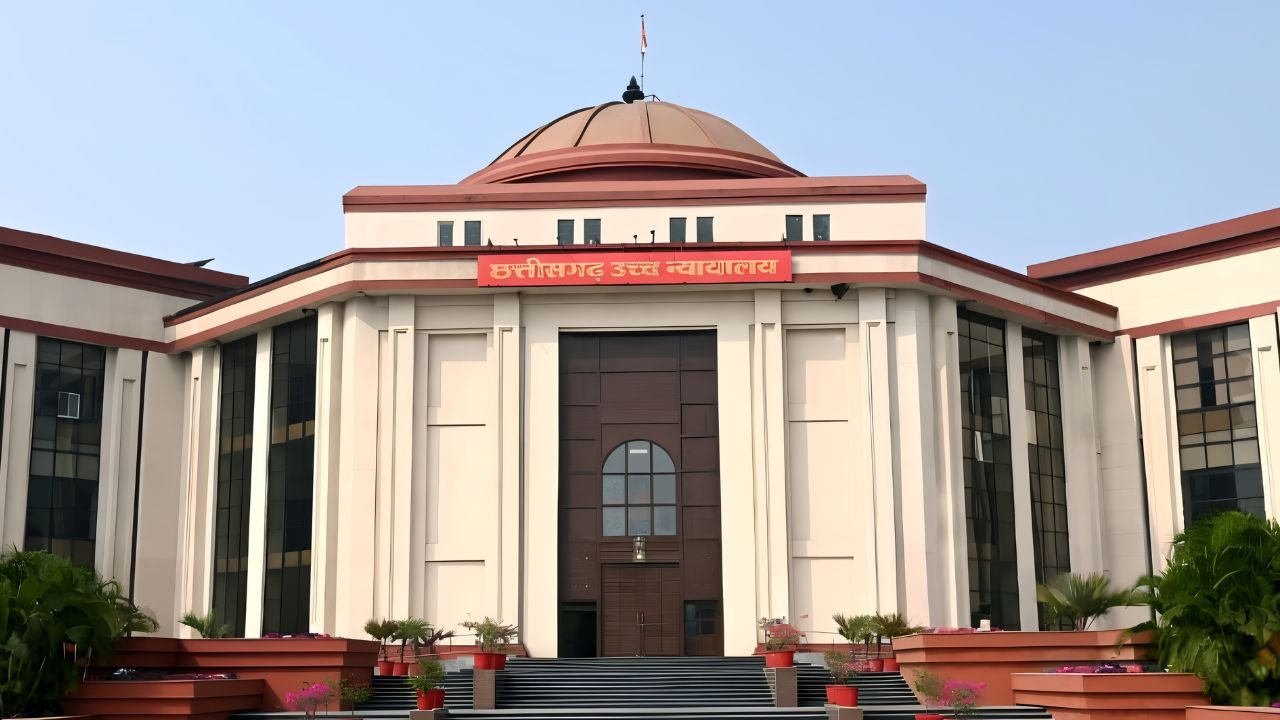

Chhattisgarh | In a significant ruling in a high-value GST fraud case, the Chhattisgarh High Court has granted bail to a 49-year-old accused involved in an alleged fake Input Tax Credit (ITC) scam worth approximately ₹11.44 crore. The court observed that the investigation in the matter was largely complete and the evidence placed before it was predominantly documentary in nature, reducing the necessity of continued judicial custody.
The accused, Santosh Wadhwani, was arrested in January 2026 by the Directorate General of Goods and Services Tax Intelligence (DGGI), Raipur unit, for allegedly availing fraudulent Input Tax Credit using multiple non-existent firms. According to the prosecution, the accused was linked to at least four fake entities, including M/s Aksha Trading, M/s M.K. Enterprises, M/s Dishankar Trading, and M/s Giridhar Gopal Impex Pvt. Ltd., which were allegedly created only on paper without any real business activity or physical movement of goods.
FCRF Returns With CDPO, Its Premier Data Protection Certification for Privacy Professionals
Authorities claimed that these firms were used as shell entities to generate fake invoices, enabling wrongful tax credit claims amounting to ₹11.44 crore. The case forms part of a broader crackdown on GST fraud networks that allegedly exploit loopholes in digital invoicing and tax credit systems.
During the hearing, the defence counsel argued that the accused was being unnecessarily detained despite the fact that all relevant documents were already in possession of the investigating agency. The defence also submitted that no further custodial interrogation was required, as the investigation had reached its final stage and continued incarceration would serve no meaningful purpose.
The prosecution, however, strongly opposed the bail plea, stating that the accused played a central role in orchestrating the fraud by operating multiple fictitious firms and facilitating fraudulent ITC claims on a large scale. The agency argued that such economic offences have serious implications for the public exchequer and should be dealt with strictly.
After examining submissions from both sides, the court noted that the material evidence in the case is largely documentary and that the investigation had substantially concluded. The bench further observed that in cases of this nature, custodial detention is not justified once the investigation is complete and the accused is not required for further interrogation.
The court also took note of the fact that the alleged offences carry a maximum punishment of up to five years. Considering the nature of allegations, stage of investigation, and type of evidence, the High Court granted bail to the accused. The order was passed with the condition that the accused furnish a personal bond of ₹1 lakh along with one solvent surety to the satisfaction of the concerned trial court.
Legal experts note that this ruling reflects a consistent judicial approach in economic offences where documentary evidence dominates the record and continued custody is not considered necessary after charge-sheet or near-completion of investigation. However, they also caution that such decisions do not dilute the seriousness of GST fraud cases, which continue to be a major concern for tax authorities.
The case is expected to proceed to trial, where the court will examine the full scope of alleged transactions, the role of the accused, and whether the firms involved were genuinely operating or were created solely for tax evasion purposes. Authorities continue to investigate wider networks suspected to be linked with similar fake ITC operations across multiple regions.
With bail now granted, the accused will remain available for trial proceedings, while the case adds another chapter to the ongoing crackdown on large-scale GST fraud and shell company networks in the country.
