

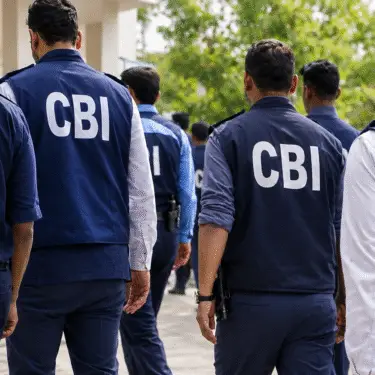
Mumbai: The Central Bureau of Investigation (CBI) has registered a case against two senior officials of electronics giant Nokia in connection with an alleged ₹19.33 crore Employees’ Provident Fund (EPF) fraud. According to the investigating agency, the accused created 94 fake Employees’ Provident Fund (EPF) accounts during 2023–24, diverted provident fund money into them and subsequently withdrew the funds. The FIR also names unknown public servants and private individuals for their alleged role in the criminal conspiracy.
According to the CBI, the accused have been identified as Vaibhav Verma, Payroll Cluster Lead, and Kamaraju Mutyala, Head of Payroll Management. Investigators allege that the two officials created fictitious EPF accounts that did not belong to genuine employees and used them to fraudulently divert and withdraw ₹19.33 crore. The agency is now tracing the complete money trail and identifying all beneficiaries linked to the alleged fraud.
The investigation revealed that during the relevant period, Nokia was functioning as an exempted establishment under the Employees’ Provident Fund Act. Under this arrangement, the company managed employees’ provident fund contributions through its own privately administered PF trust. In July 2023, Nokia applied to surrender its exempted status, and after receiving approval, it shifted to the Employees’ Provident Fund Organisation (EPFO) framework in September 2023. The alleged irregularities surfaced during this transition process.
The EPFO’s Zonal Fraud Risk Management Committee reportedly detected large-scale discrepancies and identified 94 beneficiary accounts that were allegedly not linked to genuine employees but had received provident fund payments. The findings prompted a detailed investigation and verification of financial and employment records.
Following the discovery of the suspected fraud, Nokia initiated an independent internal forensic audit. The audit allegedly identified the involvement of the two senior officials, following which the company suspended them and initiated disciplinary proceedings. Nokia also informed the EPFO about the findings, which subsequently led to the registration of the CBI case.
During the forensic investigation, deleted digital files were reportedly recovered from the accused officials’ laptops. According to investigators, the electronic records contained details of individuals who were not employees of the company. The probe has also uncovered alleged fake employment confirmations, forged Know Your Customer (KYC) approvals and documents processed using official digital credentials. Investigators are examining who authorised the fake accounts, how the funds were transferred and whether additional individuals were involved in the alleged conspiracy.
In an official statement, Nokia said that it remains committed to the highest standards of ethics, integrity and regulatory compliance in all its business operations. The company stated that it is fully cooperating with the investigating authorities. As the matter is under investigation, it declined to comment further on the specifics of the case.
Renowned cybercrime expert and former IPS officer Prof. Triveni Singh said that financial fraud has evolved far beyond forged paper documents. Manipulation of digital identities, KYC systems, payroll platforms and electronic records can now facilitate large-scale financial crimes. He noted that digital forensics, audit trails, log analysis and electronic evidence play a decisive role in exposing such frauds. According to him, organisations can significantly reduce such risks by implementing robust internal controls, periodic forensic audits and multi-layer verification mechanisms.
The CBI has registered the case under relevant provisions of the Bharatiya Nyaya Sanhita (BNS), the Prevention of Corruption Act and the Information Technology Act. Investigators are examining banking records, payroll data, EPF transfer documents, digital evidence and the role of all individuals connected to the alleged fraud. The agency is also probing whether any government officials or external collaborators facilitated the creation of the fake accounts or the diversion of funds. If the allegations are established, the case could rank among the largest alleged corporate provident fund frauds uncovered in India in recent years.
