

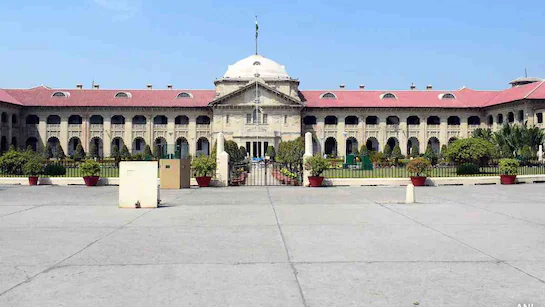
The Allahabad High Court has referred the conduct of senior IAS officer and Devi Patan Mandal Commissioner Durga Shakti Nagpal to the court dealing with criminal contempt matters after a judicial officer alleged that the Commissioner attempted to influence and intimidate her during a telephone conversation concerning a pending civil suit.
A bench of Justice Syed Qamar Hasan Rizvi observed that the alleged tone and language of the conversation gave a “direct impression that the Presiding Officer of the Court was tried to be influenced”. The court described it as “shocking” that a litigating party or the state could approach a court through such a telephone call in relation to a pending matter.
The observations arose from a transfer application concerning a civil suit pending before a Civil Judge (Senior Division) in Gonda. The suit, involving a dispute over government land, had been pending since 1997 and was at the evidence stage.
Judicial Officer Alleges Pressure During Phone Call
During the proceedings, the High Court was informed that Civil Judge (Senior Division) Shabina Khan, who was hearing the suit, had reported an alleged telephone conversation with Commissioner Nagpal and requested that the case be transferred to another court.
Before the High Court could decide the transfer plea, the District Judge, Gonda, had already withdrawn the suit from the concerned Civil Judge’s court and transferred it to another court of equivalent jurisdiction. The High Court therefore held that the transfer application had “lost its efficacy” and consigned it to the record.
However, the court decided to examine the allegations contained in the judicial officer’s letter, observing that it “cannot shut its eyes” to them.
Khan had written to the District Judge, Gonda, on August 4, 2026, alleging that Commissioner Nagpal had called her on July 15, 2026, while she was on leave.
According to the judicial officer’s account, the Commissioner allegedly asked when she would return from leave and whether she intended to extend it. The judge alleged that the Commissioner then referred to her position as a senior IAS officer and questioned why her phone call had not been answered.
The letter further alleged that the Commissioner said it was good that the judge had spoken to her, otherwise she was going to complain against her to the High Court. The Commissioner was also alleged to have questioned the judicial officer’s conduct and said she would get the case transferred.
Khan subsequently alleged before the District Judge that the Commissioner had attempted to use her position to intimidate her, threatened to complain to the High Court and sought to exert undue pressure.
Commissioner Gives Different Account of Conversation
The state did not deny that the telephone conversation had taken place. However, Commissioner Nagpal presented a different account of its purpose.
She stated that she had taken charge of Devi Patan Mandal in April 2026 and subsequently learnt that a dispute concerning government land had remained pending before the Gonda civil court for around 30 years.
According to her version, the land was Nazul land reserved for construction of the Commissioner’s office building. She said she had directed concerned government officials and counsel to pursue the matter effectively and ascertain the next hearing date.
Nagpal stated that after learning that the presiding officer was on extended leave, she called the judge on July 15 only to ask how long she would remain on leave and whether she intended to extend it. She maintained that the pending case was not discussed during the telephone call.
She further stated that she subsequently contacted the District Judge and requested that the case be disposed of expeditiously.
The High Court considered both the judicial officer’s letter and the Commissioner’s version while examining whether the alleged conduct required further consideration.
High Court Stresses Judicial Independence
Justice Rizvi observed that the alleged tone and language of the conversation gave a direct impression that an attempt had been made to influence the presiding officer.
The court said it was shocking that a litigating party or the state could approach a court through such a telephone call when a matter was pending before it.
The bench stressed that the High Court is obligated to protect subordinate courts from being “insulted or pressurized” and that judicial officers must have “full freedom and independence” to decide cases fairly and fearlessly.
It further observed that any action tending to pressurise a court amounts to obstructing the process of justice.
Referring to the Supreme Court’s decision in In Re: Ajay Kumar Pandey 1996, the High Court noted that threatening to file a complaint against a judge regarding judicial proceedings could amount to an attempt to interfere with the administration of justice.
The bench consequently held that the matter prima facie required consideration by the court dealing with criminal contempt matters. It directed that the matter be placed before the appropriate court after seeking directions from the Chief Justice or Senior Judge.
