

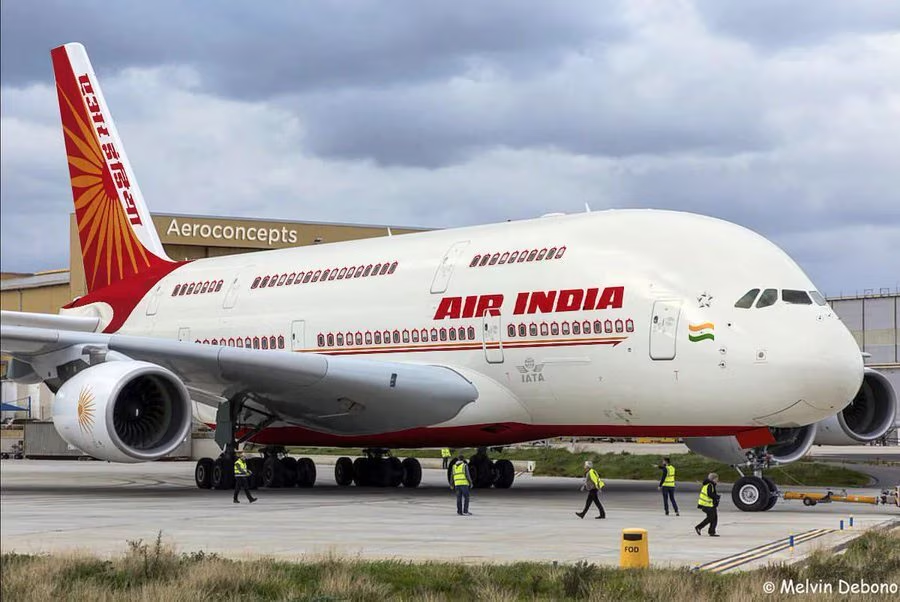
New Delhi: An Air India Airbus A320 flying from Phuket to Delhi briefly lost control of key flight surfaces after all three of its independent hydraulic systems registered a pressure drop, according to an initial assessment by Airbus. The incident caused the aircraft to lose around 300 feet of altitude and left 24 passengers and crew members injured.
The incident occurred on August 4 aboard Air India flight AI2379. Airbus’ preliminary assessment of the aircraft’s flight-data recorders found that pressure dropped across the Green, Blue and Yellow hydraulic systems within about one second of each other. The simultaneous loss temporarily affected the aircraft’s elevators and ailerons, leaving the pilots struggling to control the aircraft for several seconds.
Pilots briefly lose control of aircraft
The A320 is equipped with three independent hydraulic systems designed to provide redundancy and ensure that the failure of one system does not result in a loss of aircraft control.
During the Phuket-Delhi flight, however, all three systems indicated a pressure drop almost simultaneously. The elevators and ailerons, which control the aircraft’s vertical movement and banking, briefly stopped responding to pilot commands.
The aircraft’s ailerons moved in the same direction, causing the aircraft’s nose to pitch upward sharply. The autopilot disengaged as the abnormal event unfolded. The first officer then took manual control and applied a strong nose-down input, but the flight-control surfaces initially did not respond.
Aircraft drops 300 feet, 24 injured
The sudden change in the aircraft’s movement caused a rapid downward acceleration after the nose was pushed down. Passengers and cabin crew were thrown upward, resulting in injuries to 24 people.
According to the initial assessment, hydraulic pressure was restored across all three systems within seconds, after which the flight-control computers reconnected and the aircraft again responded to pilot inputs. The aircraft subsequently continued its journey and landed safely in Delhi.
The incident has been described by pilots and engineers familiar with the A320 as an extremely rare occurrence. Airbus has not established whether the aircraft actually suffered a simultaneous hydraulic failure or whether the pressure indications could have been caused by a faulty sensor, switch or wiring issue.
Airbus seeks further technical checks
Airbus has asked Air India to physically inspect hydraulic pressure switches and conduct further checks on the aircraft’s hydraulic systems. The aircraft manufacturer has also sought information about recent hydraulic-system maintenance and additional accounts from the pilots as part of its assessment.
The preliminary findings do not establish the root cause of the incident. Further inspection of the aircraft’s sensors, switches and wiring is expected to help determine whether the pressure loss was an actual hydraulic failure or a false signal.
AAIB investigating serious incident
The Indian authorities have classified the episode as a serious incident and the Aircraft Accident Investigation Bureau (AAIB) is investigating the circumstances surrounding the sudden loss of altitude. Airbus and France’s Bureau of Enquiry and Analysis for Civil Aviation Safety (BEA) are assisting with the technical investigation.
The aircraft also experienced forces above specified limits during the sudden altitude change, prompting Airbus to recommend checks for possible structural damage.
While the investigation continues, the preliminary flight-recorder assessment has not established any pilot action as the cause of the technical event. Investigators are examining the aircraft’s systems, maintenance history, flight data and cockpit accounts to determine what triggered the unusual loss of hydraulic pressure.
The final findings will determine whether the incident resulted from an actual malfunction of the aircraft’s hydraulic systems or a faulty indication from the sensors or associated wiring.
