
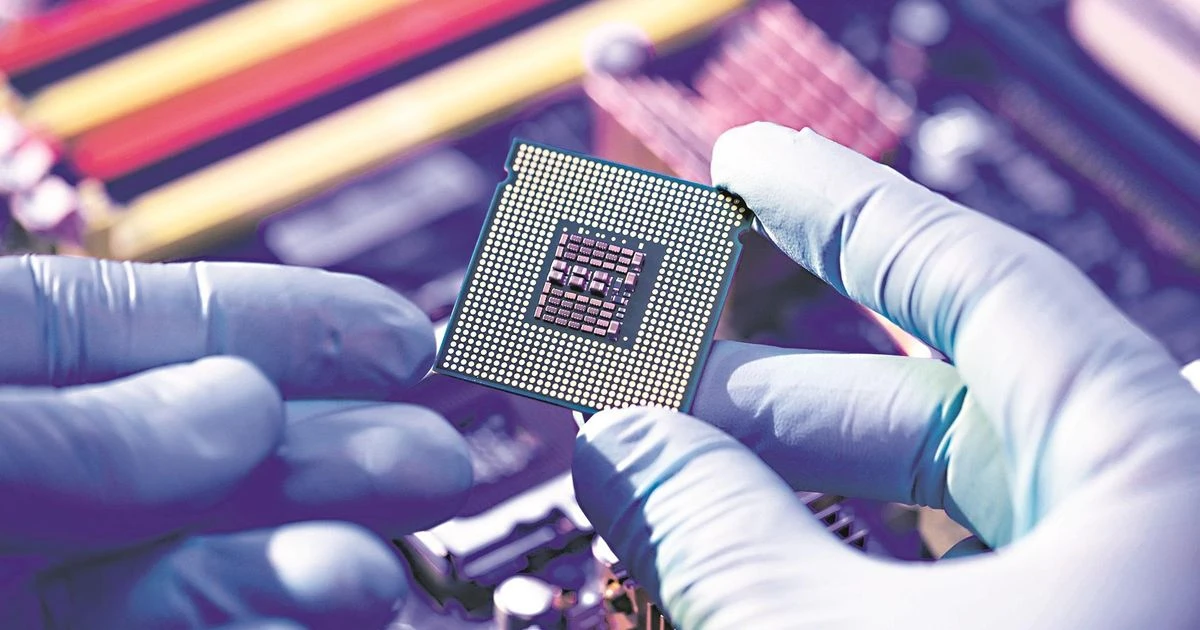

In a stark assessment of the global technology landscape, Chey Tae-won, chairman of South Korea’s SK Group, warned that an escalating worldwide shortage of artificial intelligence memory chips is rapidly evolving from a commercial bottleneck into a major geopolitical flashpoint. Speaking at the Korea Chamber of Commerce and Industry’s Jeju Forum, Chey projected that global demand for AI-specific memory could skyrocket by up to 100 per cent by 2027. With manufacturing capacity unable to match this explosive surge, foreign governments have begun actively intervening to secure domestic chip supplies.
The warning carries immense weight across global supply chains, as SK Group’s semiconductor arm, SK hynix, commands roughly 58 per cent of the global revenue share in high-bandwidth memory (HBM). These ultra-fast, stacked dynamic random-access memory (DRAM) components are paired directly with advanced graphics processors to power generative AI models. As the supply-demand imbalance deepens, access to advanced memory is no longer viewed merely as a corporate procurement challenge, but as an indispensable pillar of national economic security.
A Chaotic Scramble for Critical Memory Assets
The core of the crisis lies in a profound structural deficit across the semiconductor manufacturing ecosystem. According to industry estimates, artificial intelligence applications now account for over half of total semiconductor consumption, driving baseline memory demand growth of 50 to 60 per cent annually. Yet, because establishing advanced clean rooms and packaging facilities requires years of lead time, virtually no meaningful new manufacturing capacity will come online next year.
This widening deficit has ignited what Chey described as near-chaotic lobbying efforts by corporate buyers and sovereign states alike. While private technology conglomerates have so far absorbed the brunt of the supply pressure, government-level friction is becoming inevitable. SK hynix, alongside its primary market competitors Samsung Electronics and Micron Technology—who each hold approximately 21 per cent of the HBM market—finds itself at the epicentre of intense diplomatic manoeuvring.
The competition reflects a fundamental shift in how advanced hardware is valued on the world stage. Foreign capitals are increasingly treating HBM allocations with the same strategic priority historically reserved for energy reserves or defence material. As state actors press chipmakers for guaranteed quotas, the risk of bilateral trade friction and retaliatory policy measures grows exponentially.
The Double-Edged Sword of Abnormal Pricing
Beyond diplomatic friction, the memory crisis poses severe structural threats to the broader technology economy. Current market prices for HBM and server DRAM have reached what Chey characterized as abnormally high levels. While elevated prices yield short-term windfalls for chipmakers, sustained price spikes threaten to trigger “chipflation,” forcing consumer hardware manufacturers to raise prices on personal computers and smartphones.
Overly inflated margins also risk destabilising the competitive balance of the semiconductor industry. High prices incentivise well-capitalised new entrants—ranging from automotive giants like Tesla to heavily subsidised state-backed firms in China—to aggressively enter chip manufacturing. Furthermore, prolonged price inflation could eventually choke off downstream hardware demand, harming the long-term growth of the entire artificial intelligence ecosystem.
To mitigate the bottleneck, SK hynix is accelerating its domestic construction timeline, moving the initial clean room opening at its Yongin mega-cluster forward to February 2027. The firm committed an additional 21.6 trillion won (approximately ₹1.21 Lakh Crore) in capital expenditure to convert its Cheongju M15X plant into a dedicated HBM base. Internationally, SK hynix is reviewing prospective fab sites while building a $3.87 billion (over ₹32,000 Crore) advanced packaging facility in the United States, balancing operational feasibility against political pressure from Washington for reshoring.
Strategic Imperatives for India’s AI Ambitions
The escalating crunch in global memory supply holds profound strategic ramifications for the Union Government and India’s expanding technology ecosystem. Under the IndiaAI Mission, New Delhi is actively deploying sovereign graphics processing clusters to democratise high-performance computing for domestic startups and academic institutions. However, because these hardware stacks depend entirely on imported HBM components, global supply squeezes could severely elevate infrastructure deployment costs and delay critical computing timelines across the country.
Policy analysts emphasise that the global memory crisis validates the strategic necessity of the India Semiconductor Mission (ISM). As the Central Government evaluates subsequent phases of semiconductor incentives, establishing domestic advanced packaging facilities and securing long-term supply partnerships with East Asian chipmakers must become top diplomatic priorities. Without guaranteed access to high-bandwidth memory, sovereign computing initiatives risk facing severe operational bottlenecks.
Navigating this era of machine-speed technological expansion requires proactive economic statecraft. As the global battle for memory hardware shifts from boardroom negotiations to inter-governmental diplomacy, India’s ability to forge resilient supply alliances will determine the trajectory of its digital economy.
Follow for daily updates on cybercrime, corporate fraud, DFIR, hacking, investigations, and digital forensics
