
Follow us on Google News

Artificial intelligence companies are increasingly recruiting former intelligence officers to protect their technology, confidential research and senior executives from espionage, as the leadership crisis at Nvidia draws attention to security risks facing the rapidly expanding AI industry.
Companies developing advanced AI systems and semiconductor technology are investing in specialised security teams capable of identifying threats that extend beyond conventional cyberattacks. These include employees stealing confidential information, attempts to manipulate senior executives and suspected intelligence operations targeting valuable corporate technology.
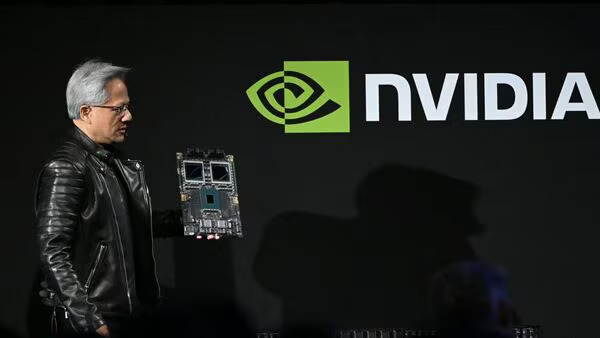
The trend has gained renewed attention following Nvidia’s announcement on Thursday that co-founder Jensen Huang has resigned as chief executive and stepped down from its board. Chief Financial Officer Colette Kress has been appointed interim CEO while the company searches for a permanent successor.
FCRF Launches CP-FRM to Build India’s Next Generation of Fraud Risk Professionals
Nvidia Leadership Crisis Draws Attention To Corporate Espionage
Huang’s departure follows reports of two extramarital relationships, including one involving a woman suspected by US intelligence officials of links to Chinese intelligence.
Huang acknowledged one relationship, while Nvidia maintained that it had no reason to believe company secrets or national security information had been compromised. China has rejected the espionage allegations.
The controversy has nevertheless raised questions about how technology companies protect their senior executives from potential intelligence-gathering operations.
Executives at major AI companies often have access to commercially sensitive information, including product development plans, chip supply arrangements, confidential partnerships and discussions with government officials.
Such information can be valuable to competitors or foreign intelligence agencies.
Security specialists say that protecting corporate technology therefore involves more than securing computer networks. Companies must also recognise attempts to obtain information through personal relationships, financial pressure or other forms of manipulation.
The Nvidia case has not established that such an operation succeeded. However, it has brought wider concerns about executive security into public discussion.
OpenAI And Other Technology Companies Expand Security Expertise
The recruitment of intelligence professionals was already underway before Nvidia’s leadership crisis.
In June 2024, OpenAI appointed retired US Army General Paul Nakasone, a former director of the National Security Agency, to its board and Safety and Security Committee.
The company said his experience would help protect its computing infrastructure, sensitive AI technology and customer information.
OpenAI is also advertising for a senior global security investigator with experience in counterintelligence, cybersecurity and insider threats. The advertised annual base salary ranges from approximately $230,400 to $500,000, alongside potential equity compensation.
The position involves investigating threats originating from employees, external actors and companies connected through supply chains.
Dutch semiconductor equipment manufacturer ASML has similarly established an Intelligence Fusion Centre and is recruiting an intelligence liaison officer in Taiwan.
The role includes investigating physical and digital security threats, protecting employees and infrastructure, and coordinating intelligence-related activities across the region.
These appointments illustrate how companies developing strategically important technologies are bringing expertise traditionally associated with government intelligence agencies into their corporate security operations.
What Is Counterintelligence And Why Do AI Companies Need It?
Counterintelligence involves identifying and preventing attempts by other organisations or individuals to obtain protected information through espionage.
In a corporate setting, this can include investigating suspicious access to confidential documents, identifying employees who may be transferring sensitive information and detecting attempts to manipulate people with access to valuable technology.
An insider threat occurs when someone with authorised access to company systems misuses that access.
For example, an engineer may legitimately need access to confidential chip designs for research. If that individual copies the documents for an unauthorised outside business, ordinary network protections may not prevent the theft.
Counterintelligence specialists examine these risks alongside conventional cybersecurity teams.
Their work can involve reviewing access records, investigating unusual behaviour and helping employees recognise attempts to obtain confidential information.
However, such investigations must also respect employee privacy and applicable laws. Unusual behaviour or personal relationships do not, by themselves, establish espionage.
Google Trade Secret Case Demonstrates The Risks Facing AI Developers
Earlier investigations have already demonstrated how valuable AI technology can become a target for theft.
In January 2026, a US jury convicted former Google engineer Linwei Ding of stealing confidential AI technology and economic espionage.
The case involved thousands of pages of information relating to Google’s computing infrastructure, including specialised processors and software used to operate AI systems.
However, the legal outcome subsequently changed.
On August 20, a federal judge overturned the economic espionage convictions, finding insufficient evidence that Ding intended or knew his actions would benefit the Chinese government. His trade-secret theft convictions remained intact.
Ding was subsequently sentenced in September to nearly one year in prison.
The case illustrates an important distinction between stealing commercial information and conducting espionage on behalf of a foreign government.
For AI companies, both possibilities create serious security challenges. Establishing who obtained confidential information, why it was taken and whether an outside organisation benefited requires careful investigation rather than assumptions based on nationality or personal associations.
What This Means For You:
Employees handling confidential AI research, financial records or company technology should report suspicious requests for information and avoid transferring work documents to personal accounts. Businesses should restrict access to sensitive material, maintain independent oversight of senior executives and establish clear procedures for reporting suspected security breaches.