
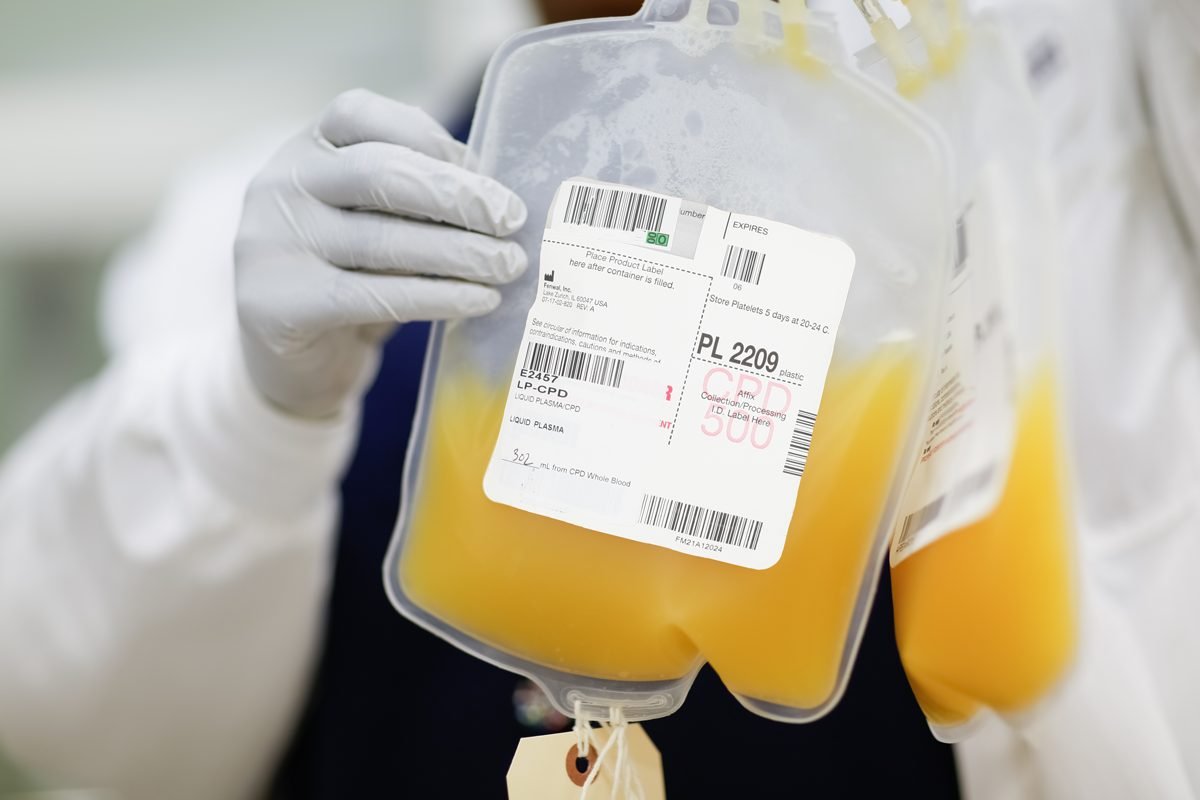

The Ahmedabad Rural Special Operations Group has arrested Ajitbhai Mithabhai Solanki, 33, a resident of Bavla, in connection with an alleged interstate plasma adulteration racket. His arrest brings the total number of people held in the case to seven, as investigators trace a supply chain that allegedly stretched across Gujarat, Maharashtra, Rajasthan, Madhya Pradesh and Chhattisgarh.
Police have also seized a Bolero pickup vehicle worth roughly ₹2.5 lakh, allegedly used to ferry the substituted plasma. The case first came to light after a pharmaceutical company in Ahmedabad’s Changodar area complained that plasma consignments arriving from blood banks had been tampered with before delivery.
How the Swap Allegedly Worked
Investigators say the operation was orchestrated by Dinesh Chaudhary of Banaskantha district, a former blood plasma collection executive with pharmaceutical firms who allegedly used his technical knowledge of the collection process to run the scheme. Genuine, high-quality plasma meant for treating conditions such as cancer and haemophilia was allegedly intercepted mid-transit and swapped for inferior or contaminated plasma sourced from other blood banks.
Police allege Chaudhary obtained the substandard plasma from Mohan Gaikwad, a Maharashtra resident who sourced it through a blood bank in the state. Transport personnel allegedly informed Chaudhary in advance whenever a vehicle was en route carrying genuine plasma, allowing the swap to be timed precisely before the consignment reached its pharmaceutical buyer.
An Expanding Interstate Web
What began as a single-state case has grown considerably. Investigators say the racket supplied adulterated plasma to blood banks in Maharashtra’s Washim and Jalna districts, with two Maharashtra blood bank operators, Prakash Sangale and Ashok Sangale, arrested for allegedly helping move the substituted material onward to a pharmaceutical company in Bengaluru.
Officers are additionally questioning operators at several other Maharashtra blood banks, including facilities in Ahmednagar, Dhule, Nashik and Chhatrapati Sambhajinagar, to determine whether they were knowingly involved. Superintendent of Police Om Prakash Jat said investigators have so far uncovered roughly 1,700 adulterated plasma bags in total, with each unit allegedly sold for around ₹5,000, a figure officials expect could rise as the probe identifies more associates.
Forensic Findings and the Public Health Question
A forensic examination by the Department of Pathology at B.J. Medical College found that all 1,140 plasma units recovered from Chaudhary’s residence were of very poor quality, posed a risk to human life and were unsuitable for transfusion. The units failed to meet standards prescribed by the Food and Drugs Administration, prompting their destruction at a Gujarat Pollution Control Board-authorised biomedical waste facility following court-approved procedure.
Crucially, police say no evidence has yet emerged that the adulterated plasma reached hospitals or was administered to patients directly, since the material was supplied to pharmaceutical companies rather than treatment facilities. Investigators are nonetheless examining whether any substituted plasma entered the manufacturing chain before the racket was exposed, and whether earlier consignments dating back further were similarly tampered with.
Accountability and What Comes Next
A case has been registered at Changodar Police Station under multiple sections of the Bharatiya Nyaya Sanhita, including provisions covering endangerment of life and health. Gujarat Health Minister Praful Pansheriya said the state government would take strict action against everyone involved, stressing that patients’ health cannot be compromised under any circumstances.
Investigators are now coordinating with the Health Department, the Food and Drugs Department, laboratories and the Gujarat State Council for Blood Transfusion to determine whether prescribed blood-bank protocols were followed at any stage of the chain. Police say they are focused on tracing financial transactions, identifying the scheme’s beneficiaries, and mapping how long the network had been operating before further arrests are made.
Follow for daily updates on cybercrime, corporate fraud, DFIR, hacking, investigations, and digital forensics
