

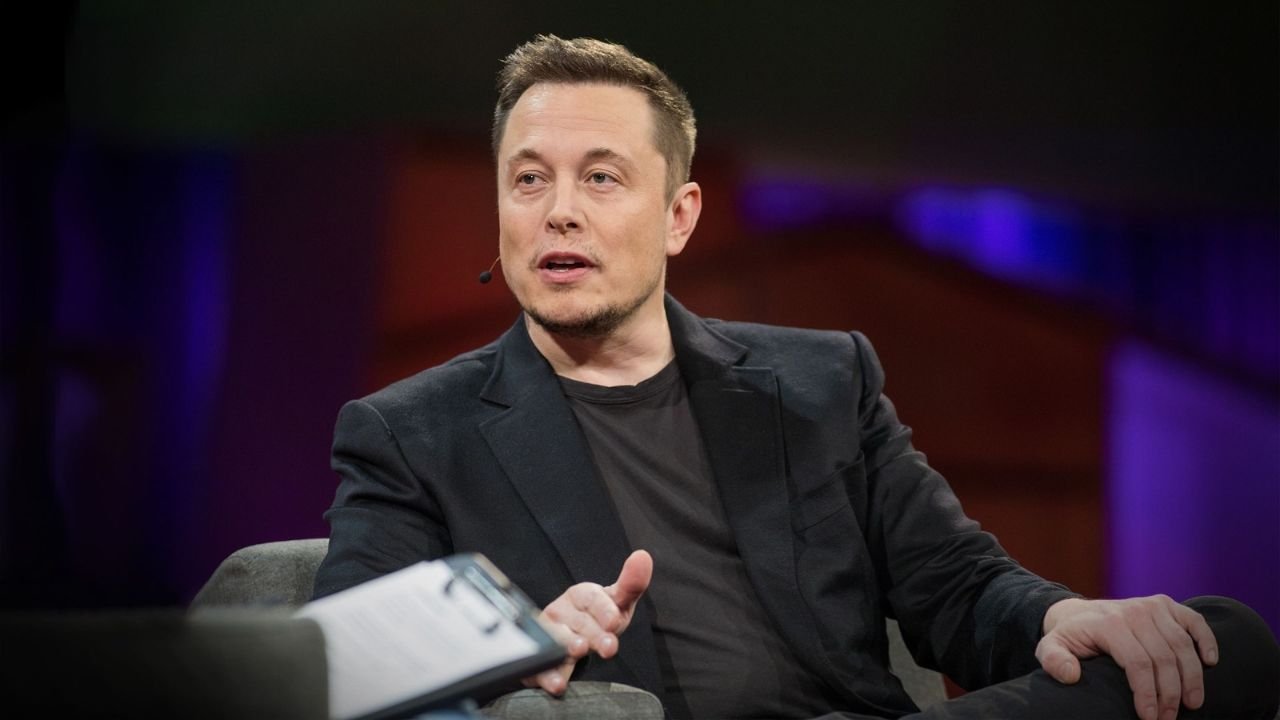

Elon Musk has said artificial intelligence and robotics are the only realistic way to address the United States’ growing national debt, arguing that spending cuts alone cannot close the gap between federal revenue and expenditure.
Speaking to Walter Isaacson for his new podcast series, The Builders, Musk said the scale of the debt problem was too large to be solved solely through conventional government cost-cutting. His comments come after the US national debt crossed $40 trillion in August 2026.
Musk said his experience with the Department of Government Efficiency, or DOGE, convinced him that the deficit could not be solved from within the government through spending reductions alone.
FCRF Launches CP-FRM to Build India’s Next Generation of Fraud Risk Professionals
Musk Says Spending Cuts Cannot Solve Debt Problem
Musk told Isaacson that the United States would need major gains in productivity from AI and robotics to address its debt burden.
“The only way we’re going to solve the national debt is with AI and robots,” Musk said. “We’re not gonna solve it by trying to save our way there.”
Musk spent around four months working in President Donald Trump’s White House, leading DOGE, a government cost-cutting initiative launched in January 2025. The temporary organisation formally ended in July 2026.
Musk had previously pledged that DOGE could help reduce government spending by trillions of dollars. The organisation published regular estimates of savings generated through programme cuts, regulatory reductions and other measures.
However, the accuracy of some of those figures was questioned by independent analysts. In August 2026, the US Government Accountability Office published an audit that found some DOGE savings estimates were incorrect or unsupported.
Despite the cost-cutting efforts, the US federal budget deficit remained close to $2 trillion in the 2026 fiscal year.
DOGE Experience Shapes Musk’s View
Musk also said that efforts to reduce government spending inevitably create political resistance.
He argued that cutting wasteful expenditure can generate opposition from people affected by funding reductions and suggested that stronger political commitment would be required to make deeper cuts.
Musk also reflected on his own role in DOGE, saying he had “kinda got carried away” with the project and should have returned his attention to artificial intelligence sooner.
The initiative was involved in reducing federal programmes, cutting regulations and carrying out large-scale layoffs. However, Musk’s latest remarks suggest that he no longer views spending reductions alone as sufficient to address the country’s fiscal position.
His comments place greater emphasis on the possibility that technological productivity gains could expand economic output enough to ease the burden of government debt.
US National Debt Has Crossed $40 Trillion
Musk has made similar arguments before. In November 2025, he said AI and robotics were “pretty much the only thing” capable of solving the US debt crisis.
At that time, the national debt stood at more than $38 trillion. By August 2026, it had crossed $40 trillion.
Musk reiterated the position on X in August, writing that “AI+robots will solve the debt problem”.
His latest comments extend that argument by linking it directly to his experience with DOGE and his conclusion that government savings alone cannot eliminate the deficit.
The claim remains Musk’s assessment of how technological growth could affect US public finances. The extent to which AI and robotics could generate sufficient productivity gains to materially reduce the national debt would depend on economic growth, government revenue, spending levels and the broader adoption of those technologies.
Follow for daily updates on cybercrime, corporate fraud, DFIR, hacking, investigations, and digital forensics
