

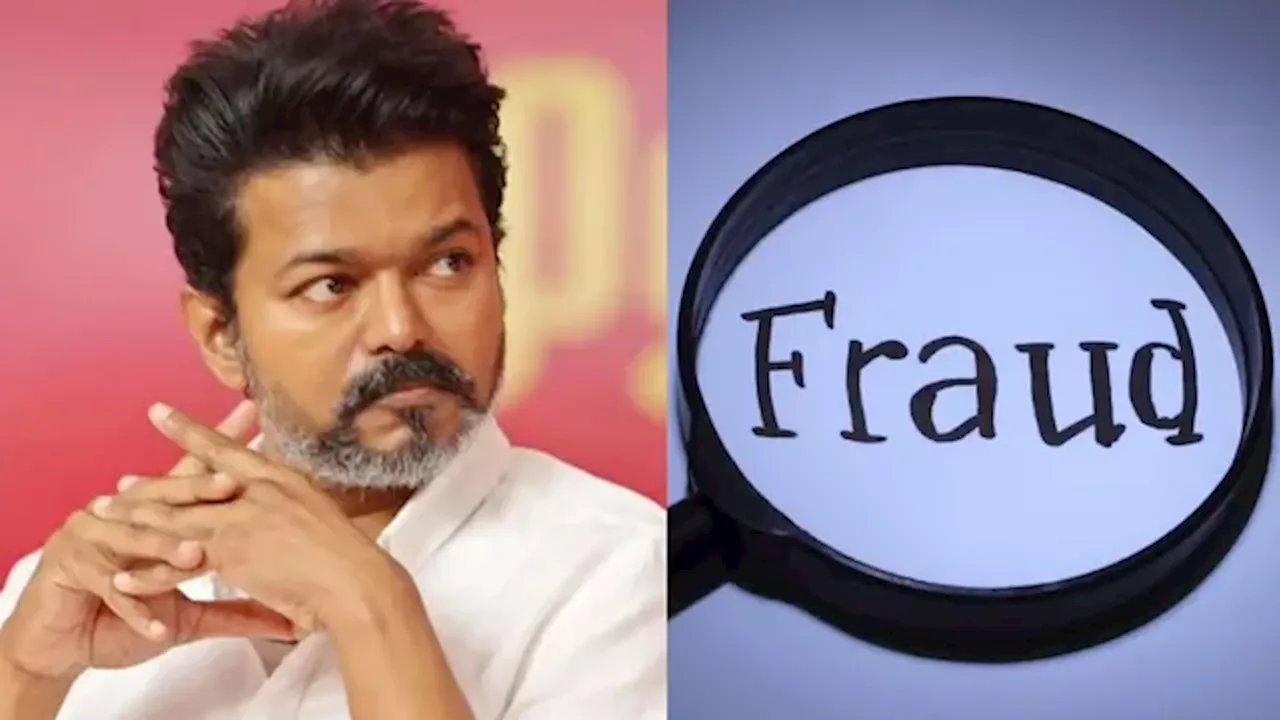
Jabalpur: A 69-year-old man in Jabalpur, Madhya Pradesh, has allegedly been cheated out of ₹7.52 lakh by cyber fraudsters who used the name of Tamil Nadu Chief Minister and South Indian film star Vijay Thalapathy to promise him financial assistance worth ₹1 crore.
The accused allegedly lured the elderly man through a Facebook link offering financial aid and loans. After he clicked on the link, he began receiving calls from different mobile numbers. The callers claimed to be associated with Vijay Thalapathy and assured him that he would receive ₹1 crore in financial assistance.
Trusting their promises, the victim made seven payments to different bank accounts. Even after collecting ₹7.52 lakh, the fraudsters continued contacting him and demanded an additional ₹60,000, claiming they needed the money to secure their release after being detained by the police while bringing gold for him. The victim became suspicious and approached the police.
FCRF Launches CP-FRM to Build India’s Next Generation of Fraud Risk Professionals
Facebook Link Used to Target the Elderly Man
Pravesh Dheer, a 69-year-old resident of Jabalpur’s Gorakhpur police station area, told the police that he had received a message on social media offering financial assistance through Vijay Thalapathy. After clicking on the link provided in the message, he began receiving calls from different mobile numbers.
The callers claimed to be associated with Vijay Thalapathy and assured him that they could arrange financial assistance worth ₹1 crore. They subsequently asked him to pay various fees to complete the process.
Believing that the payments were part of the procedure for obtaining such a large amount, Dheer followed their instructions. The fraudsters sent him QR codes on seven occasions and persuaded him to transfer money to different bank accounts. As a result, a total of ₹7.52 lakh was transferred to the accounts specified by the accused.
Money Transferred to Seven Bank Accounts
According to the police, the money was transferred to several accounts within Jabalpur city. Of the total amount, ₹3.40 lakh was deposited into the account of Maa Computer in Wright Town, while ₹1.67 lakh was transferred to the account of Agarwal Online Service in Madan Mahal. Another ₹5,000 was deposited into the account of Kolkata Sweets.
The remaining transfers included ₹14,000 to the account of Samakit Pandey, ₹12,000 to Bablu Yadav, ₹25,000 to Neighbour Sindhi and ₹1.89 lakh to Adarsh Mule Photocopy.
The seven accounts through which the money was transferred have emerged as an important part of the investigation. Police are examining the transactions and the individuals associated with these accounts to establish the extent of the alleged fraud and identify those operating the network.
Fraudsters Demand Another ₹60,000 After Collecting ₹7.52 Lakh
Even after receiving the money, the accused allegedly continued communicating with Dheer. During one of the calls, they claimed that they were bringing gold for him but had been detained by the police on the way. The callers then demanded another ₹60,000, allegedly claiming that the money was needed to secure their release from police custody.
After paying ₹7.52 lakh without receiving the promised financial assistance, Dheer became suspicious when the accused demanded additional money. Instead of making another payment, he contacted the police and reported the incident.
Police Register FIR, Investigate Bank Accounts
The Gorakhpur police have registered a First Information Report (FIR) based on the complaint and initiated an investigation. Investigators are attempting to determine who circulated the Facebook link, identify the callers and establish who controlled the bank accounts used to receive the money.
The fact that the money was transferred to multiple accounts within Jabalpur has also become a significant aspect of the investigation. Police are examining the transactions and the role of individuals associated with the accounts to trace the alleged fraudsters and identify the main accused.
The incident highlights the risks associated with online offers promising large sums of money in the names of celebrities, political leaders and other public figures. Fraudsters often exploit people’s expectations of financial assistance by demanding advance payments under the pretext of processing fees or other formalities.
People are advised to verify the authenticity of such offers before responding to unfamiliar links or phone calls. Requests for advance payments in exchange for promised financial assistance or loans should be treated with caution, particularly when the individuals involved cannot establish their identity or provide verifiable details about the offer.
Follow for daily updates on cybercrime, corporate fraud, DFIR, hacking, investigations, and digital forensics
