

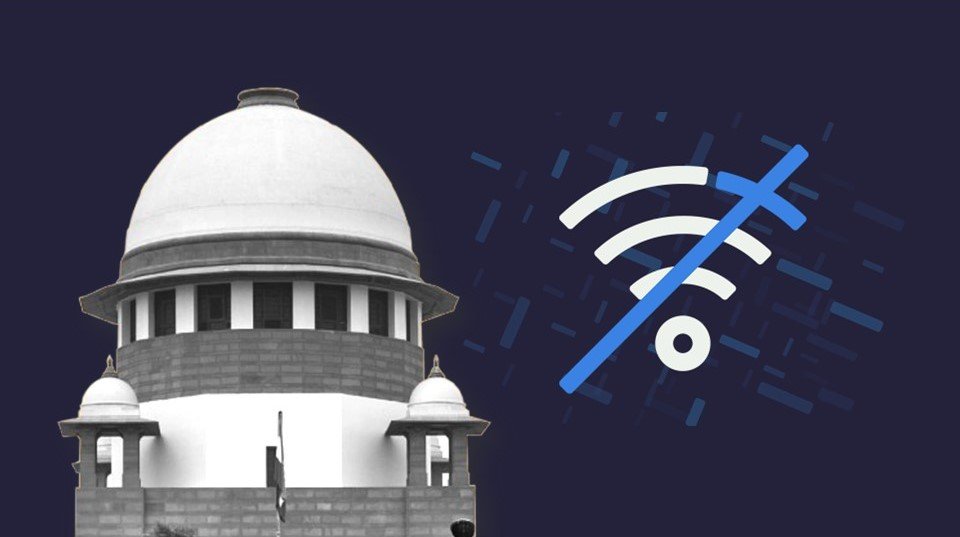
The Supreme Court has declared internet access a fundamental right for all individuals, including children, regardless of age.
A Bench of Justices J.B. Pardiwala and K.V. Chandran delivered the ruling on October 15, 2026, holding that the right to access and use the internet is protected under Article 21 read with Article 19(1)(a) of the Constitution.
The court rejected blanket restrictions on children’s internet and social media access, stating that online safety measures should target harmful content and those responsible for circulating it rather than deny children access altogether.
FCRF Launches CP-FRM to Build India’s Next Generation of Fraud Risk Professionals
Why Did the Supreme Court Reject Internet Bans for Children?
The court acknowledged that the internet presents serious risks to children but held that restricting their access entirely was not an appropriate solution. It identified privacy concerns arising from age-verification systems, including the continuous collection of sensitive personal information and the potential for surveillance.
The Bench also observed that blanket bans could push children towards unregulated platforms and discourage victims of online exploitation from reporting abuse. The court emphasised that internet access supports education, communication and expression, particularly for children in remote areas and those with special needs.
Referring to earlier constitutional judgments, including Anuradha Bhasin v. Union of India and Pragya Prasun v. Union of India, it held that the question of internet access as a fundamental right was no longer unresolved.
What Online Safety Measures Did the Court Suggest?
Instead of broad restrictions, the court proposed age-appropriate safeguards based on parental consent, guidance and oversight. These included dedicated child-mode accounts with private settings by default, restrictions on messages from unknown adults and stronger moderation of advertisements and content shown to children.
The Bench left implementation details to the Union government while permitting restrictions on inherently harmful content, including adult websites. It also directed that databases developed to identify child sexual exploitation and abuse material (CSEAM) must not be used for unrelated purposes.
What Directions Were Issued to Social Media Platforms?
The court ordered the creation of a national database of known CSEAM hashes and URLs, with entries verified by at least three trained analysts. Significant social media platforms must adopt hash-matching and URL-listing systems to identify prohibited material. Known material must be removed immediately, while newly identified material must be verified, removed and reported within two hours.
Platforms must also establish accessible reporting mechanisms, acknowledge complaints within 24 hours and publish monthly compliance reports subject to independent audits. The court directed authorities to consider financial penalties linked to platform turnover and recovery of revenue generated from such material.
What Happens Next?
- The court directed the government to develop necessary guidelines, operating procedures and legal amendments.
- It also called for age-appropriate digital safety education in schools, alongside training for parents and teachers.
- Schools must display Child Helpline 1098 and Cybercrime Helpline 1930.
- The Union government must submit a compliance affidavit before the next hearing on December 10, 2026.
The ruling places responsibility for online child safety on technology platforms, regulators and law enforcement agencies rather than children themselves. It establishes that protecting children from exploitation and preserving their constitutional freedoms must be pursued together, with safeguards directed at harmful content and those responsible for its circulation.
Follow for daily updates on cybercrime, corporate fraud, DFIR, hacking, investigations, and digital forensics
