


Germany is preparing a cooperation agreement with Nvidia aimed at accelerating the use of artificial intelligence across its industrial economy, as Europe looks for ways to close the technology gap with the United States and China.
The agreement is expected to be announced next week in Berlin and will involve additional partners alongside the US chipmaker.
Government sources say the initiative is intended to make a significant contribution to industrial AI, including technologies used in manufacturing, robotics and autonomous systems.
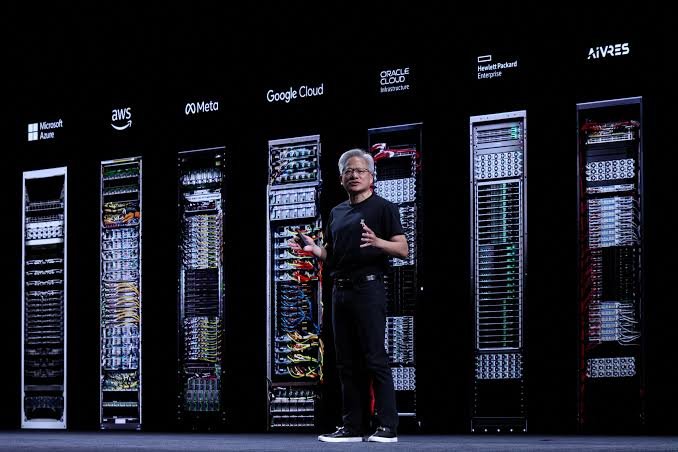
Nvidia Chief Executive Jensen Huang is expected in Berlin during the same period as the government’s Invest in Germany conference and Nvidia’s GTC technology event.
FCRF Launches CP-FRM to Build India’s Next Generation of Fraud Risk Professionals
Germany Wants AI to Move From Software Into Factories
The agreement is expected to focus heavily on what the technology industry calls physical AI.
Unlike a chatbot that operates mainly through text or software, physical AI allows machines such as robots, vehicles and industrial equipment to perceive their surroundings and make decisions.
A warehouse robot, for example, may use cameras and AI models to recognise objects and decide how to move them safely.
For Germany, the technology has particular significance because manufacturing remains one of the foundations of its economy.
Automakers, machinery companies, chemical producers and industrial suppliers are all under pressure to become more productive while dealing with high energy costs, global competition and ageing workforces.
AI could help companies automate factory processes, inspect products for defects, predict equipment failures and train robots to perform complicated tasks.
The planned Nvidia cooperation is therefore aimed at industrial adoption rather than simply encouraging more consumer AI applications.
Powerful Industrial AI Models Form Part of Plan
Reports about the agreement indicate that Germany also wants to support the development of stronger AI models designed specifically for industrial use.
These systems could be trained on engineering, manufacturing and machine data rather than primarily on internet text.
That distinction matters.
A general chatbot may be good at writing emails or summarising documents but may not understand the behaviour of a robotic arm, factory production line or industrial machine.
Specialised models can instead be trained to interpret sensor information, simulate equipment and optimise production.
Nvidia has increasingly positioned its hardware and software around this market.
Its technology is already being used to simulate factories, train robots and develop autonomous driving systems.
The company has also deepened partnerships with major German businesses.
Mercedes-Benz and Nvidia announced an expanded partnership this week to develop the next generation of automated driving systems using Nvidia computing, sensor and safety technologies.
Germany’s broader agreement could extend that model beyond the automotive sector.
Europe Is Trying to Close Its AI Investment Gap
The initiative arrives as European policymakers worry that the region is falling behind the US in AI infrastructure and investment.
American technology companies dominate the market for advanced AI models, cloud computing and the chips required to train them.
China has also invested heavily in domestic AI infrastructure and semiconductor development.
Europe has strong manufacturing companies and research institutions but fewer globally dominant AI platforms.
Germany increasingly sees its industrial base as an advantage it can use differently.
Instead of trying only to replicate Silicon Valley’s consumer AI companies, policymakers want to apply advanced computing to sectors where European companies already have deep expertise.
Industrial data could become particularly valuable.
Manufacturers possess years of information about machines, production processes and engineering systems that could be used to build specialised AI tools.
A recent study by Germany’s ifo Institute estimated that generative AI could eventually add hundreds of billions of euros in annual economic value to the German economy.
However, the institute also warned that restrictive access to training data could reduce those gains significantly.
Nvidia Deepens Its Role in European AI Infrastructure
For Nvidia, the planned agreement adds to a growing list of European partnerships.
The company has positioned itself not merely as a supplier of chips but as an infrastructure provider for national AI strategies.
Its processors are already central to many of the computing systems used to train advanced AI models.
Nvidia is now pushing further into robotics, automotive systems, industrial simulation and what it calls AI factories.
Germany offers an attractive market because of its large manufacturing sector.
But the relationship also creates strategic questions for Europe.
European governments want greater control over critical technology while much of the hardware powering their AI infrastructure still comes from American companies such as Nvidia.
The German agreement therefore reflects both the opportunity and the dependence created by the current AI boom.
More details, including the participating companies and the scale of investment involved, are expected when the agreement is formally announced.
What this means for you:
Germany’s plan shows that the next phase of AI expansion may increasingly happen inside factories, vehicles and industrial machines rather than only in chatbots. That shift could affect manufacturing jobs, productivity and demand for specialised technical skills.
Follow for daily updates on cybercrime, corporate fraud, DFIR, hacking, investigations, and digital forensics
