

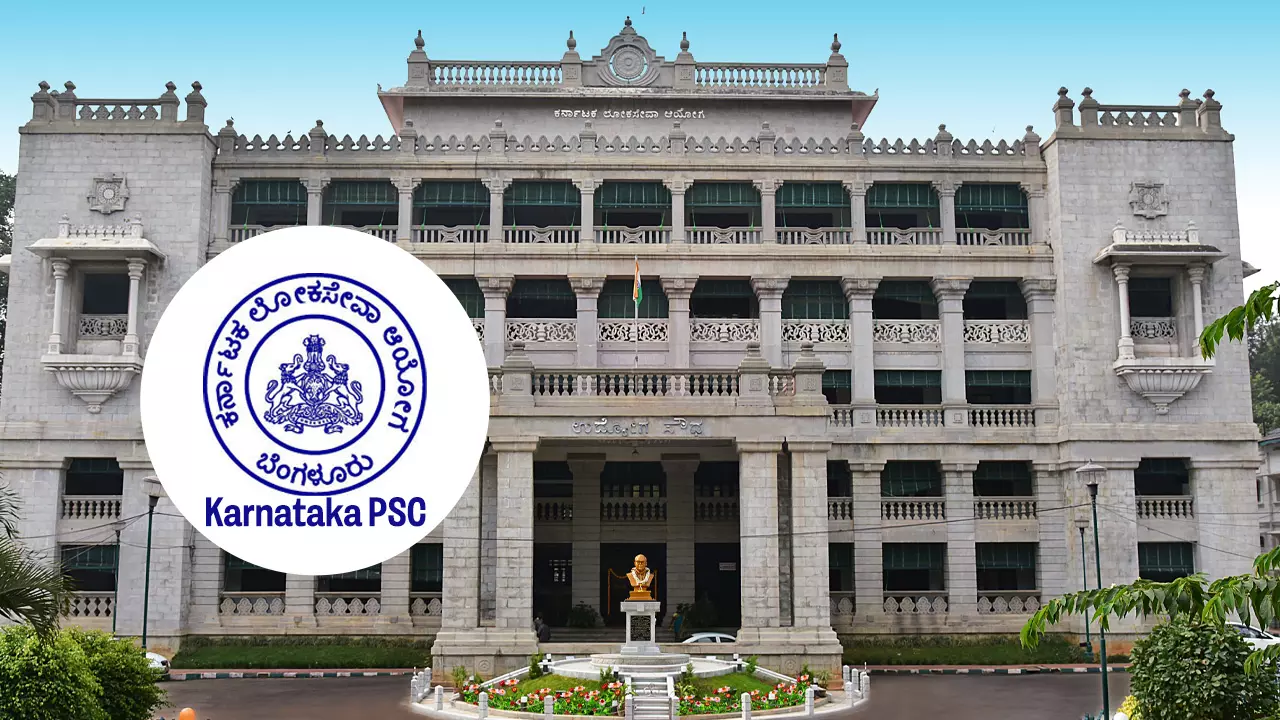

The probe into alleged irregularities in Karnataka Public Service Commission recruitments has triggered a sharp controversy following the Supreme Court’s decision to modify the selection process for a Special Investigation Team and remove senior IPS officer Alok Kumar as its head. The shift came after the Karnataka government challenged the High Court’s initial order constituting the team under Kumar’s leadership, prompting the senior police officer to submit a formal representation to Chief Secretary Shalini Rajneesh disputing the state’s arguments before the apex court. While the Supreme Court directed the State Director General of Police to select a new head within ten days, the underlying allegations concerning malpractices in state recruitment remain pending resolution.
Officer Disputes State Submissions and Cites Judicial Clearance
In his letter to the Chief Secretary, Alok Kumar challenged the assertions made by the Karnataka government’s counsel before the Supreme Court on October 1, which referenced his past involvement in the 2019 phone-tapping controversy. Kumar stated that the government failed to accurately convey that the Central Bureau of Investigation had filed a closure report in the matter, which was accepted by the Special CBI Court on February 13, 2024. The officer pointed out that the federal agency’s investigation, supported by findings from the Central Forensic Science Laboratory and witness statements, found insufficient evidence against him, while original complainant Kuldeep Jain raised no objection to the closure.
Kumar also defended his record regarding departmental proceedings, noting that an earlier disciplinary proposal was dropped in March 2023 under then Chief Minister Basavaraj Bommai. Although a fresh show-cause notice and charge sheet were issued against him in May 2025, the Central Administrative Tribunal quashed them in October 2025 and directed that his consequential benefits be restored. Kumar noted that while the state challenged that ruling before the Karnataka High Court, the court declined to issue an interim stay. He urged the administration to ensure that the government’s legal representatives fully present these judicial findings before the Supreme Court to safeguard his professional standing.
High Court Mandate and Government Legal Challenge
The Special Investigation Team was originally established on September 21 by Justice M. Nagaprasanna of the Karnataka High Court to investigate two specific recruitment controversies. The first matter involves the selection of the daughter of suspended KPSC chairperson Shivashankar S. Sahukar for an Industrial Extension Officer post, while the second concerns alleged irregularities in hiring for 400 veterinary officer vacancies. Concluding that the Criminal Investigation Department and local police should not continue the probe, the High Court constituted a five-member team led by Kumar, alongside IPS officers Divya V. Gopinath, Anup A. Shetty, Kushal Chouksey, and Kshama Mishra, with instructions to report progress every 30 days and complete the inquiry within 100 days.
The state government contested the directive before the Supreme Court, arguing that the CID investigation was already nearing completion and had yielded multiple arrests. State counsel questioned the need for a fresh investigation without proven bad faith by existing investigators, while also raising conflict-of-interest objections regarding Kumar and Gopinath, who heads the State Forensic Science Laboratory. After staying the initial directions, the Supreme Court altered the team’s composition, removing Kumar and Gopinath, permitting the state to propose two replacements, and remanding the revised panel back to the High Court for review.
Systemic Irregularities and Enforcement Directorate Role
The High Court’s initial ruling highlighted persistent issues in commission recruitments dating back to 1998, citing long-standing grievances regarding mark alterations, OMR sheet manipulation, nepotism, and financial misconduct. The court observed that corrupt recruitment practices erode constitutional guarantees of equal opportunity and cause grave injustice to candidates dedicating years to competitive examinations. The court also authorized investigators to coordinate with the Enforcement Directorate, which is conducting an inquiry under the Prevention of Money Laundering Act. The reconstituted investigative team must now establish the facts surrounding the disputed appointments within the mandated timeline.
Follow for daily updates on cybercrime, corporate fraud, DFIR, hacking, investigations, and digital forensics
