

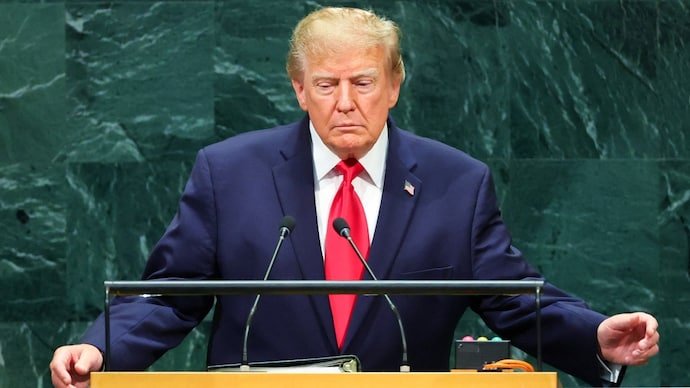
US President Donald Trump has announced the creation of a new federal task force focused on artificial intelligence, naming Director of National Intelligence Jay Clayton to lead an administration-wide effort aimed at coordinating government policy on the technology.
What Is the Super Intelligence Force?
Trump said the “Super Intelligence Force” will coordinate federal efforts to ensure the United States continues to lead in the development of advanced AI, which his administration has begun referring to as “super intelligence.”
The task force will also coordinate the federal government’s engagement with consumers, public interest groups, religious organisations, critical infrastructure providers and companies developing advanced AI systems.
Trump said the initiative is intended to protect US interests and improve Americans’ lives as increasingly powerful AI technology develops.
Who Will Lead the New Task Force?
Director of National Intelligence Jay Clayton will chair the Super Intelligence Force, effectively making him the administration’s new AI czar.
Federal Trade Commission Chair Andrew Ferguson and Undersecretary of War for Research and Engineering Emil Michael will serve as vice chairs.
Director of the Office of Personnel Management Scott Kupor has also been named as a member. The task force will report directly to the president and White House Chief of Staff Susie Wiles.
The new body is expected to bring together officials from different parts of the administration as the federal government seeks a coordinated approach to AI.
FCRF Launches CP-FRM to Build India’s Next Generation of Fraud Risk Professionals
What Will the Task Force Examine?
The task force will reportedly have 120 days to prepare a report examining the risks and opportunities presented by artificial intelligence.
Its charter calls for plans to respond to threats enabled by “super intelligence” while addressing broader questions surrounding the development of the technology.
Clayton has previously said it would be irresponsible for the United States to “back away” from AI while countries such as China continue to advance, arguing that one of the biggest risks would be failing to move first.
The initiative therefore combines the administration’s push for US technological leadership with an examination of the risks created by increasingly capable AI systems.
Why Is Trump Calling AI ‘Super Intelligence’?
The task force follows an executive order signed on September 29 seeking to rename artificial intelligence as “super intelligence.”
Trump has previously said the word “artificial” makes the technology sound “fake.”
The new terminology has already been adopted by some technology executives, although questions have been raised about whether using “super intelligence” for existing AI systems could create confusion because the term can also refer to significantly more advanced systems.
Elon Musk has also begun using the terminology, saying his company’s AI platform SpaceXAI would be renamed SpaceXSI and describing SpaceX as a “super intelligence company.”
How Does the Move Fit Into Trump’s AI Policy?
The announcement comes after Trump said he would establish a board to oversee AI safety following a pact signed by technology executives.
The agreement, signed on September 29, included executives from companies including OpenAI, Anthropic, SpaceX and Google and was described by Trump as “morally binding.”
The new task force represents another step in the administration’s attempt to develop a federal approach to AI while maintaining its emphasis on technological expansion.
Trump has largely resisted calls for stronger oversight and has generally favoured allowing AI companies significant scope to regulate themselves.
What Is the Debate Over AI Regulation?
The task force has been created amid pressure from some prominent figures in the technology industry for tighter safeguards around increasingly powerful AI.
OpenAI chief executive Sam Altman has argued that the benefits of artificial intelligence justify accepting some risks, while also saying the technology should remain accessible to the public.
“The world should accept some bad things happening for the benefits of this technology and people having the agency,” Altman said in an interview.
The debate reflects a broader question facing governments and technology companies over how quickly AI should advance and how its risks should be managed without restricting development.
What Does This Mean?
The creation of the Super Intelligence Force means the US government is moving to coordinate its approach to artificial intelligence through a dedicated federal body rather than leaving AI-related decisions scattered across different agencies. Led by Director of National Intelligence Jay Clayton and reporting directly to senior White House leadership, the task force will examine both the opportunities and risks of increasingly powerful AI systems.
Its 120-day review could help shape how the US responds to AI-enabled threats, works with technology companies and other groups, and pursues its goal of remaining ahead in advanced AI development.
The420 Insight
The creation of the Super Intelligence Force puts AI coordination closer to the centre of the US government, with a task force reporting directly to the president and senior White House leadership. Its 120-day review will be an important test of how the administration intends to balance technological leadership with the security and societal risks posed by increasingly capable AI systems.
About the author — Ayesha Aayat writes on cybercrime, digital safety, and emerging online threats. Her work focuses on public awareness, legal clarity, and technology-driven risks.
Follow for daily updates on cybercrime, corporate fraud, DFIR, hacking, investigations, and digital forensics
