

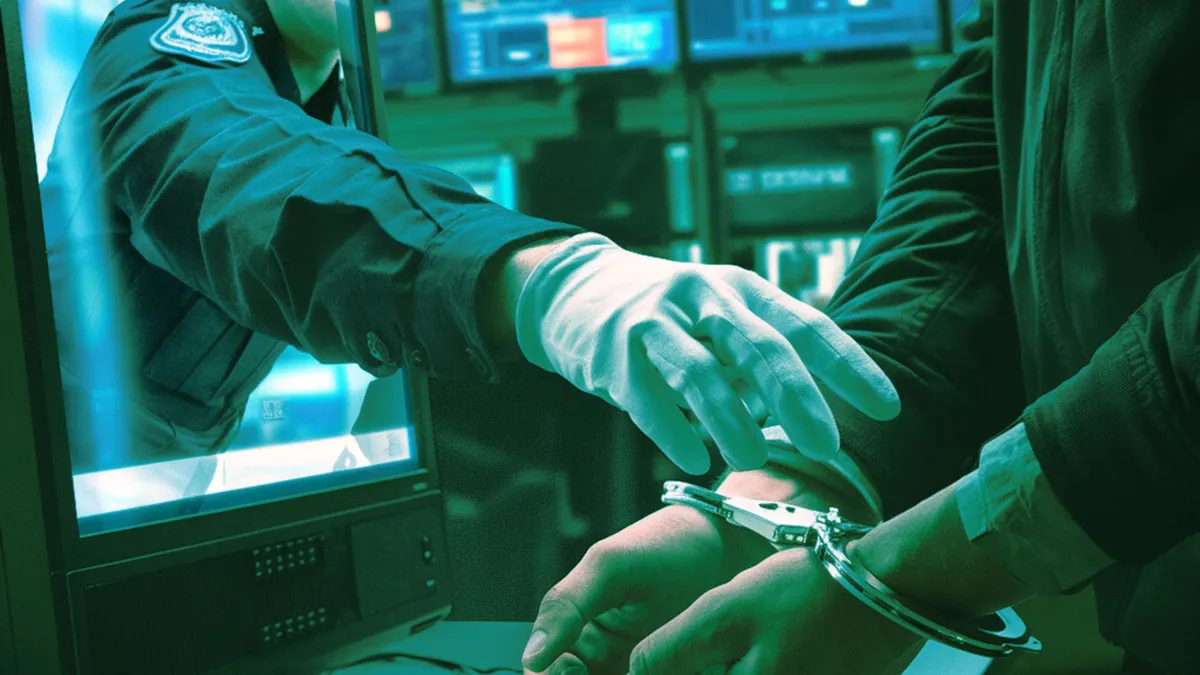

A 68-year-old South Mumbai woman has allegedly lost ₹3.02 crore after cybercriminals posing as police, NIA and ATS officials kept her under a prolonged “digital arrest” and convinced her to transfer her savings for supposed verification.
The fraud continued from August 21 to September 12, according to Mumbai Police. The woman, who lives alone, was first contacted through a WhatsApp video call by a man claiming to be a Mumbai Police officer.
A case was registered at the South Region Cyber Police Station on September 14 after she realised she had been cheated.
Proposal for Conducting Cyber Crisis Drill, Tabletop Exercise (TTEx) & CCMP Readiness Exercise
Caller claimed her name had surfaced in money-laundering case
The first caller allegedly told the woman that her name had appeared in a money-laundering investigation.
She was later contacted by other people who claimed to be officials from the National Investigation Agency and Anti-Terrorism Squad.
The callers allegedly told her the case was serious and that she could be arrested at any time.
They then used her age as part of the deception, telling her that because she was a senior citizen she would be questioned remotely rather than being taken into custody.
There is no legal procedure in India called a “digital arrest”.
Police, NIA, CBI, ATS or any other agency do not place people under arrest through WhatsApp or video calls and then ask them to transfer money for verification.
Fraudsters asked for bank and fixed-deposit details
Once the woman believed she was dealing with genuine officers, the callers allegedly began asking detailed questions about her finances.
They sought information about her bank accounts, fixed deposits and previous transactions.
The fraudsters then allegedly told her that the money in those accounts had to be checked to prove it was legitimate and not connected to criminal activity.
She was instructed to transfer the funds to bank accounts provided by them.
The callers allegedly assured her that the money would be returned after verification.
₹3.02 crore sent in three separate transactions
Believing the instructions were part of an official investigation, the woman transferred a total of ₹3.02 crore in three transactions.
That is one of the most significant features of the case.
Digital-arrest scams often do not rely on a single hurried transfer.
Fraudsters may keep the victim under pressure for days or weeks, gradually collecting information about savings, investments and fixed deposits before instructing them to move larger amounts.
The prolonged contact can make the fraud appear more credible because the victim begins to believe they are participating in an ongoing investigation rather than responding to a single suspicious call.
Fraud came to light only after brother intervened
The woman became suspicious after the money was not returned and the callers stopped responding.
She eventually told her brother what had happened.
He realised that she had likely been defrauded and advised her to approach police.
She then filed a complaint with the South Region Cyber Police Station.
A team led by DCP Cyber Bajrang Bansode, along with senior inspector Nandkumar Glopale and sub-inspector Dipesh Shinde, is investigating the case.
Elderly victims remain frequent targets
The case follows several recent digital-arrest frauds involving senior citizens in Mumbai.
Earlier this month, Mumbai cyber police arrested six people, including a bank operations manager and an IIT graduate, in a separate ₹1.12 crore digital-arrest case involving a 68-year-old Dahisar resident.
That victim was allegedly told that his Aadhaar and SIM had been linked to money laundering and was kept under pressure over WhatsApp video calls.
The two cases are separate and there is no public evidence that they involve the same gang.
But both demonstrate the same core tactic: impersonating officials, creating fear of arrest and convincing the victim that transferring money is necessary to prove innocence.
Why digital-arrest scams can continue for weeks
These scams work by isolating victims psychologically.
Fraudsters may insist that the supposed investigation is confidential and warn the target not to tell relatives, lawyers or bank staff.
Some keep victims connected on video calls for long periods, demand regular updates and repeatedly threaten arrest if instructions are not followed.
That continuous pressure reduces the chance that the victim will independently verify the claims.
Living alone can make the situation more dangerous because there may be no family member nearby to challenge the story.
In the Mumbai case, the fraud allegedly continued for around three weeks before a relative became involved.
Money trail now central to investigation
Cyber police will now try to trace the three beneficiary accounts that received the ₹3.02 crore.
Investigators can examine whether the funds remained in those accounts or were rapidly transferred through mule accounts, withdrawn in cash or converted into other assets.
The phone numbers, WhatsApp accounts and devices used by the fraudsters will also be important.
Police may seek platform records, IP information and bank-account KYC details to identify the people behind the calls.
The available report does not indicate that any accused has yet been arrested in this specific case.
No government agency asks for ‘safe account’ transfers
The central fraud claim in digital-arrest cases is often that money must be moved to an official, safe or verification account.
No legitimate investigating agency follows such a process.
If police or another government body suspects criminal activity in a bank account, it can use lawful procedures such as freezing the account, issuing notices or obtaining court orders.
It does not ask the account holder to voluntarily transfer crores of rupees to unfamiliar bank accounts during a video call.
That remains one of the clearest warning signs of the scam.
What this means for you: If anyone claiming to be from police, NIA, CBI, ATS or another government agency asks you to transfer money for “verification”, disconnect immediately. Contact the agency through an independently verified number and report the attempt through 1930 and the National Cyber Crime Reporting Portal.
Follow for daily updates on cybercrime, corporate fraud, DFIR, hacking, investigations, and digital forensics
