

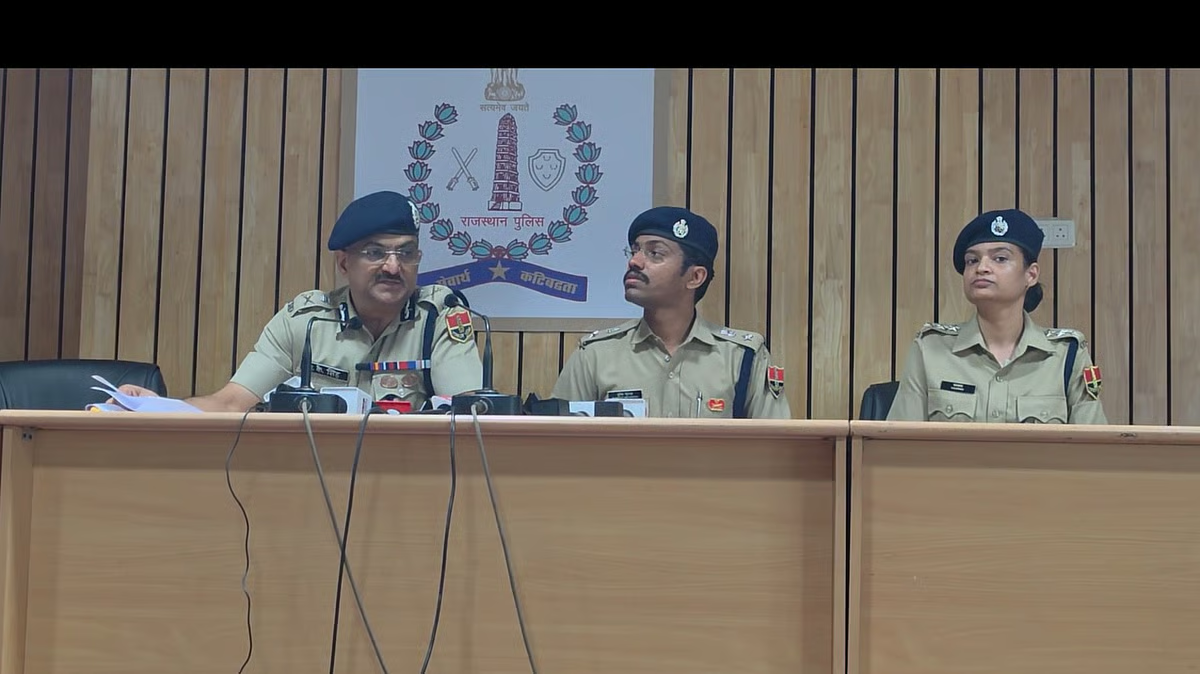

Rajasthan Police have blocked 15,326 mobile numbers, around 7,800 URLs and online profiles, and more than 100 digital devices allegedly linked to the circulation of child sexual exploitation and abuse material.
Additional Director General of Police, Cyber Crime, V.K. Singh said the action followed technical analysis of nearly 25,000 inputs relating to suspected online activity. Police are identifying repeat offenders and registering criminal cases based on digital evidence and tipline reports.
FIRs have so far been registered in Churu, Nagaur, Alwar, Khairthal-Tijara, Sikar, Hanumangarh and Chittorgarh.
Proposal for Conducting Cyber Crisis Drill, Tabletop Exercise (TTEx) & CCMP Readiness Exercise
NCMEC tipline reports triggered district-level action
Police said the cases were initiated using reports received through the National Center for Missing & Exploited Children, or NCMEC.
NCMEC operates a CyberTipline that receives reports from technology companies and other sources about suspected online child sexual exploitation. Those reports can then be shared with law-enforcement authorities for investigation.
In Rajasthan, police say the reports are being combined with technical analysis to identify mobile numbers, accounts, devices and repeat offenders.
That does not mean every blocked number or URL automatically belongs to a convicted offender.
Blocking is an enforcement measure based on suspected links to prohibited material, while individual criminal liability must still be established through investigation and court proceedings.
Telegram and Discord groups under scrutiny
Rajasthan Police said offenders were allegedly using platforms such as Telegram and Discord to circulate prohibited material through secret or paid groups and channels.
Users were also allegedly joining such groups under false identities and exchanging material through direct messages.
In some cases, police said files were uploaded to Google Drive or other cloud-storage services and only the access links were shared.
That makes enforcement more difficult.
Instead of repeatedly uploading the same file to social-media platforms, offenders can store it elsewhere and distribute only a link, which can then spread across multiple groups and private chats.
Investigators therefore need to trace not only visible social-media accounts but also cloud links, device identifiers and the users behind them.
Around 25,000 inputs are being analysed
ADG V.K. Singh said Rajasthan Police had received approximately 25,000 inputs relating to suspected online circulation of child sexual exploitation and abuse material.
The cybercrime wing is analysing those digital trails before taking further action.
The current blocking of more than 15,000 mobile numbers therefore appears to be part of a much larger review rather than a completed investigation.
Police have indicated that repeat offenders are a particular focus.
If the same phone number, online profile or device repeatedly appears in tipline reports, investigators can use those links to prioritise cases and identify possible networks rather than treating each incident separately.
Blocking 100 devices points to deeper digital tracing
The action also includes more than 100 digital devices.
That is significant because device-level action goes beyond simply taking down an account or disabling a phone number.
A person can create another social-media account or obtain a new SIM card relatively easily.
Device identifiers and forensic evidence can provide investigators with another way to connect activity across different accounts and platforms.
Police did not publicly disclose the exact technical method used to block or identify the devices.
Any conclusion about how that process works should therefore wait for further official detail.
Possession and circulation can attract criminal liability
Police warned that people should not download, store or forward child sexual exploitation and abuse material.
Such conduct can attract action under the Protection of Children from Sexual Offences Act, the Information Technology Act and other applicable laws.
That is important because some users wrongly assume that legal liability applies only to the person who originally created the material.
Indian law can also apply to knowingly publishing, transmitting, possessing or circulating such content in certain circumstances.
The safest response when encountering suspected illegal material is to avoid downloading or forwarding it and report the account, link or group through the appropriate platform and law-enforcement channels.
Seven districts already have FIRs
Police have registered cases in seven districts based on NCMEC tipline inputs.
These include Churu, Nagaur, Alwar, Khairthal-Tijara, Sikar, Hanumangarh and Chittorgarh.
The spread across multiple districts suggests that the activity under investigation is not concentrated in one city.
It also shows how online offences can require coordination between a central cybercrime unit and local police stations.
A tipline report may identify an account or device digitally, but local police still need to establish who controlled it, seize evidence where appropriate and investigate the individual circumstances of each case.
Crackdown reflects broader shift toward platform-level enforcement
The Rajasthan action reflects a wider change in cybercrime enforcement.
Police are increasingly working from digital identifiers rather than waiting for a traditional victim complaint.
Reports from technology companies, international child-safety organisations and cybercrime portals can create leads before local police receive a direct complaint.
That allows investigators to identify recurring accounts, phones and devices across multiple platforms.
It also means users who believe private groups or encrypted-looking communities are beyond law-enforcement scrutiny may be mistaken.
The current Rajasthan operation shows that account data, device information, cloud links and tipline reports can be combined to build a wider investigative picture.
What this means for you: Never download, save or forward suspected child sexual abuse material, even for “awareness”. Report the account, group or link instead through the platform, local police, 1930 or the National Cyber Crime Reporting Portal. Rajasthan Police’s action shows that even private groups and cloud-sharing links can become part of a wider digital investigation.
Follow for daily updates on cybercrime, corporate fraud, DFIR, hacking, investigations, and digital forensics
