

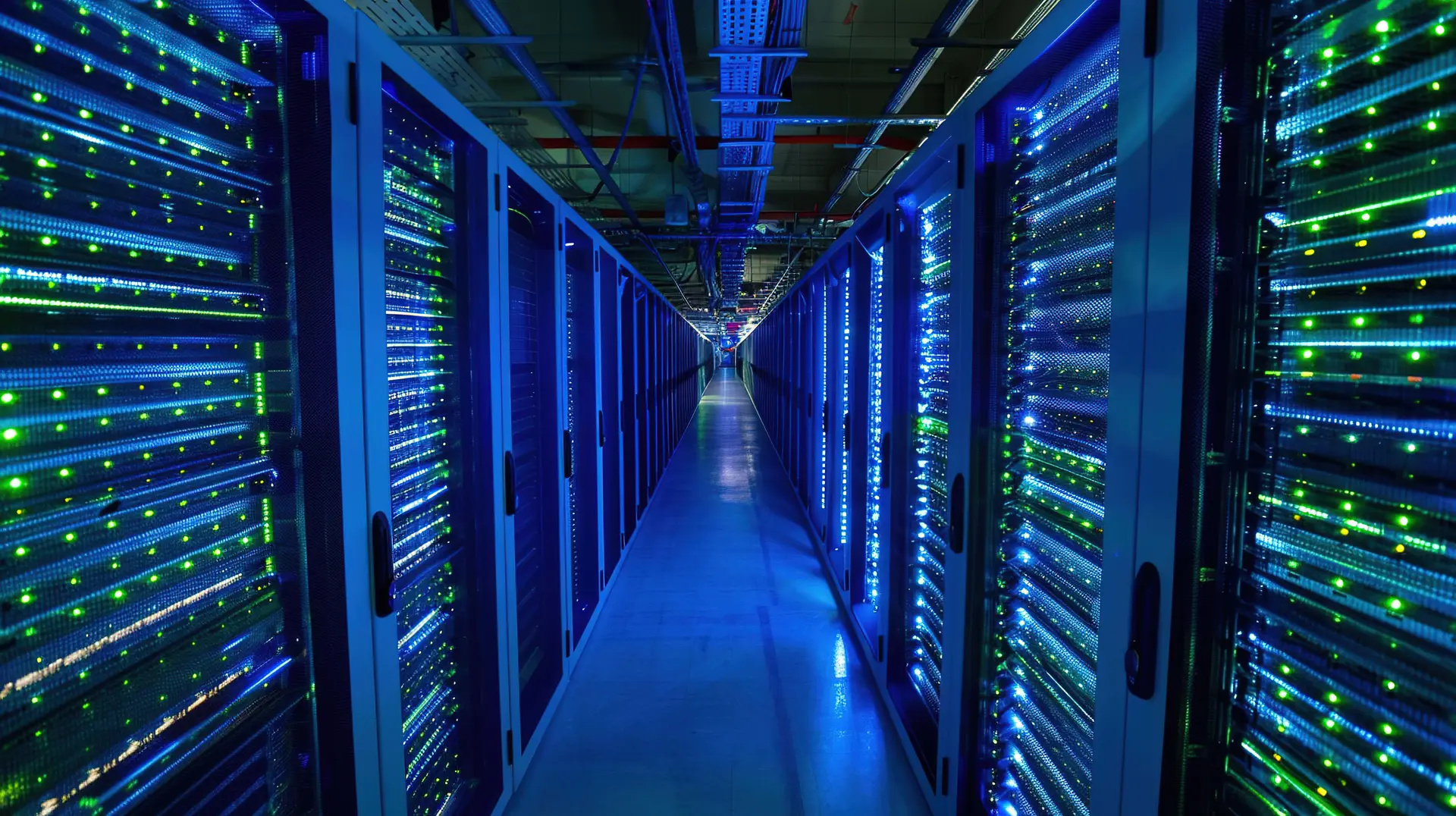

CtrlS Datacenters has partnered with US networking company Ciena to build five high-capacity metro networks connecting nine data centres across Chennai, Hyderabad, Kolkata, New Delhi and Noida.
The networks will provide up to 100 terabits per second of capacity and are being deployed to support rising demand from artificial intelligence, cloud services and hyperscale customers. The project forms part of a broader Managed Optical Fiber Network rollout for a leading hyperscaler.
The companies announced the deployment on September 28.
Proposal for Conducting Cyber Crisis Drill, Tabletop Exercise (TTEx) & CCMP Readiness Exercise
Nine data centres will be linked across five metros
The new networks are designed to improve high-speed connectivity between CtrlS data centres in five major Indian cities.
These include Chennai, Hyderabad, Kolkata, New Delhi and Noida.
For data-centre operators, interconnection between facilities is becoming increasingly important because AI and cloud workloads often need to move large volumes of data between multiple locations.
A single AI workload may rely on compute resources housed in one data centre, storage in another and enterprise applications running elsewhere.
That creates demand for faster links with low latency and high reliability.
CtrlS said the upgrade is intended to support enterprises and hyperscalers requiring stronger data-centre interconnect capacity.
Network capacity will reach up to 100 Tb/s
The most significant technical figure in the announcement is the planned capacity.
CtrlS says the networks will support up to 100 Tb/s.
That figure refers to the maximum aggregate transmission capacity of the optical network, not the internet speed available to an individual user.
For comparison, one terabit equals 1,000 gigabits.
A 100 Tb/s backbone is therefore designed to move enormous volumes of traffic between large data-centre facilities rather than serve as a normal enterprise broadband connection.
The expansion reflects the increasing amount of east-west traffic generated as cloud and AI workloads move between data centres.
Ciena will supply optical networking technology
CtrlS is deploying Ciena’s WaveLogic 5 Extreme-powered Waveserver platform along with the company’s 6500 Reconfigurable Line System.
Ciena’s services team will also handle end-to-end project management.
The Waveserver platform is designed for high-capacity data-centre interconnection.
In simple terms, it allows very large amounts of data to be sent efficiently over optical fibre between facilities.
The 6500 RLS, meanwhile, helps operators manage and reconfigure optical connections across the network as capacity needs change.
That matters for AI infrastructure because demand is often uneven.
One data centre may require much more capacity during a particular training or inference workload, while traffic patterns can shift as customers move resources between regions.
Automation will manage network operations
The deployment will also use Ciena’s Navigator Network Control Suite.
The platform is intended to automate parts of network management and speed up the delivery of new services.
This is increasingly important as data-centre networks become more complex.
Manually configuring high-capacity optical links across multiple cities can be slow and prone to operational errors.
Automation allows operators to monitor capacity, configure services and respond more quickly when traffic patterns change.
For hyperscale cloud customers, that can mean faster provisioning and more predictable connectivity between facilities.
What a managed optical fibre network means
A Managed Optical Fiber Network, or MOFN, is effectively a high-capacity fibre network operated as a managed service for a customer.
Instead of a hyperscaler building and managing every element of the fibre connection itself, a data-centre or network provider can manage the optical transport layer on its behalf.
That includes capacity, equipment, monitoring and service availability.
The model is particularly useful for cloud and AI companies that need very large amounts of bandwidth but do not necessarily want to operate every part of the underlying metro fibre infrastructure.
CtrlS said the current deployment is part of a larger MOFN project for an unnamed leading hyperscaler.
The company has not publicly identified that customer.
AI is pushing data-centre networks beyond traditional cloud requirements
AI infrastructure is changing the type of traffic data centres have to handle.
Traditional cloud workloads often involve users connecting to applications hosted in a central facility.
AI can generate much heavier traffic between data centres themselves.
Training models may require movement of enormous datasets, while inference workloads can be distributed across several sites closer to users.
Ciena said AI is pushing service providers to modernise IP and transport networks because access, aggregation and metro connectivity are becoming increasingly important as AI workloads move beyond centralised training clusters.
That makes optical interconnection a critical part of the AI infrastructure stack.
GPUs and servers receive most of the attention, but they cannot operate efficiently if data cannot move between locations fast enough.
India’s data-centre buildout is accelerating
The CtrlS-Ciena project comes as Indian data-centre operators expand capacity to support cloud adoption, AI demand and enterprise digitalisation.
CtrlS founder and CEO Sridhar Pinnapureddy said the company is seeing growing demand from enterprises and hyperscalers for reliable data-centre interconnect services.
India is increasingly attracting investment in large data-centre campuses, AI infrastructure and high-density compute.
That expansion places pressure not only on land, electricity and cooling, but also on fibre networks connecting facilities to each other.
A data centre with significant compute capacity can still become a bottleneck if the surrounding network cannot move traffic at comparable speed.
No investment figure disclosed
The companies have not publicly disclosed the financial value of the deployment.
The announcement confirms the technical scope, cities, data-centre count and planned capacity, but does not provide an investment figure or completion timetable.
That means this should not be described as a multi-crore investment unless a separate verified figure becomes available.
It is also important not to imply that all nine data centres are new.
The announcement concerns the network connecting existing CtrlS facilities and supporting broader expansion, not construction of nine new data centres.
What this means for you: Faster interconnection between Indian data centres matters because AI and cloud services increasingly depend on moving huge volumes of data between facilities. The CtrlS-Ciena deployment is part of the less visible infrastructure needed to support that growth.
Follow for daily updates on cybercrime, corporate fraud, DFIR, hacking, investigations, and digital forensics
