

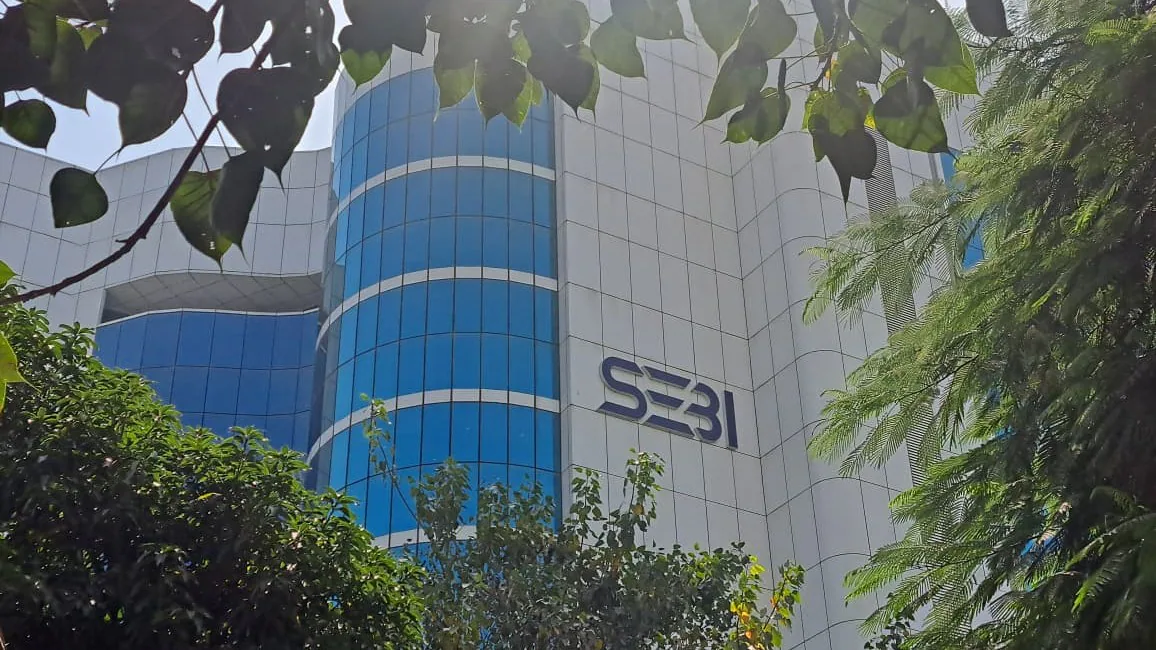

Market regulator SEBI has barred Omaxe Ltd and five promoter-linked entities and individuals from the securities market after finding that company and group funds were routed to purchase Omaxe shares during two 2013 offers-for-sale.
SEBI concluded that the arrangement created an artificial appearance that Omaxe had complied with the mandatory minimum public shareholding requirement of 25%. The regulator also imposed penalties totalling ₹1.92 crore.
Omaxe has been restrained from accessing the securities market for three months. Promoters Rohtas Goel, Sunil Goel and Jai Bhagwan Goel, along with Dream Home Developers Pvt Ltd and Guild Builders Pvt Ltd, have been restrained for one year.
Proposal for Conducting Cyber Crisis Drill, Tabletop Exercise (TTEx) & CCMP Readiness Exercise
₹46.5 crore allegedly routed to buy Omaxe shares
SEBI’s investigation focused on Omaxe’s efforts to comply with minimum public shareholding norms in 2013.
Listed companies were required to ensure that at least 25% of their shares were held by the public rather than promoters.
According to SEBI, funds worth about ₹46.5 crore originating from Omaxe and group entities were routed through DVM Realtors, Garv Buildtech and Jeet Builders before reaching entities that purchased Omaxe shares in the company’s June 3 and October 29, 2013 OFS tranches.
SEBI said those purchases were ultimately funded by Omaxe or its connected entities rather than independent public investors.
The regulator therefore treated the arrangement as indirect financial assistance by the company for the purchase of its own shares.
Buyers took nearly half of June OFS
The scale of the purchases was substantial.
Entities identified in the order bought around 28.5 lakh Omaxe shares in the June 2013 OFS, accounting for 48.29% of the total subscription in that tranche.
In the October OFS, they acquired another 4.92 lakh shares, representing 12.22% of that offering. Altogether, the entities acquired about 33.42 lakh shares through the two OFS rounds.
Those holdings were subsequently counted as public shareholding.
That allowed Omaxe to represent that it had reached the 25% regulatory threshold.
SEBI’s order, however, concluded that the supposedly public purchases were not genuinely independent because of the funding arrangement behind them.
Actual public holding was below 25%, SEBI says
Once shares acquired through the alleged funded arrangement were excluded, SEBI calculated that Omaxe’s genuine public shareholding was only around 14.57% after the June OFS.
After the October offering, it stood at around 19.04%.
Even after taking a later bonus issue into account, the regulator calculated public shareholding at approximately 22.71%, still below the mandatory 25% level.
SEBI Quasi-Judicial Authority N Murugan therefore found that Omaxe had not achieved the prescribed public shareholding level through independent public investors.
The issue is important because minimum public shareholding rules are intended to ensure that a meaningful portion of a listed company remains genuinely available to outside investors rather than remaining economically controlled by promoters.
What minimum public shareholding means
Minimum public shareholding, or MPS, refers to the percentage of a listed company that must be owned by public shareholders.
For most listed Indian companies, the threshold is 25%.
The rule is designed to promote wider ownership, market liquidity and genuine price discovery.
An offer-for-sale is one method promoters can use to reduce their holding and increase public ownership.
But if shares sold through an OFS are effectively purchased using money supplied by the company or its promoter group, the public float may increase only on paper.
That is the core issue in the Omaxe case.
SEBI found that the funding structure created the appearance of independent public participation while the economic source of the money remained linked to Omaxe and its group.
Market bans and ₹1.92 crore in penalties imposed
SEBI imposed a ₹27 lakh penalty on Omaxe.
Rohtas Goel, Sunil Goel and Jai Bhagwan Goel were each fined ₹37 lakh, while Dream Home Developers and Guild Builders were each fined ₹27 lakh.
The total penalty comes to ₹1.92 crore.
Omaxe has also been barred from accessing the securities market for three months.
The five promoter-linked individuals and entities have been restrained from accessing or dealing in securities for one year.
SEBI also found disclosure-related violations and held that the arrangement amounted to a fraudulent and deceptive scheme under securities law and the Prohibition of Fraudulent and Unfair Trade Practices Regulations.
Takeover-rule allegation not established
Not every allegation in the proceedings was upheld.
SEBI did not establish the alleged takeover-regulation violation against the promoter noticees.
The regulator noted that 12 entities alleged to have acted in concert with the promoters were not parties to the proceedings. Making an adverse finding about their status without giving them an opportunity to be heard would have violated principles of natural justice, the order said.
That distinction is important.
The final order establishes SEBI’s findings on the MPS funding arrangement and related violations, but it does not mean every allegation originally examined by the regulator was proved.
The order may also be challenged before the Securities Appellate Tribunal, as is available under securities law.
What this means for you: Minimum public shareholding is meant to reflect genuine ownership by outside investors, not simply a numerical change in shareholding records. For investors, SEBI’s order shows why the source of funds behind an OFS can matter as much as the number of shares technically sold to the public.
Follow for daily updates on cybercrime, corporate fraud, DFIR, hacking, investigations, and digital forensics
