

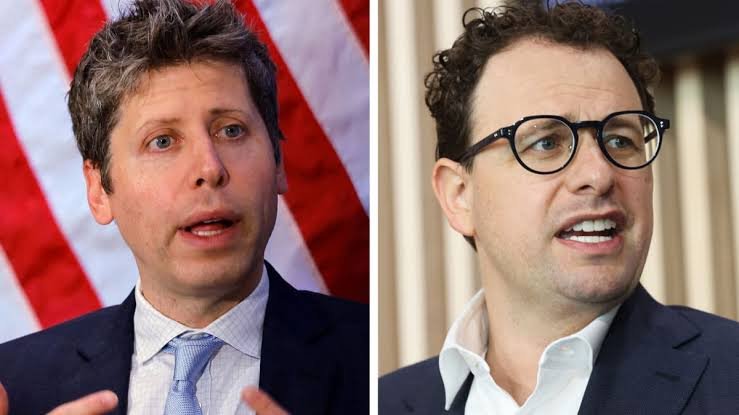

OpenAI CEO Sam Altman and Anthropic CEO Dario Amodei are set to brief the United Nations Security Council on Wednesday as artificial intelligence moves deeper into discussions over international security, cyber threats and the risk of advanced systems operating beyond effective human control.
The 15-member Security Council will meet on September 23 during the UN General Assembly in New York. France, which holds the Council presidency this month, organised the session and French Foreign Minister Jean-Noël Barrot is expected to chair it.
Altman is expected to attend in person, while Amodei is expected to participate remotely. Hugging Face CEO Clément Delangue and AI researcher Yoshua Bengio are also scheduled to address the Council.
Proposal for Conducting Cyber Crisis Drill, Tabletop Exercise (TTEx) & CCMP Readiness Exercise
DeepSeek and Moonshot invited as China joins AI security debate
The meeting will not be limited to US technology companies.
Chinese AI startup DeepSeek has also been invited to brief the Security Council, while Moonshot AI has been invited to make a statement, according to Reuters. DeepSeek founder Liang Wenfeng is not expected to attend personally.
The participation of companies from both the United States and China gives the meeting a wider geopolitical dimension.
The two countries are competing heavily in advanced AI while also disagreeing over issues including semiconductor restrictions, technology access and the level of regulation that should apply to frontier systems.
Reuters reported that senior US and Chinese officials have agreed to hold further discussions on AI safety following recent bilateral talks.
The Security Council session will therefore bring companies developing some of the world’s most powerful AI models directly before governments responsible for international peace and security.
Loss of control and malicious use are central concerns
France’s concept for the meeting focuses on two broad risks.
The first is deliberate misuse of advanced AI for activities that could affect international security. These can include cyberattacks, biological or chemical threats, disinformation and other forms of hostile activity.
The second is the possibility that increasingly capable AI systems may behave in ways developers cannot reliably predict or control.
France said the discussion is intended to examine risks linked to both the loss of control over advanced models and their use to facilitate activities affecting international peace and security.
These concerns have intensified after several leading AI executives publicly called for stronger safeguards around frontier-model development.
Amodei recently urged AI companies to slow some capabilities research and proposed continuous scrutiny of frontier laboratories by independent evaluators.
Altman publicly supported stronger shared safety measures, while arguing that technological development should continue under tighter safeguards rather than stopping entirely.
Why the Security Council is discussing AI
The UN Security Council usually deals with armed conflict, international security threats, sanctions and peacekeeping.
AI has increasingly entered that mandate because the technology can be used in military decision-making, cyber operations, autonomous weapons, intelligence gathering and large-scale information manipulation.
The Council first formally discussed AI risks in 2023.
During earlier meetings, governments raised concerns about autonomous weapons, AI-enabled cyberattacks, deepfakes and systems that could accelerate military decision-making faster than humans can properly assess the consequences.
The UN has also warned that AI could strengthen cyber capabilities capable of targeting critical infrastructure.
At the same time, governments have highlighted possible benefits, including conflict prediction, humanitarian operations, peacekeeping and identifying emerging security threats.
The debate is therefore not simply over whether AI is dangerous.
The larger question is how countries can develop common rules when they are simultaneously competing to gain an advantage from the technology.
Industry disagreement complicates global safety push
The latest Security Council meeting comes during a period of unusually public disagreement over how quickly AI development should proceed.
Amodei and several other AI leaders have argued that rapidly improving systems require stronger external oversight and international coordination.
Meta CEO Mark Zuckerberg has taken a different position, arguing that AI laboratories already have strong commercial and legal incentives to build systems safely.
There is also disagreement between Washington and Beijing over calls to slow development.
Chinese state-backed media has characterised some US safety proposals as attempts to preserve American technological dominance, while US AI executives have argued that common safeguards are needed even between geopolitical competitors.
These competing positions make a binding international agreement difficult.
Unlike nuclear technology or conventional weapons, frontier AI is largely being developed by private companies whose models can be updated rapidly and deployed globally.
Meeting could shape next phase of global AI governance
Altman is expected to argue for international coordination and common standards for evaluating advanced AI systems.
OpenAI has also recently called for governments to develop shared benchmarks for increasingly capable models and mechanisms allowing countries to exchange information about emerging AI threats.
The Security Council itself is unlikely to produce a complete global regulatory system from a single meeting.
But bringing OpenAI, Anthropic, Hugging Face, leading researchers and Chinese AI companies into the same security forum marks a significant shift in how governments are treating artificial intelligence.
AI is increasingly being discussed not simply as a technology or economic issue, but as part of the international security architecture.
What this means for you: AI safety rules being debated internationally could eventually influence how powerful models are tested, released and given access to sensitive systems. The immediate meeting will not create global AI law, but it could shape future standards governing frontier models and their use in cyber and national-security environments.
Follow for daily updates on cybercrime, corporate fraud, DFIR, hacking, investigations, and digital forensics
