

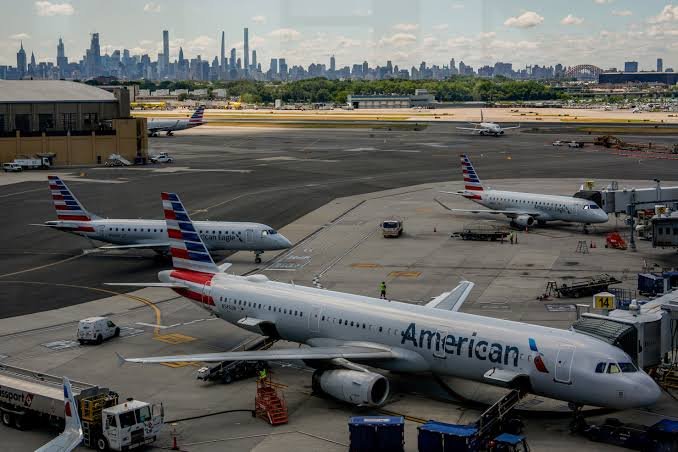

A failed air traffic control circuit and an accidentally severed backup fibre-optic cable disrupted flights across some of the busiest airports in the northeastern United States on Monday, causing thousands of delays and cancellations.
The disruption affected John F. Kennedy International Airport and LaGuardia Airport in New York, Newark Liberty and Teterboro in New Jersey, Philadelphia International Airport and Boston Logan International Airport. More than 100 flights were diverted as controllers struggled with the telecommunications failure.
US Transportation Secretary Sean Duffy said the crisis worsened because a backup communications line in New Jersey had been cut during construction work.
The damaged line was eventually repaired, allowing normal operations to begin resuming on Monday evening.
Proposal for Conducting Cyber Crisis Drill, Tabletop Exercise (TTEx) & CCMP Readiness Exercise
Primary circuit failed as backup line was already damaged
FAA Administrator Bryan Bedford said the incident began when a telecommunications circuit serving the Philadelphia Terminal Radar Approach Control facility failed.
The facility, commonly known as a TRACON, helps controllers manage aircraft approaching and departing major airports in the region.
Under normal circumstances, the system should have shifted to backup communications.
Officials then discovered that the backup fibre-optic connection in New Jersey had also been damaged during construction activity.
That combination left the Federal Aviation Administration with reduced communications and radar capability across critical northeastern airspace.
The FAA responded by restricting traffic and imposing ground stops, meaning aircraft bound for affected airports were held at their departure points instead of being allowed to enter already constrained airspace.
NJ Transit says crew accidentally severed Verizon cable
Duffy initially said an Amtrak construction crew had cut the line.
NJ Transit later said one of its own construction teams working on the Delco Lead project between New Brunswick and North Brunswick had accidentally severed the fibre-optic cable.
The agency said the crew had been working several feet away from markings intended to identify the underground utility line and was investigating whether those markings were accurate.
Verizon confirmed that the damaged infrastructure belonged to the company and said the line had been operational before the construction incident.
The cable was repaired later in the day.
The incident therefore appears to have been an infrastructure and communications failure rather than a cyberattack.
No US authority has said malicious activity was responsible for Monday’s outage.
Newark among hardest-hit airports
Newark Liberty International Airport experienced some of the most severe disruption.
Commercial arrivals were effectively halted for several hours, and more than 100 Newark-bound flights were diverted to other airports. Flight-tracking information cited in reports showed aircraft being sent to more than 30 alternative airports.
JFK and LaGuardia were also placed under restrictions as the problem spread through the region.
Philadelphia experienced prolonged delays and repeated ground stops, while Boston Logan and Teterboro were also affected.
FlightAware data cited by Reuters showed more than 5,600 flights delayed or cancelled across the United States during the disruption, including around 1,200 at the three main New York-area airports.
Passengers continued to face residual delays after the technical problem had been repaired because airlines had to reposition aircraft, crews and passengers.
What a TRACON and backup fibre connection do
A TRACON is an air traffic control facility responsible for aircraft travelling through the busy airspace immediately around major airports.
Controllers use radar, radio and telecommunications systems to maintain safe separation between aircraft arriving, departing and passing through their area.
Those systems require highly reliable communications links.
Backup fibre circuits are intended to provide redundancy. If the primary connection fails, traffic can be shifted to an alternative line so controllers do not lose essential communications.
Monday’s disruption became severe because the main circuit failed while the backup route was unavailable.
That exposed what aviation officials described as a weakness in the architecture supporting the region’s air traffic control system.
Incident renews scrutiny of ageing US air traffic infrastructure
The outage occurred as the US government is already spending billions of dollars to modernise its air traffic control network.
The Department of Transportation on the same day announced a new airspace-management platform called SMART, which combines around 200 data streams to help aviation specialists predict congestion and manage traffic more efficiently.
Duffy said the cable incident reinforced the need for a broader overhaul of ageing communications and air traffic control infrastructure.
The timing also created additional pressure because world leaders and diplomatic delegations were arriving in New York for the United Nations General Assembly.
One aircraft carrying Bulgarian President Iliana Iotova was diverted to Boston before later reaching New York, according to Bulgaria’s state news agency.
The incident shows how failures outside an airport itself can quickly affect aviation across several states.
A single fibre cable was not solely responsible for the disruption. The immediate problem resulted from the combination of the primary circuit failure and the already damaged backup connection.
What this means for you: If a major air traffic control outage occurs, check directly with your airline before travelling to the airport, even if your airport is not where the technical failure occurred. Ground stops and diversions can create knock-on delays across the wider network.
Follow for daily updates on cybercrime, corporate fraud, DFIR, hacking, investigations, and digital forensics
