

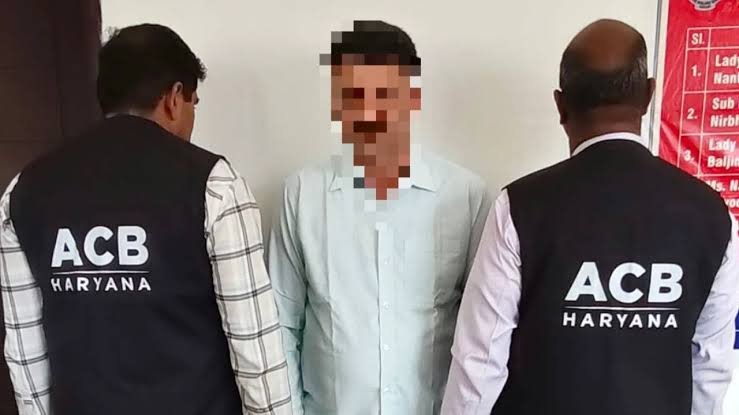

The Haryana State Vigilance and Anti-Corruption Bureau has arrested a Criminal Investigation Department inspector for allegedly accepting a ₹5 lakh bribe in exchange for allowing vehicles carrying mining material to operate without interference.
The accused has been identified as Inspector Rajesh Kumar, posted with the Haryana CID. He was allegedly caught during a trap operation conducted by the bureau’s Kurukshetra unit on September 20.
According to investigators, the alleged payment was not a one-time demand. The complaint claimed that Kumar had sought a recurring monthly payment linked to vehicles travelling between Yamunanagar and Karnal.
Proposal for Conducting Cyber Crisis Drill, Tabletop Exercise (TTEx) & CCMP Readiness Exercise
₹10,000 per vehicle allegedly demanded
The case began with a complaint from a Karnal-based transporter.
According to the Anti-Corruption Bureau, Kumar allegedly stopped vehicles carrying mining material and demanded ₹10,000 per vehicle per month in return for allowing them to operate without interference.
The complainant allegedly asked for the amount to be reduced.
Investigators say Kumar then agreed on September 19 to accept ₹7,000 per vehicle per month. He allegedly collected details of around 70 vehicles, taking the total monthly demand to approximately ₹5 lakh.
The bureau verified the complaint before setting up the trap.
Officials said Kumar was caught while allegedly accepting ₹5 lakh at Umri Chowk. The operation was conducted in the presence of a gazetted officer and a shadow witness.
Mining transport route comes under scrutiny
The alleged demand concerned vehicles transporting mining material between Yamunanagar and Karnal.
Mining-related transport is closely monitored because operators may require valid permits, transit documents and compliance with state rules.
That creates multiple points where vehicles may be stopped for inspection.
The allegation in this case is that official authority was instead being used to seek money in return for uninterrupted movement.
Police have not yet publicly said whether all the vehicles mentioned in the alleged list were operating legally or whether any separate mining violations are being investigated.
The present case is focused on the alleged bribery demand and acceptance.
What the corruption charges mean
A case has been registered at the State Vigilance and Anti-Corruption Bureau police station in Ambala.
The FIR includes Sections 7 and 7A of the Prevention of Corruption Act along with Section 308(2) of the Bharatiya Nyaya Sanhita.
Section 7 of the Prevention of Corruption Act deals broadly with a public servant obtaining or attempting to obtain an undue advantage in connection with official duties.
Section 7A addresses taking an undue advantage to influence a public servant through corrupt or illegal means or personal influence.
The inclusion of these sections reflects the bureau’s allegation that money was demanded in return for favourable official treatment.
These remain allegations at this stage. Kumar’s guilt has not been established by a court.
Haryana has stepped up anti-corruption action
The arrest comes amid a broader effort by Haryana authorities to strengthen the State Vigilance and Anti-Corruption Bureau.
The state government has expanded the bureau’s staffing and investigative capacity in recent months as it deals with corruption complaints and major financial probes.
The Haryana ACB has also carried out several recent trap operations against government officials.
In another case earlier this week in Telangana, two police officials were arrested in an unrelated ₹5 lakh bribery case, underscoring how trap operations remain one of the most commonly used methods for investigating direct cash demands by public officials.
In the Haryana case, investigators will now examine whether the alleged demand involved anyone else, how long payments may have been sought and whether similar amounts had been collected earlier.
The financial records and communications of the accused may also become important if the bureau widens the probe.
The immediate allegation, however, is unusually specific: a monthly rate allegedly fixed per mining vehicle, multiplied across a list of around 70 vehicles.
That is what turned the complaint into a ₹5 lakh trap operation.
What this means for you: If a public official demands money for doing, delaying or avoiding an official duty, document the demand where safely possible and approach the state Anti-Corruption Bureau rather than paying privately. Trap cases depend heavily on timely complaints and verifiable evidence.
Follow for daily updates on cybercrime, corporate fraud, DFIR, hacking, investigations, and digital forensics
