

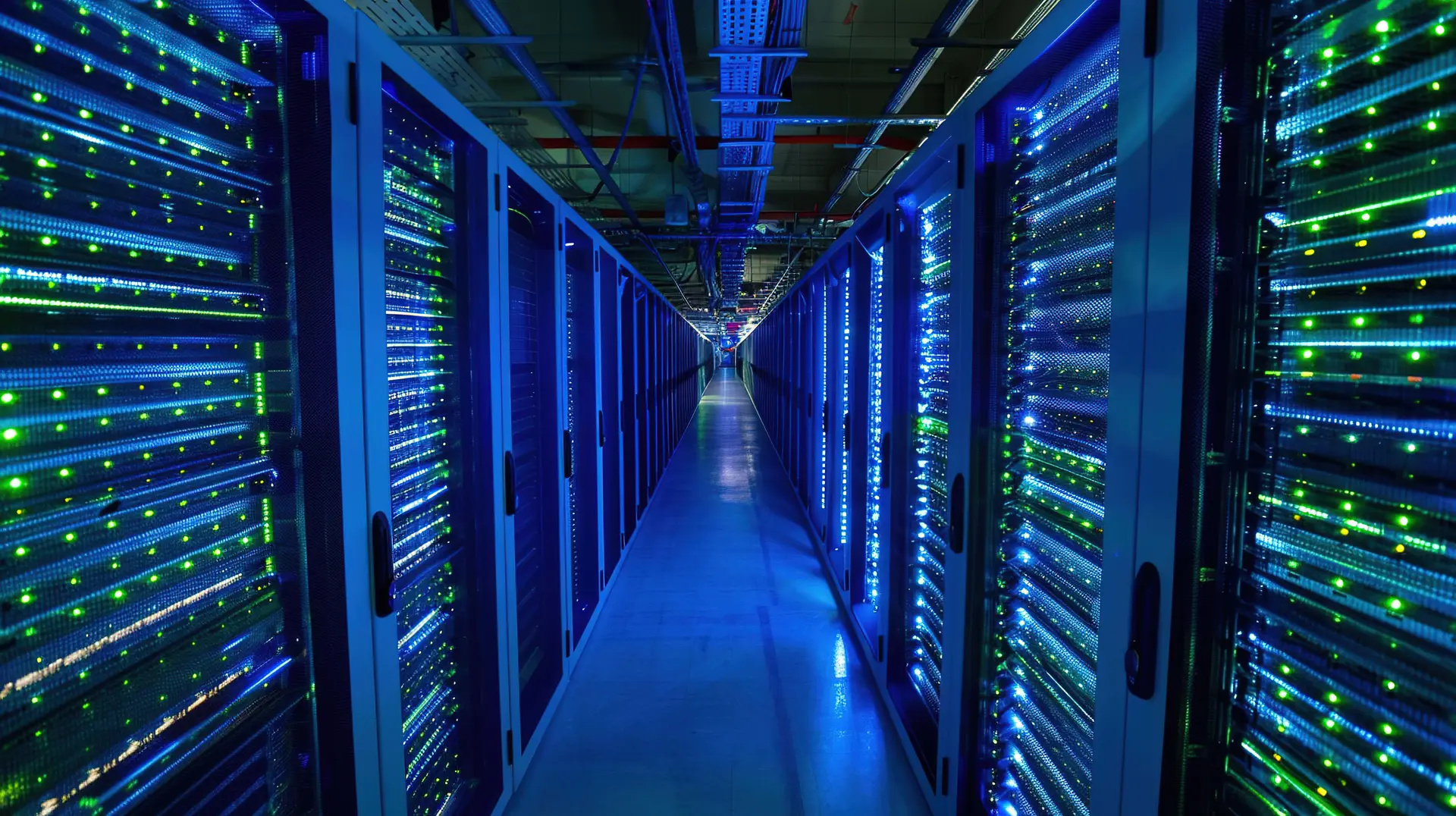

Karnataka has approved a ₹1,300.45 crore data centre policy aimed at strengthening the infrastructure needed to run artificial intelligence, cloud computing and other high-demand digital services.
The state cabinet cleared the Sustainable Data Centre Policy 2026–2031 on Friday. Karnataka is targeting 1 gigawatt of cumulative data centre IT load and wants to account for 10–12% of India’s AI-ready data centre capacity by 2031.
The cabinet also approved a separate ₹120 crore Marine Biotechnology Policy, creating a five-year roadmap to expand Karnataka’s so-called blue bioeconomy.
Proposal for Conducting Cyber Crisis Drill, Tabletop Exercise (TTEx) & CCMP Readiness Exercise
Karnataka wants a bigger share of India’s AI infrastructure
Data centres are the physical backbone behind cloud platforms, AI systems, streaming services and large digital businesses.
They contain thousands of servers that store information and perform computing tasks. AI systems need particularly large amounts of computing power, which is why states are competing aggressively to attract new facilities.
Karnataka IT and Biotechnology Minister Priyank Kharge said growth in AI, cloud computing, 5G, fintech, Internet of Things and Global Capability Centres is creating unprecedented demand for computing capacity.
The new policy has a five-year budget of ₹1,300.45 crore and is intended to position Karnataka as a hub for next-generation digital infrastructure.
The move comes as India’s data centre market expands rapidly. National capacity increased from around 375 MW in 2020 to roughly 1,500 MW by 2025, according to Union government data.
Industry estimates suggest the expansion could accelerate sharply. Anarock has projected India’s data centre capacity could exceed 6.7 GW by 2030, compared with more than 1.8 GW in the first half of 2026.
What “1 GW of IT load” actually means
A data centre’s IT load refers broadly to the electricity required by its computing equipment, including servers, storage systems and networking hardware.
A target of 1 GW therefore does not simply describe the physical size of the buildings. It indicates the scale of computing infrastructure Karnataka wants operating inside them.
That scale brings another challenge: power.
The Union government has estimated that AI data centres could add 26.3 GW of electricity demand across India by 2031–32. That means states trying to attract large data centres will also need reliable grids, renewable power and sufficient cooling infrastructure.
Karnataka had signalled in July that it was preparing a comprehensive data centre policy specifically to support AI and next-generation computing. At the time, officials said reliable electricity and water supply would be central to the strategy.
The competition is already intense.
Maharashtra says it currently accounts for around 66% of India’s data centre capacity and is targeting 5.7 GW by 2032. Uttar Pradesh, meanwhile, has set a target of adding more than 2 GW by 2030.
Cabinet also bets on marine biotechnology
Alongside digital infrastructure, Karnataka approved the Marine Biotechnology Policy 2026–2031.
The state wants to increase the value of its marine-products economy from around $2 billion to between $6 billion and $8 billion by 2031.
The government has allocated ₹120 crore over five years.
Part of the money will be used to establish the Karnataka Institute of Marine Biotechnology and Blue Economy, develop specialised biotechnology zones and create research infrastructure for areas such as genomics, microbiology, marine bioprocessing and bioinformatics.
The policy also proposes a performance-linked incentive scheme for high-value products made from seaweed.
These could include nutraceuticals, biofertilisers, bioplastics, biomaterials, chemicals and biofuels.
A pilot Blue Carbon Certification Programme is also planned. It would measure and certify carbon captured through seaweed cultivation and other eligible coastal ecosystems.
Coastal economy targeted for new jobs and investment
Karnataka has a coastline stretching around 340 km across Dakshina Kannada, Udupi and Uttara Kannada.
According to the state’s economic survey cited by the government, around 10 lakh people are involved in marine and inland fisheries in these coastal districts. Fish production reached approximately 9.63 lakh metric tonnes in 2024–25, compared with around 5.81 lakh tonnes in 2015–16.
The government estimates that the marine biotechnology policy could create around 10,000 direct and indirect jobs.
The two cabinet decisions target very different industries, but both follow the same broader strategy: use public incentives to build specialised infrastructure and attract private investment into sectors the state expects to expand rapidly.
For data centres, the biggest test will be whether Karnataka can provide the enormous electricity, water and land requirements needed for its 1 GW ambition without worsening existing infrastructure pressures.
For marine biotechnology, success will depend on whether research projects and incentive schemes translate into commercially viable products while protecting coastal ecosystems.
What this means for you: Karnataka’s data centre push could bring new technology investment and jobs, but it will also increase pressure on electricity and cooling resources. For businesses and startups, the policy could eventually mean greater access to local AI and cloud infrastructure.
Follow for daily updates on cybercrime, corporate fraud, DFIR, hacking, investigations, and digital forensics
