
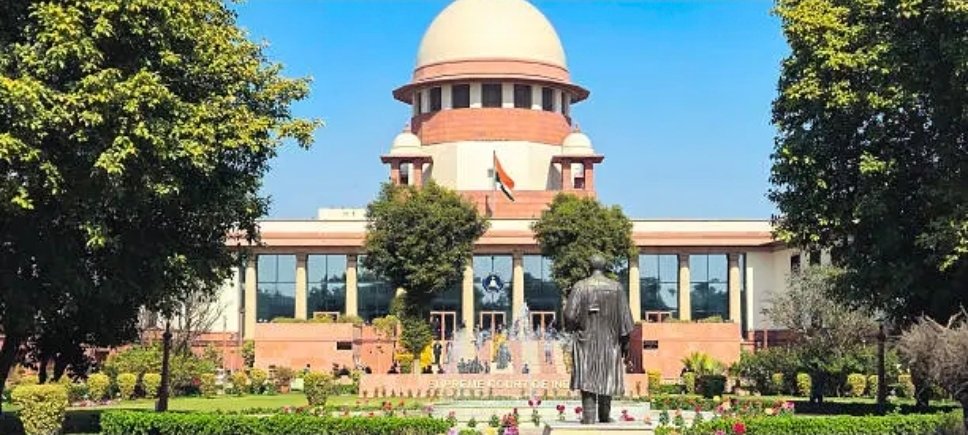
The Supreme Court has ruled that identical work alone cannot establish a right to equal pay without broader parity factors.
What must employees prove for equal pay?
A bench of Justices Dipankar Datta and Sheel Nagu held that an employee cannot establish a claim for equal pay merely by showing that another employee performs identical or similar duties. The claimant must demonstrate broader parity across material conditions governing employment.
The court said relevant factors include the source of recruitment, educational qualifications, experience, the manner in which the appointment was made, and the nature of responsibilities and accountability attached to the post.
It observed that the law on “equal pay for equal work” has evolved from an earlier approach in which similarity of work could be sufficient to seek parity. The present test requires courts to examine whether the groups being compared are equal in all material respects.
“Mere functional similarity of work has been held to be no longer enough,” the court said.
Why can similar jobs carry different pay?
The bench said pay does not depend only on the volume or functional nature of the work performed. Qualitative differences, including responsibility and reliability, may also justify different treatment.
Employees holding the same posts and performing similar work can therefore be paid differently where there is a difference in the degree of responsibility, reliability or confidentiality. Such a classification, however, must be bona fide and reasonable and must have a rational nexus with its objective.
The court further reiterated that educational qualifications, merit and experience can constitute valid grounds for differentiation in pay. Differences in the recruitment process may also be relevant in appropriate cases.
The bench stressed that equal pay must be for “equal work of equal value” and said the doctrine has “no mechanical application” in every case.
Proposal for Conducting Cyber Crisis Drill, Tabletop Exercise (TTEx) & CCMP Readiness Exercise
What was the Kerala teachers’ dispute?
The ruling arose from a dispute involving higher secondary school teachers, junior, in government-aided schools in Kerala. The teachers had been directly recruited under a 1998 government order.
They sought the full-time pay scale and allowances extended to teachers in the same cadre who had entered higher secondary schools through transfer or promotion.
The directly recruited teachers maintained that their qualifications, duties and responsibilities were identical to those of the transferees and promotees. The Supreme Court, however, upheld the distinction in pay after finding that the two groups could not claim equivalence in experience.
The court found that teachers transferred or promoted from lower schools had greater experience, which constituted a valid basis for differential treatment.
How has the equal-pay principle evolved?
The bench traced the development of the law through earlier judgments. It observed that in the last century, equal pay for equal work had been treated as an expansive anti-exploitation principle under Articles 14 and 39(d) of the Constitution.
The position later developed into a more exacting test based on service rules and the circumstances surrounding employment.
In the Kerala dispute, the court held that the greater experience of transferred or promoted teachers was a valid and intelligible differentia connected with the objective of granting them higher pay. The benefit effectively preserved the full-time status and benefits they had enjoyed before promotion.
The judgment makes clear that comparison of day-to-day duties is only one part of the inquiry. Courts must also consider how employees entered service, their experience and qualifications, and the level of responsibility attached to their positions.
When can a court grant pay parity?
The Supreme Court said the equal-pay doctrine can be enforced by constitutional courts, but only after the factors governing parity have been considered.
Where complete parity exists across the relevant factors and equal pay is claimed for work of equal value, a writ court can intervene and grant appropriate relief. Where such parity is absent, the court said, relief need not follow merely because the employees perform similar work.
Applying that test, the bench dismissed the appeals filed by the directly recruited teachers. It affirmed the Kerala High Court’s 2011 judgment that had denied them pay parity with teachers who had entered the higher secondary schools through promotion or transfer.
Follow for daily updates on cybercrime, corporate fraud, DFIR, hacking, investigations, and digital forensics
