

A 65-year-old woman from Noida Extension has allegedly lost ₹24 lakh after cyber fraudsters accused her of links to a drug parcel and hawala transactions, threatened her with arrest and kept her under continuous video-call surveillance for nearly 48 hours.
The woman, a resident of Tech Zone-4, told cyber police that the fraud began with a call from people posing as telecommunications officials. The callers allegedly claimed her Aadhaar details had been used for illegal activity before transferring her to people posing as investigators.
She was later persuaded to transfer ₹24 lakh in the name of an investigation after being told the money would be returned if she was found innocent.
Proposal for Conducting Cyber Crisis Drill, Tabletop Exercise (TTEx) & CCMP Readiness Exercise
Aadhaar misuse claim allegedly triggered the fear
According to the complaint, the woman received an unknown call on October 5, 2025.
The first caller allegedly identified himself as an employee of the telecommunications department and claimed that her Aadhaar card had been linked to criminal activity.
She was told that a case had already been registered and that a warrant had been issued against her.
When she asked for details, the call was allegedly transferred to another person who claimed to be an investigating officer.
That caller told her a parcel being sent overseas in her name had been intercepted and that drugs had been found inside.
The alleged investigators then escalated the accusations by claiming that her identity was also connected to hawala transactions.
This combination of drugs, money laundering and identity misuse is a standard pressure technique documented by India’s cybercrime authorities. I4C warns that fraudsters routinely accuse victims of sending contraband, misusing Aadhaar, receiving illegal money or being linked to criminal financial activity.
Fraudsters allegedly kept her under watch for two days
The woman said the callers kept her connected over video and instructed her to remain available for questioning.
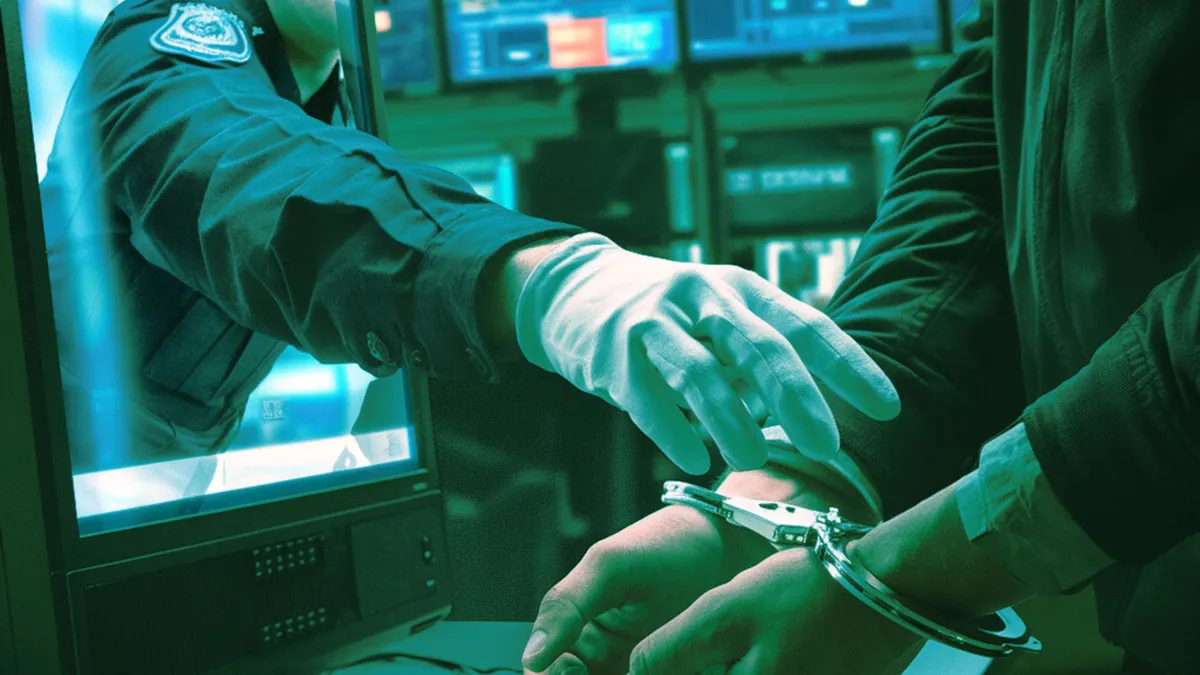
For nearly 48 hours, she was allegedly made to believe that she was under what the fraudsters described as a “digital arrest”.
There is no such legal process.
The Indian Cyber Crime Coordination Centre has repeatedly warned that police, CBI, narcotics officials and other agencies do not place people under arrest through video calls or demand money to clear them in an investigation.
The fake investigation works because the victim is isolated.
Continuous video calls prevent them from speaking freely to family members, banks or genuine police officers who could expose the fraud.
The longer the victim remains under pressure, the easier it becomes for the caller to control the conversation.
₹24 lakh allegedly transferred as part of ‘verification’
On October 7, the fraudsters allegedly instructed the woman to transfer ₹24 lakh from her bank account.
She was reportedly told that the transaction was required as part of the investigation and that the money would be returned once authorities confirmed that she had no connection with the alleged crime.
That promise is another common feature of digital-arrest scams.
Victims are often told their savings are being moved to a “safe account”, “verification account” or government-controlled account.
No genuine investigating agency asks a citizen to transfer personal funds to establish innocence.
After making the payment, the woman waited for the money to be returned.
When that did not happen, she realised she had allegedly been cheated and approached the cyber police.
Telecom and police impersonation is becoming a standard script
The sequence described in the Noida complaint closely mirrors the official digital-arrest template.
A first caller poses as a telecom or regulatory official and claims the victim’s SIM, Aadhaar or phone number is involved in illegal activity.
The call is then transferred to a fake police, CBI or narcotics officer.
The second person makes the accusation much more serious.
Drug trafficking, money laundering, terrorism or hawala allegations are commonly introduced because they create panic and make the victim less likely to question the supposed official.
TRAI has separately warned that criminals impersonate telecom authorities and threaten users with SIM deactivation or criminal proceedings before handing victims over to fake law-enforcement personnel.
Why older victims are frequently targeted
Digital-arrest scams are designed around psychological pressure rather than technical hacking.
The fraudster does not necessarily need malware, stolen passwords or access to the victim’s phone.
Instead, the attacker creates a situation where the victim voluntarily follows instructions.
Senior citizens can become particularly vulnerable when callers combine official-looking documents, police uniforms, government logos and long video calls.
A similar CBI-investigated case involved a senior citizen who was coerced into transferring ₹25.65 lakh after callers falsely claimed her bank account had been linked to terrorism-related activity.
These cases show why genuine personal details do not prove that a caller is legitimate.
Scammers may already possess a victim’s name, phone number, Aadhaar-related information or banking details from earlier data leaks or criminal databases.
Bank accounts now become central to the investigation
Cyber police are examining the beneficiary account into which the ₹24 lakh was allegedly transferred.
That financial trail may help identify mule accounts used to receive the money before it was moved elsewhere.
Investigators will also examine the phone numbers, WhatsApp or video-call accounts and other digital identifiers used during the alleged 48-hour confinement.
The speed of reporting can be critical in such cases.
I4C advises victims to immediately call the national cybercrime helpline 1930 and report the fraud through the National Cyber Crime Reporting Portal so banks and police can attempt to block the funds before they are moved further.
What this means for you
If anyone claiming to be from police, CBI, a telecom department or another government agency says you are under “digital arrest”, end the call immediately. No authority conducts an arrest through WhatsApp or video call, and no legitimate investigator will ask you to transfer money to prove your innocence.
The420 Insight
Digital-arrest scams succeed because they replace evidence with fear. Once victims believe that a warrant, drug case or money-laundering probe is real, criminals can make an ordinary bank transfer look like a legal obligation. The strongest defence is simple: no Indian law recognises digital arrest, and no genuine agency asks for money over a video call.
Follow for daily updates on cybercrime, corporate fraud, DFIR, hacking, investigations, and digital forensics
