

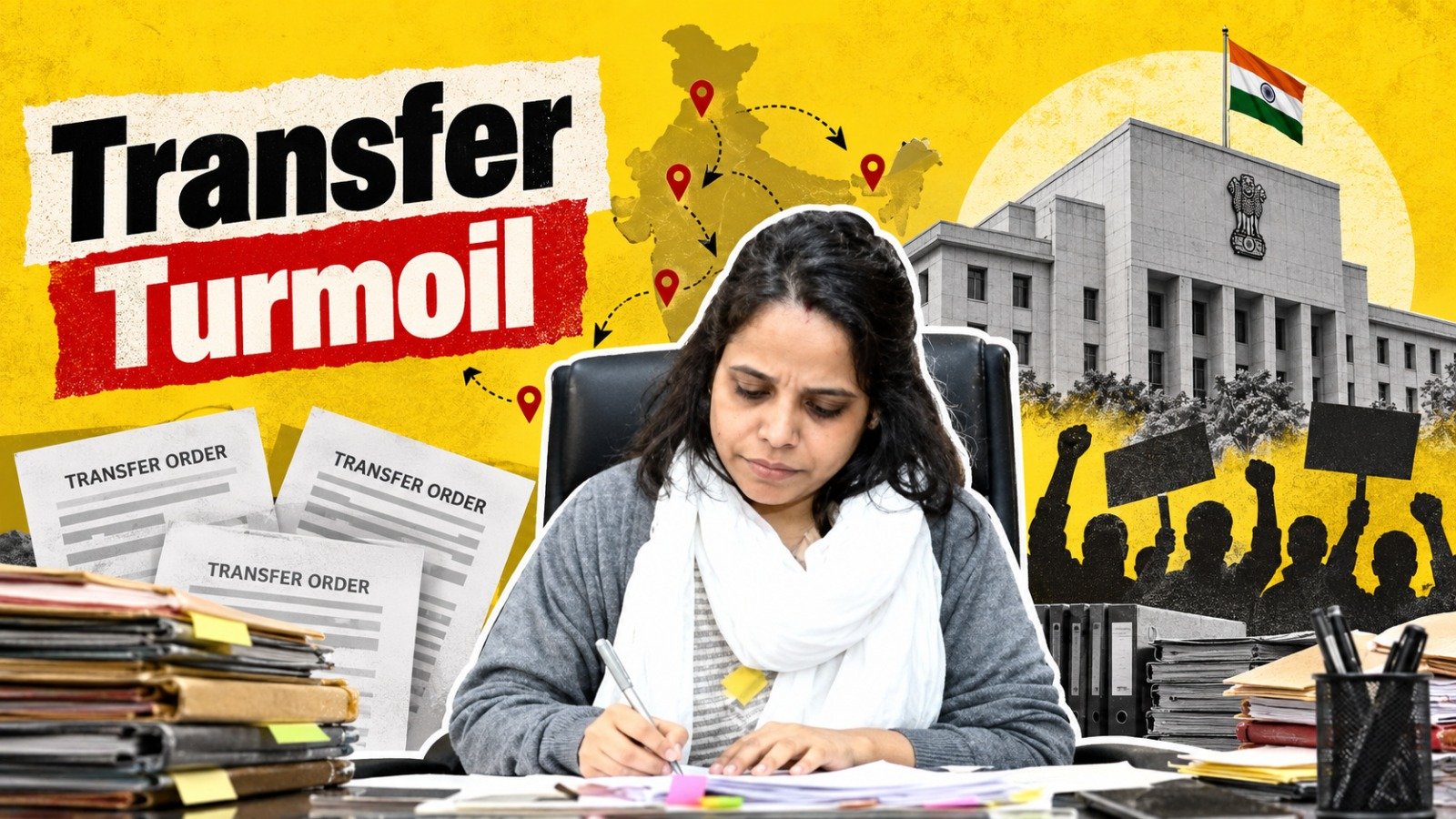

Madhya Pradesh IAS officer Neha Marvya Singh has alleged that a “mutiny” by subordinates led to her fourth transfer in a year, just 50 days after she took charge of her latest assignment.
The 2011-batch officer expressed her anger in a message shared with the Madhya Pradesh IAS Officers’ Association after the transfer list dated September 5, 2026, included her name again. She described the move as humiliating and said repeated short tenures had left her unable to work effectively.
The controversy has brought an internal dispute within the state’s tribal welfare administration into public view. While Singh alleges that employees threatened and undermined her, earlier reporting shows that staff had also protested against her, accusing her of misbehaviour and threats of disciplinary action.
Proposal for Conducting Cyber Crisis Drill, Tabletop Exercise (TTEx) & CCMP Readiness Exercise
Fourth Transfer in a Year Leaves Officer ‘Demotivated’
Singh, 40, had been holding multiple responsibilities connected with tribal development. Following the latest reshuffle, she was assigned the role of Managing Director of the Madhya Pradesh Scheduled Tribe Finance and Development Corporation, with the rank of additional secretary.
The change came less than two months after she took charge as director of the Tribal Area Development Project. According to Singh, it was the fourth time in one year that her name appeared on a transfer list.
Her message acknowledged that the state government has the authority to decide where an IAS officer should serve. She said she had always accepted such orders respectfully, but the circumstances of this transfer had left her deeply disturbed.
The officer questioned how she could understand a department, identify problems and deliver results when she was moved after only a few weeks or months. She said the repeated changes had made her appear vulnerable in the eyes of her own staff.
‘Subordinates Threatened to Get Me Transferred’
Singh alleged that employees whose establishment and administrative control rested with the department, rather than directly with her, had organised what she called a “mutiny”.
She claimed that some subordinates thumped her desk and threatened to have her transferred. She also alleged that files were being withheld and that she had reported insubordination and mistreatment through the proper channels.
Instead of action being taken against the employees, Singh said, she was the one who was moved.
In the message, she questioned whether an IAS officer could become so vulnerable that subordinates could influence their posting through collective pressure. She also urged the IAS Officers’ Association to take her concerns seriously rather than limit itself to routine social interactions.
Her account has not been independently established through a departmental inquiry. The available reports do not identify the specific employees accused of threatening her or confirm that the government accepted their demands while ordering the transfer.
Staff Had Earlier Protested Against Her Conduct
The dispute has another side that is important to the story.
On August 14, employees of the Tribal Area Development Programme staged a pen-down protest against Singh’s working style, according to Free Press Journal. They alleged misbehaviour, threats of suspension and withholding of increments.
The report also said the chairman of the State SC/ST Commission had raised concerns about her functioning and the implementation of tribal welfare schemes.
These allegations are separate from Singh’s claim that she faced a concerted campaign by subordinates. Neither side’s version establishes, by itself, why the government ultimately changed her assignment.
A fair assessment would require the state administration to examine the employees’ complaints, Singh’s reports of alleged insubordination and the reasons recorded for the transfer. Without that material, it would be premature to describe the move either as punishment for an honest officer or as a justified response to staff grievances.
Why Frequent IAS Transfers Matter Beyond One Officer
The controversy raises a larger question about administrative stability.
In its 2013 judgment in T.S.R. Subramanian versus Union of India, the Supreme Court directed the creation of Civil Services Boards and emphasised the importance of secure tenure for civil servants. The Court observed that repeated transfers can harm good governance and make it difficult for officers to implement public policy.
A transfer is not automatically unlawful simply because it happens early. Governments retain the power to move officers, and service rules permit premature transfers in appropriate circumstances.
The issue is whether such decisions are made for legitimate administrative reasons and through the required process, rather than as a response to improper pressure.
For departments handling welfare schemes, unstable leadership can affect continuity. A new officer needs time to understand pending files, review projects, establish accountability and resolve operational problems. Staff grievances must also be addressed fairly so that legitimate complaints are not dismissed as rebellion.
What Happens Next?
Singh’s message has placed the matter before the IAS Officers’ Association, but no publicly verified response from the association or a formal inquiry into her allegations was available at the time of writing.
The state government has not publicly disclosed a detailed explanation linking the transfer to either the staff protest or Singh’s complaints.
The immediate questions are whether the association will seek clarification, whether the department will examine the competing allegations, and whether the officer will receive a stable tenure in her new assignment.
The case is therefore not merely about an officer’s disappointment at being transferred. It is about whether the administration can resolve workplace conflict without allowing either staff pressure or arbitrary postings to undermine the functioning of a public department.
What this means for you: Frequent transfers can affect the continuity of government services, particularly when officers are responsible for welfare and development programmes. Citizens should expect transparent administrative decisions, fair examination of staff complaints and accountability for delays in public work.
The420 Insight: The most important unanswered question is why the transfer was ordered. Singh’s allegation of a staff “mutiny” is serious, but the employees’ earlier complaints also deserve independent examination. A credible inquiry should establish whether there was misconduct, improper pressure or a legitimate administrative reason for the move. The larger enforcement gap is the absence of clear public accountability when repeated transfers disrupt departmental leadership. Without transparent reasons and fair grievance procedures, both officers and employees can lose confidence in the system.
https://www.linkedin.com/company/policetechnology/
