

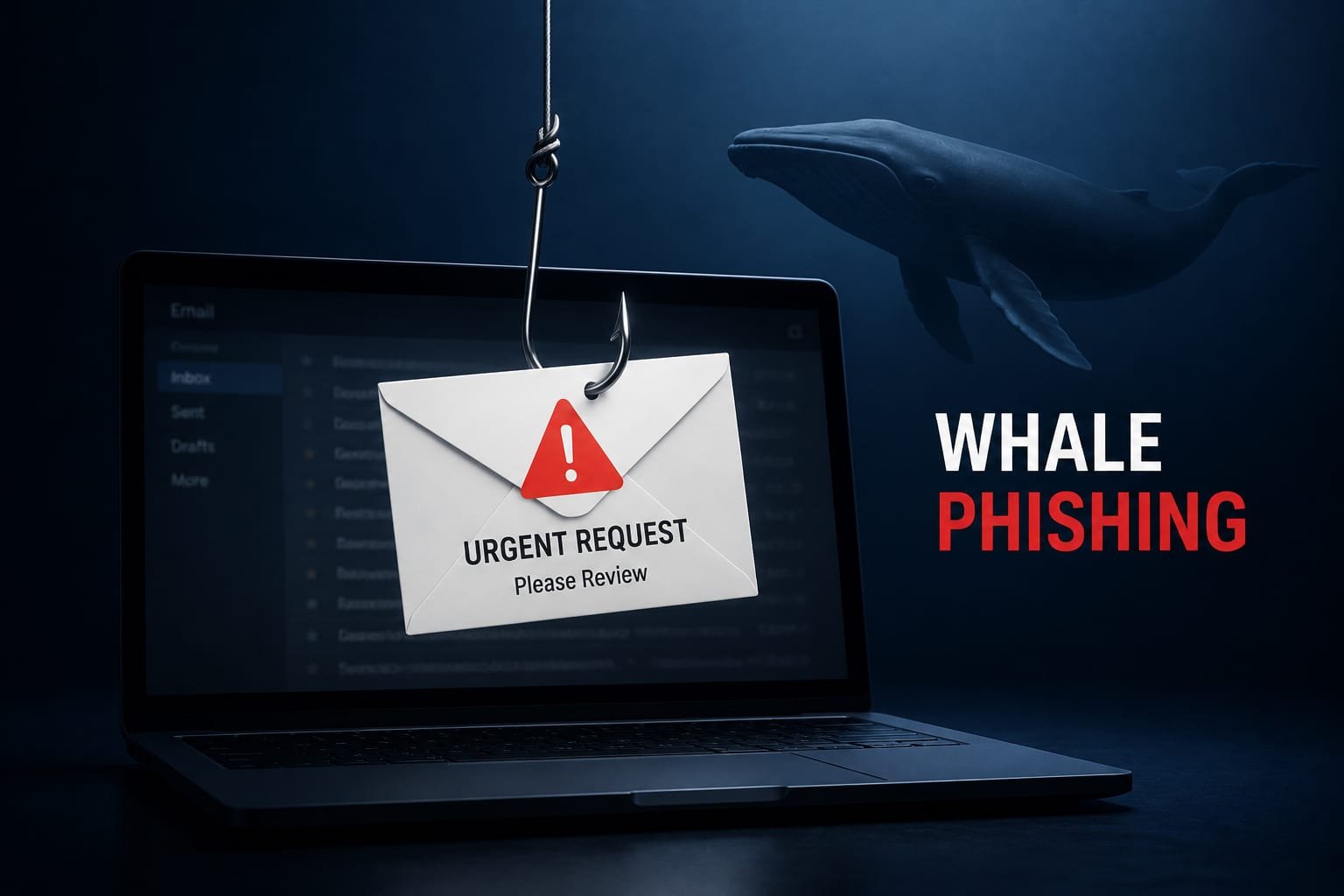
A sugar trader lost around Rs 3 crore after cybercriminals allegedly hacked his account-linked phone and carried out a whale phishing attack. The fraudsters reportedly gained access to sensitive information and used it to carry out large financial transactions.
What is whale phishing?
Phishing is a type of online fraud where criminals pretend to be trusted people or organisations through emails, messages, calls or fake websites to trick users into sharing passwords, bank details or other sensitive information.
Whale phishing is a more targeted form of phishing where attackers specifically choose high-value individuals such as business owners, executives or people handling large financial transactions. In these attacks, criminals often collect personal or professional details about the victim to create convincing messages and gain access to accounts or steal money.
The incident highlights how targeted phishing attacks are becoming more sophisticated, with criminals focusing on individuals connected to businesses and financial accounts.
How the trader became a victim of a targeted cyber attack
According to the report, the trader’s phone was compromised before the fraud took place. After gaining access, the attackers allegedly used the information available through the device to execute the scam.
Whale phishing attacks are designed to target specific individuals, often business owners or people handling large financial transactions. These attacks usually involve carefully planned messages or methods created to appear legitimate.
Algoritha Security Launches ‘Make in India’ Cyber Lab for Educational Institutions
Cybercriminals using advanced phishing methods
Unlike regular phishing attempts that target large groups of users, whale phishing focuses on selected victims. Attackers study their targets and use personal or professional details to make their communication appear genuine.
In this case, the attackers allegedly used access to the trader’s account-related information to carry out the fraud. Such incidents show the growing risks faced by business owners who manage high-value transactions digitally.
Phone security becomes a major concern
The incident also highlights the importance of securing mobile devices, as phones are increasingly connected to banking services, business accounts and communication platforms.
A compromised phone can provide criminals with access to important information, including messages, applications and account details that may help them plan financial fraud.
Why business owners are becoming key targets
Cybercriminals often target individuals involved in businesses because their accounts may handle larger amounts of money. Fraudsters use social engineering techniques to build trust and convince victims to take actions that benefit the attackers.
Experts have repeatedly warned that attackers are moving beyond simple password theft and using more personalised methods to target financial accounts.
Steps users can take to avoid such frauds
Users should avoid clicking on unknown links, installing unverified applications and sharing sensitive information through phone calls or messages. Business owners should also enable additional security measures and regularly monitor account activity.
Any unusual activity, such as unexpected login alerts, changes in account settings or suspicious messages, should be reported immediately to the concerned bank and cybercrime authorities.
Stay alert before trusting any digital request
As cyber fraud methods continue to evolve, users should verify every financial request carefully. A single compromised device or mistaken approval can lead to serious financial losses, making digital awareness an important part of online safety.
About the author — Ayesha Aayat writes on cybercrime, digital safety, and emerging online threats. Her work focuses on public awareness, legal clarity, and technology-driven risks.
Follow for daily updates on cybercrime, corporate fraud, DFIR, hacking, investigations, and digital forensics
