

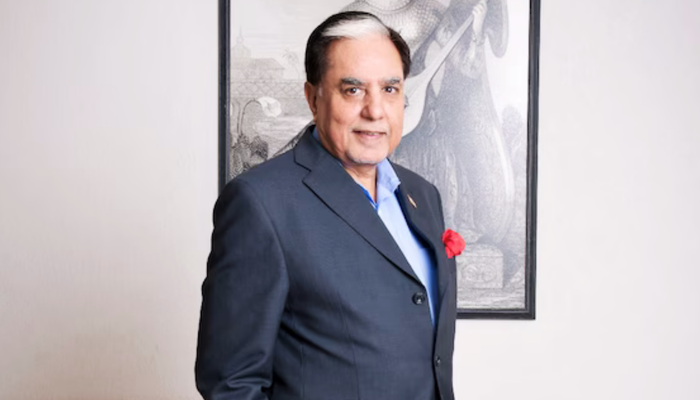
New Delhi: The insolvency proceedings involving Essel Group chairman Subhash Chandra have entered another crucial phase, with the National Company Law Tribunal (NCLT) constituting a five-member bench to hear Indiabulls Housing Finance’s plea against him.
The development comes amid a dispute over a repayment plan in Chandra’s personal insolvency resolution process involving creditor claims of around Rs 22,007 crore. The case also involves guarantees provided by Chandra to lenders.
Five-Member NCLT Bench Constituted
NCLT President Justice Anupinder Singh Grewal on Monday constituted a five-member bench headed by him to hear Indiabulls Housing Finance’s insolvency plea. The matter is scheduled to be heard on Tuesday.
The hearing comes as another major legal challenge involving Chandra’s insolvency case is pending before the National Company Law Appellate Tribunal (NCLAT).
The NCLAT is also scheduled to hear a challenge to an NCLT order that approved a payment of Rs 6.5 crore by Chandra in relation to creditor claims running into thousands of crores.
Algoritha Security Launches ‘Make in India’ Cyber Lab for Educational Institutions
Why Are Lenders Challenging the Repayment Plan?
The dispute centres on how the repayment plan should affect creditors, particularly lenders who have not agreed to the proposal.
On Monday, Solicitor General Tushar Mehta, appearing for LIC Housing Finance, sought an urgent hearing before the NCLAT. He also represented Canara Bank and Union Bank.
Mehta argued that allowing the challenged order to remain in force could undermine the purpose of the Insolvency and Bankruptcy Code (IBC).
The proceedings have become more complicated because the original two-member NCLT bench delivered differing views on the proposed repayment plan.
How Did the NCLT Proceedings Reach This Stage?
The original NCLT division bench comprised judicial member Ashok Kumar Bhardwaj and technical member Reena Sinha Puri. The two members differed on the proposed repayment plan, leading the matter to be referred to a third member.
On August 26, the third member backed the repayment plan. The decision was subsequently sent back to the original division bench for a formal order in accordance with the majority view.
However, when the original bench reconsidered the matter on Monday, it concluded that a clear majority position had still not emerged because of differences between the members’ interpretations.
The matter was therefore referred back to the NCLT President, who constituted the five-member bench to hear the issue.
What Is the Dispute Over Creditors’ Rights?
A central issue is whether the repayment plan should extinguish the claims of creditors who did not accept it.
According to the NCLT proceedings, the technical member rejected the plan, while the judicial member limited its effect to creditors who had accepted and approved it and allowed dissenting creditors to pursue their claims.
The third member, however, approved the plan while applying Section 115(1) of the Insolvency and Bankruptcy Codein a manner that extinguished creditors’ rights more broadly.
This difference in interpretation has become central to the ongoing legal battle and could have implications for how the repayment plan affects dissenting creditors.
What Happens Next in the Subhash Chandra Insolvency Case?
With proceedings continuing before both the NCLT and NCLAT, the insolvency case is likely to remain contested.
The constitution of the five-member NCLT bench, along with the NCLAT challenge, underlines the complexity of the dispute, particularly over the rights of lenders and dissenting creditors.
For Chandra, the latest developments mean that the proposed resolution of his personal insolvency remains subject to further judicial scrutiny.
About the author — Ananya Aradhya writes on cybercrime, fraud, scams, cybersecurity, digital safety, and emerging threats. Her work also covers major criminal cases, financial frauds, consumer scams, and stories that highlight risks affecting people in the real and digital world.
