

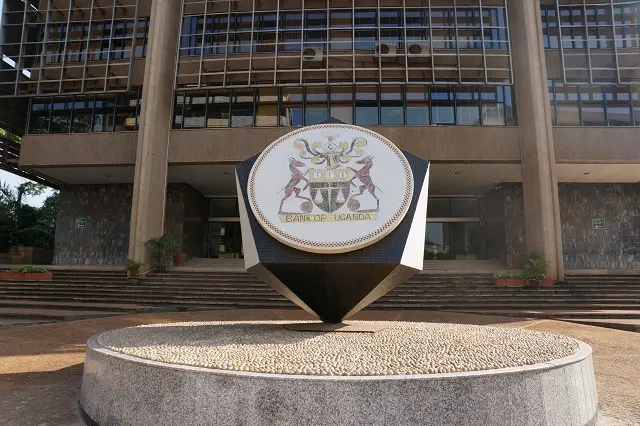

Nine officials from Uganda’s Ministry of Finance and Bank of Uganda are facing trial over an alleged government payment fraud involving around ₹60 billion, with investigators claiming that insiders manipulated electronic payment instructions to divert money meant for international lenders.
The case centres on two government payments made in September 2024. Together, the transactions were worth more than US$14 million, including funds intended for loan repayments to the World Bank’s International Development Association and the African Development Bank’s African Development Fund.
Instead, prosecutors allege that payment instructions were altered and the money redirected towards foreign companies.
A court has now ordered prosecutors to disclose the evidence to the accused officials before the trial proceeds. Anti-Corruption Division Judge David Makumbi directed the prosecution to complete disclosure by September 1 and submit a list of exhibits by September 2, giving the defence time to examine the material.
Algoritha Security Launches ‘Make in India’ Cyber Lab for Educational Institutions
What happened inside Uganda’s payment system?
The case involves Uganda’s Integrated Financial Management System, the government platform used to process and manage public financial transactions.
According to prosecutors, electronic payment files generated through the system were allegedly modified before the payments reached their intended recipients. Details identifying legitimate beneficiaries were allegedly replaced with information belonging to foreign entities.
Investigators further allege that specialised Linux scripts were inserted into the system to alter payment instructions. Emails connected to payment reconciliation at the Bank of Uganda were also allegedly tampered with, while some server logs were reportedly deleted.
Server logs are essentially digital records showing what happened inside a computer system. Deleting them can make it harder for investigators to determine who accessed a system, what changes were made and when those changes occurred.
The allegations therefore point to an important distinction: investigators initially treated the incident as a cyberattack against the Bank of Uganda, but later concluded that it involved alleged internal manipulation of government payment systems.
One payment was stopped after the World Bank raised an alarm
One of the disputed transactions involved more than US$6.6 million intended for a World Bank-related payment.
The transfer was reportedly stopped through the SWIFT system after the World Bank complained that its loan instalment had not been received.
SWIFT is the international messaging network banks use to securely communicate instructions and information about cross-border financial transactions. It does not itself function as a bank account where money is stored, but its messages can trigger transfers between financial institutions.
The prosecution alleges that another US$8.2 million linked to a transfer to MJS International was recovered. However, more than US$6.1 million allegedly sent to Roadway Company Limited, along with another US$391,720, remains unrecovered.
Investigators are now tracing money that allegedly moved to accounts in the United Kingdom and parts of Asia. Cooperation with British banks has helped recover more than half of the money prosecutors say was diverted, while recovering funds sent to Asian countries has proved more difficult.
Nine officials are now facing the legal process
The accused include former Accountant General Lawrence Ssemakula, Jennifer Muhuruzi, systems IT officer Paul Nkalubo Lumala, senior Treasury Services accountant Deborah Dorothy Kusiima, accountant Judith Ashaba and research assistant Bettina Nayebare.
Also facing trial are IT systems officer Mark Kasiiku, senior IT officer Tonny Yawe and Assistant Commissioner for Accounts at the Ministry of Finance Pedison Twesigomwe.
Prosecutors allege that Ssemakula and Muhuruzi failed to take adequate corrective action even after an internal Bank of Uganda inquiry identified irregularities.
The allegations have not been established in court. All nine officials remain entitled to the legal protections available to accused persons, and the court has extended their bail until October 12, 2026.
Court orders full evidence disclosure
The latest court proceedings have focused heavily on whether the defence has received all the evidence needed to prepare its case.
Prosecutors had sought more time to disclose an Auditor General’s report and two statements. Defence lawyers opposed the request, arguing that the court had already ordered full disclosure by July 13 and that documents were continuing to arrive in stages.
Judge Makumbi criticised the piecemeal disclosure and ordered the prosecution to complete the process. The court said the defence should not be disadvantaged by evidence being introduced suddenly during the proceedings.
The defence has also argued that the accused officials have been suspended and are receiving half salaries. Lawyers have asked the court to move the case forward, citing their constitutional right to a speedy trial.
Another unusual claim has emerged during the proceedings. Defence lawyers referred to an alleged instruction from a “Supreme Authority” calling for the officials to be reinstated and spared prosecution. Prosecutors told the court they had no knowledge of such a directive.
The investigation has involved Uganda’s Criminal Investigations Directorate, defence intelligence and security agencies. By the end of 2024, at least 21 employees from the Bank of Uganda, Ministry of Finance and Accountant General’s Office had reportedly been questioned, with mobile phones and laptops subjected to forensic examination.
The investigators are also examining whether some of the money transferred overseas was later brought back into Uganda through cash or goods.
The case now moves towards the October 12 hearing. Beyond determining the responsibility of the nine accused officials, the proceedings could expose how deeply the alleged manipulation penetrated Uganda’s public payment infrastructure and whether existing controls were capable of detecting it before millions of dollars left the system.
What this means for you: Government payment systems are designed to move public money through multiple checks, but this case shows why digital controls alone are not enough. Independent verification, tamper-resistant audit records and rapid detection of unusual beneficiary changes are critical when large public payments are involved.
