

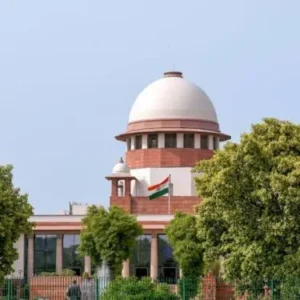
The Supreme Court has said it will constitute a high-powered committee comprising retired judges, a former director general of police, an ex-CBI director and others to examine allegations of police excesses against student protesters in Delhi. The proposed panel will also examine complaints made by female protesters and review video footage and CCTV recordings linked to violence during the July 20 Parliament march.
A bench comprising Chief Justice Surya Kant and Justices Joymalya Bagchi and V Mohana said an order constituting the committee would be released on Wednesday after suggestions are received from different parties regarding other members to be included in the panel.
High-Powered Panel to Examine Police Action
The court said video footage and CCTV recordings of the violence during the July 20 march would be handed over to the committee for examination. The panel would also look into complaints and allegations by female protesters who were reportedly targeted during the march in Delhi and other areas.
The bench asked Solicitor General Tushar Mehta to furnish details of FIRs implicating student protesters that are to be quashed, indicating that the court may exercise its plenary powers under Article 142 of the Constitution.
Emphasising the consequences criminal proceedings could have for students, the bench said their future was at stake and referred to their right to protest under Article 19. The observation came while the court was hearing arguments opposing the quashing of cases against student protesters without an apology from them.
Mehta told the court that police had identified more than 2,800 people described as “anti-social elements”, who he said had been involved in serious offences in the past, as responsible for the violence during the July 20 protest.
Court Reviews FIRs Against Student Protesters
The Supreme Court had on August 3 clarified that the expression “criminal antecedents” in its order concerning the release of student protesters applied only to those involved in grave and heinous offences. It said states could close or withdraw FIRs against the remaining students in accordance with law.
The clarification followed the Centre’s submission that it was serious about not pursuing FIRs against students who participated in the NEET examination paper leak protests, including the July 20 Parliament march in Delhi, provided they did not have criminal antecedents.
The court’s latest directions bring both the allegations of police action and the criminal cases involving protesters under scrutiny. Details of the FIRs sought by the bench could form part of its consideration on whether cases against students should be quashed.
Supreme Court Reaffirms Right to Peaceful Protest
The top court had earlier observed that police excesses or a “lathi charge” could not be justified merely because an agitation was taking place. It also underlined that the right to peaceful protest was “absolutely guaranteed”.
The July 20 march in Delhi, led by the Cockroach Janta Party (CJP), saw clashes between protesters and security personnel as crowds attempted to move towards Parliament. Security personnel used lathis and tear gas shells to disperse the protesters.
With the proposed committee, the Supreme Court has moved to establish an independent examination of allegations surrounding the police response. Its remit is expected to include the available video and CCTV material as well as complaints from female protesters, while the court separately considers the status of FIRs registered against students.
