


In the landscape of global law enforcement, the investigation of online child sexual exploitation presents a fundamental reversal of traditional criminal procedure. Rather than initiating a probe at a physical crime scene and gathering physical evidence to identify a perpetrator, specialized forensic investigators must begin with digital artifacts—photographs and videos circulating across encrypted networks—and systematically trace them back to an unidentified victim in a real-world location.
Across India and the wider international community, this reverse-engineered methodology forms the core of global victim identification protocols coordinated by INTERPOL. Working in close alignment with national law enforcement agencies, including the Central Bureau of Investigation (CBI) in its capacity as India’s National Central Bureau in New Delhi, victim identification specialists deploy advanced visual analytics and global intelligence databases to dismantle transnational exploitation rings and rescue vulnerable children from ongoing harm.
Reverse-Engineering the Digital Crime Scene
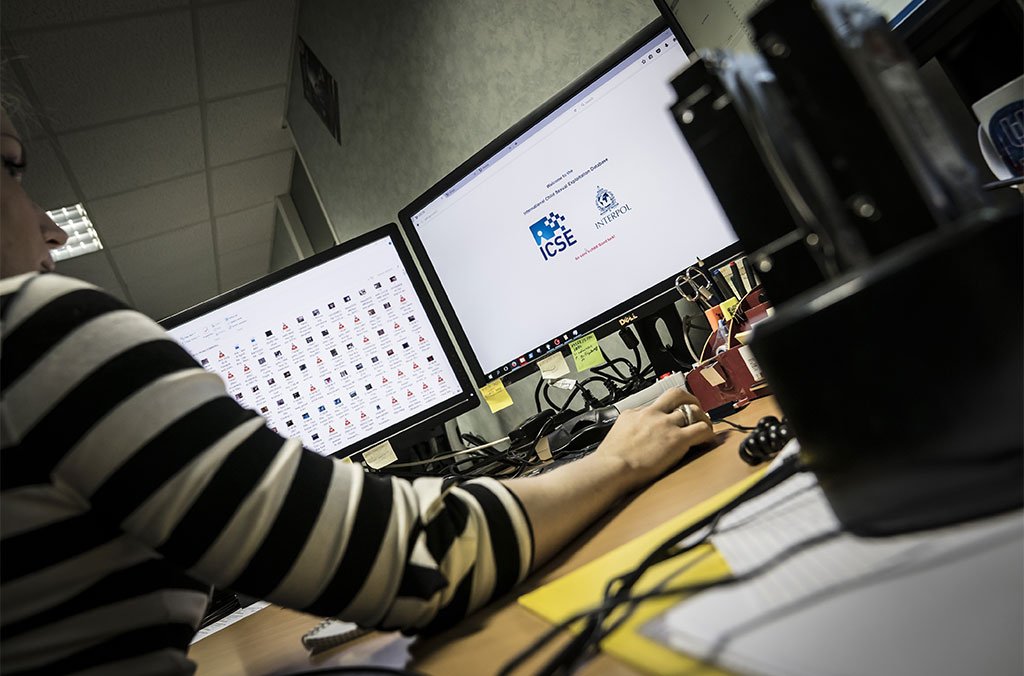
The primary technological engine powering this international response is INTERPOL’s International Child Sexual Exploitation (ICSE) database, a secure global intelligence repository holding more than 62 Lakh images and videos. The database operates as a centralized analytical nexus, utilizing perceptual hash matching and sophisticated image comparison software to discover hidden connections between seemingly disparate investigative files across member nations.
When law enforcement officers uncover illicit digital material during targeted cyber raids, proactive platform monitoring, or forensic audits of seized electronic storage devices, the media is ingested directly into the ICSE system. Specialized visual forensic analysts meticulously examine every square millimetre of an image, dissecting background artifacts such as electrical wall outlets, window frame designs, localized retail packaging, or distinctive furniture patterns to pinpoint a precise geographic origin.
Even minor environmental indicators, such as ambient acoustic profiles in video recordings, localized wall paint textures, or regional language markings on everyday consumer goods, can unlock an entire case. By converting subtle visual clues into actionable geographical intelligence, forensic teams eliminate operational blind spots and prevent multiple international police departments from independently spending valuable resources investigating identical series of images.
Cross-Border Intelligence and Institutional Interoperability
Because digital evidence moves frictionlessly across international borders, isolated domestic investigations frequently encounter insurmountable jurisdictional limitations. To bridge these operational divides, INTERPOL regularly convenes specialized Victim Identification Task Forces, bringing together law enforcement personnel and authorized civilian forensic analysts from more than 75 member countries for intensive, multi-agency analytical sessions.
To date, actionable leads generated through the ICSE platform have enabled global law enforcement agencies to identify and safeguard more than 59,400 child victims worldwide, while facilitating the arrest of over 6,200 perpetrators. By maintaining an unwavering operational focus on victim identification rather than mere content blocking, investigators prioritize extracting vulnerable individuals from immediate physical danger before pursuing criminal prosecutions against bad actors.
For India, where smartphone adoption and high-speed mobile data have expanded rapidly across tier-two and tier-three cities, domestic alignment with international intelligence networks has become an urgent operational necessity. The Central Government has repeatedly urged state police forces to strengthen dedicated cyber crime units, ensuring seamless technical integration with the CBI during major operations targeting cloud storage networks hosting illicit material.
Algorithmic Analytics and the Human Imperative
The technological posture of victim identification is undergoing rapid transformation through the integration of artificial intelligence and machine learning models. Modern computer vision systems can automatically categorize vast volumes of incoming media, flagging overlapping image sequences, calculating facial recognition metrics, and prioritizing high-risk cases where victims appear to be in active danger.
However, international law enforcement authorities emphasize that automated software serves merely as an operational force multiplier rather than a substitute for human analytical rigour. Forensic investigators undergo specialized psychological and technical training to interpret complex contextual nuances, verify visual matches, and ensure that collected evidence meets the rigorous evidentiary standards required for prosecution in court.
The Union Ministry of Home Affairs and international policing bodies continue to emphasize that establishing effective victim identification capabilities requires sustained institutional commitment. As cybercriminals increasingly pivot toward end-to-end encrypted messaging services and decentralized storage architectures, expanding cross-border data-sharing protocols and establishing dedicated forensic units remain critical safeguards for protecting vulnerable citizens across the digital landscape.
Follow for daily updates on cybercrime, corporate fraud, DFIR, hacking, investigations, and digital forensics
