

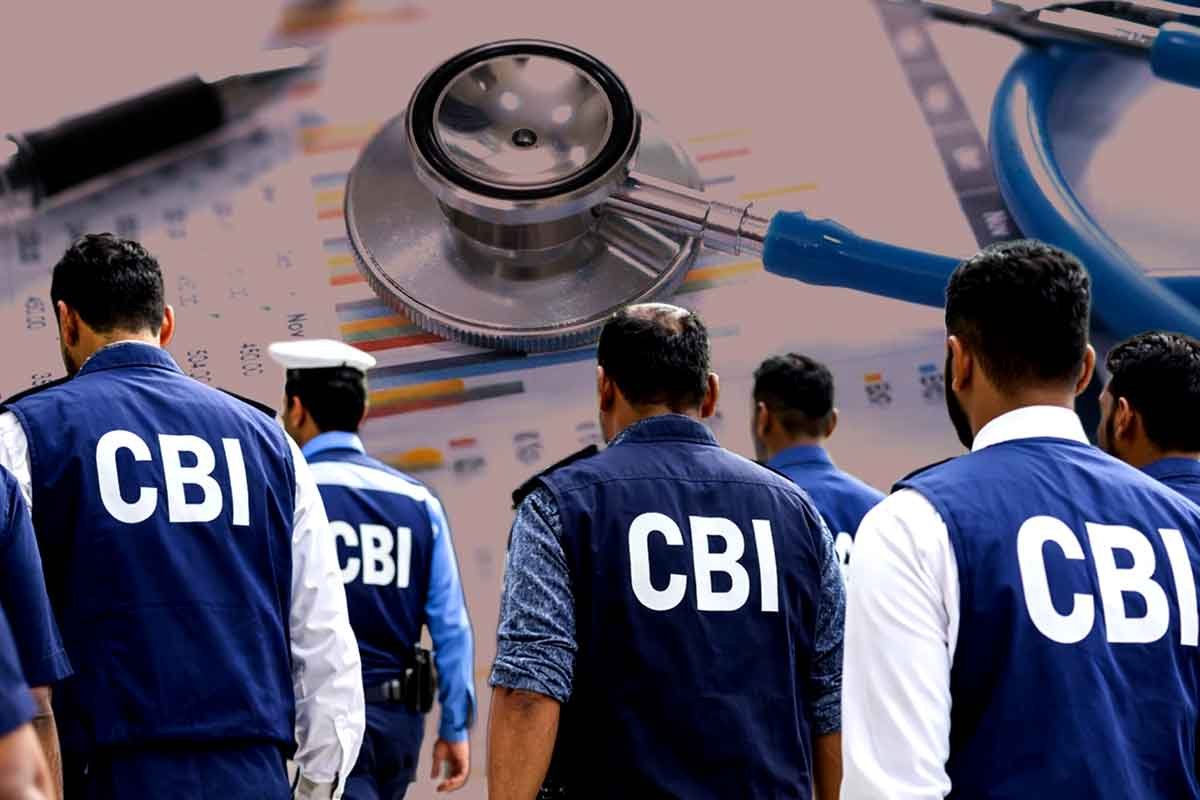

As the Central Bureau of Investigation (CBI) deepens its probe into the NEET-UG 2026 paper leak case, significant security vulnerabilities within the national examination infrastructure have come to light. Investigation findings indicate that the leak did not stem from an external digital intrusion or cyber criminal syndicate, but rather from internal procedural flaws during the paper setting and translation stages. Authorities have arrested 13 individuals thus far, including educators and intermediaries, as the agency recommends critical structural overhauls to the National Testing Agency (NTA).
According to investigative disclosures, a primary vulnerability in the security protocol involved assigning both question creation and regional language translation to the same group of educators. Three teachers—P.V. Kulkarni for Chemistry, Manisha Gurunath Mandhare for Physics, and Manisha Sanjay Havaldar for Biology—were tasked with preparing the primary question paper as well as translating the content into Marathi.
While the educators were kept under secure conditions during their operational hours, existing protocol allowed them to return home in the evenings. Investigators suspect that during these unmonitored periods, specific examination questions were memorized, transcribed offline, and covertly passed out of the secure perimeter to external conduits.
The leaked questions were initially passed off as curated revision materials, with selected candidates informed that the content comprised high-priority practice topics rather than actual examination questions. The material quickly spread beyond its initial circle through a coordinated network of brokers and local contacts operating across multiple states.
The probe revealed that a local beautician, identified as Manisha Waghmare, allegedly obtained the handwritten questions, transcribed them digitally, and formatted them to resemble a formal test paper. This formatted document was then sold to an intermediary named Dhananjay Nivrutti Lokhande, who circulated it through a commercial broker network charging lakhs of rupees per candidate.
In light of the procedural breaches uncovered during the inquiry, the CBI has submitted formal policy recommendations to the NTA to fortify future competitive examination security. Chief among these proposals is the strict segregation of paper preparation and translation duties, ensuring that no single individual or panel maintains end-to-end access to the final multilingual test repositories.
The central government handed the case over to the CBI to ensure an impartial multi-state inquiry into the integrity of India’s primary medical entrance test. With 13 individuals currently in custody, investigators are executing a comprehensive audit of bank accounts, electronic devices, and communication channels to trace the full extent of financial transactions and uncover additional network operatives.
Follow for daily updates on cybercrime, corporate fraud, DFIR, hacking, investigations, and digital forensics
