

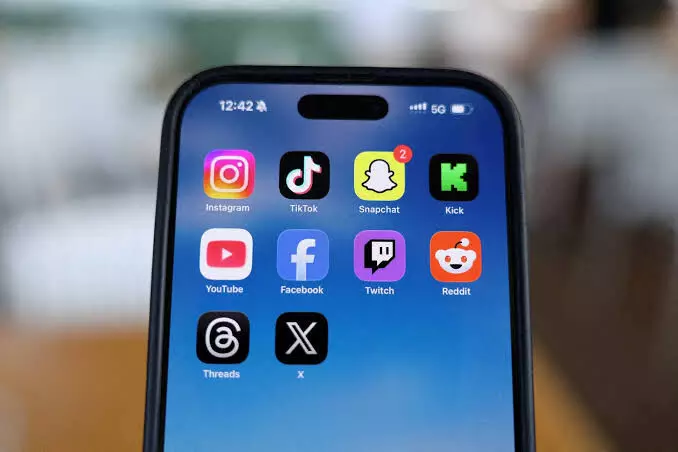

A Public Interest Litigation (PIL) has been presented before the Delhi High Court requesting the establishment of a comprehensive nationwide legal framework to prohibit children under the age of 13 from accessing social media platforms. The petition also advocates for stringent digital safeguards for adolescents between the ages of 13 and 16, including the potential implementation of an overnight digital curfew and mandatory age verification mechanisms. Filed by Kirti Dua, the mother of a three-year-old child, and paediatrician Dr. Sharad Gupta, the plea names key Central ministries, the National Commission for Protection of Child Rights (NCPCR), and major technology corporations such as Meta, Alphabet, Telegram, Snap Inc., and X Corp. as respondents.
Judicial Proceedings and Bench Recusal
The public interest litigation was listed for preliminary hearing before a Division Bench comprising Chief Justice Devendra Kumar Upadhyaya and Justice Tejas Karia. However, during the initial session, Justice Karia recused himself from hearing the matter. Following the recusal, the High Court ordered that the case be re-assigned and placed before a newly constituted Bench, excluding Justice Karia, with the next hearing scheduled for August 5.
The petition highlights that current safeguards implemented by social media platforms remain largely voluntary and easily circumvented by tech-savvy minors. By using fake dates of birth, temporary email addresses, or unverified secondary profiles, underage users routinely bypass existing age gates. Consequently, the petitioners emphasize that direct judicial and legislative intervention is necessary to institute legally binding parameters rather than relying on self-regulation by commercial entities.
Fundamental Rights and Statutory Frameworks
In their legal submissions, the petitioners contend that unrestricted exposure to algorithmic recommendation feeds, explicit materials, and online harassment directly threatens the physical, emotional, and psychological well-being of young children. The plea asserts that the unchecked proliferation of addictive platform features—such as infinite scrolling and automated content playback—exploits developing cognitive faculties for engagement purposes.
The petition argues that this lack of effective oversight constitutes a violation of children’s fundamental right to life and personal liberty guaranteed under Article 21 of the Constitution of India. It further submits that the state is failing in its constitutional obligation under Article 39(f), which mandates the protection of youth and childhood against exploitation and moral abandonment. Although federal frameworks such as the Information Technology Act, the Digital Personal Data Protection Act, and the Protection of Children from Sexual Offences (POCSO) Act exist, the plea argues that administrative enforcement remains insufficient to prevent harm in cyberspace.
Proposed Regulatory Measures and Technical Guardrails
To address these vulnerabilities, the petition outlines several key structural recommendations for federal regulators and technology intermediaries. Chief among these is a complete legal ban on social media access for children under 13, coupled with restricted content environments for adolescents aged 13 to 16. The petitioners also advocate for a night-time social media curfew for minor users to prevent sleep disruption and late-night digital exposure.
Furthermore, the plea calls for mandatory digital age verification protocols, comparing the required technical rigor to secure frameworks like DigiYatra, to ensure robust identity authentication before profile creation. Social media companies would also be mandated to instantly remove child sexual abuse material, deploy proactive AI content filtering systems, and implement stricter compliance measures under existing intermediary guidelines. The High Court has not yet expressed any opinion on the merits of the petition, and its maintainability will be examined during the upcoming hearing on August 5.
Follow for daily updates on cybercrime, corporate fraud, DFIR, hacking, investigations, and digital forensics
