

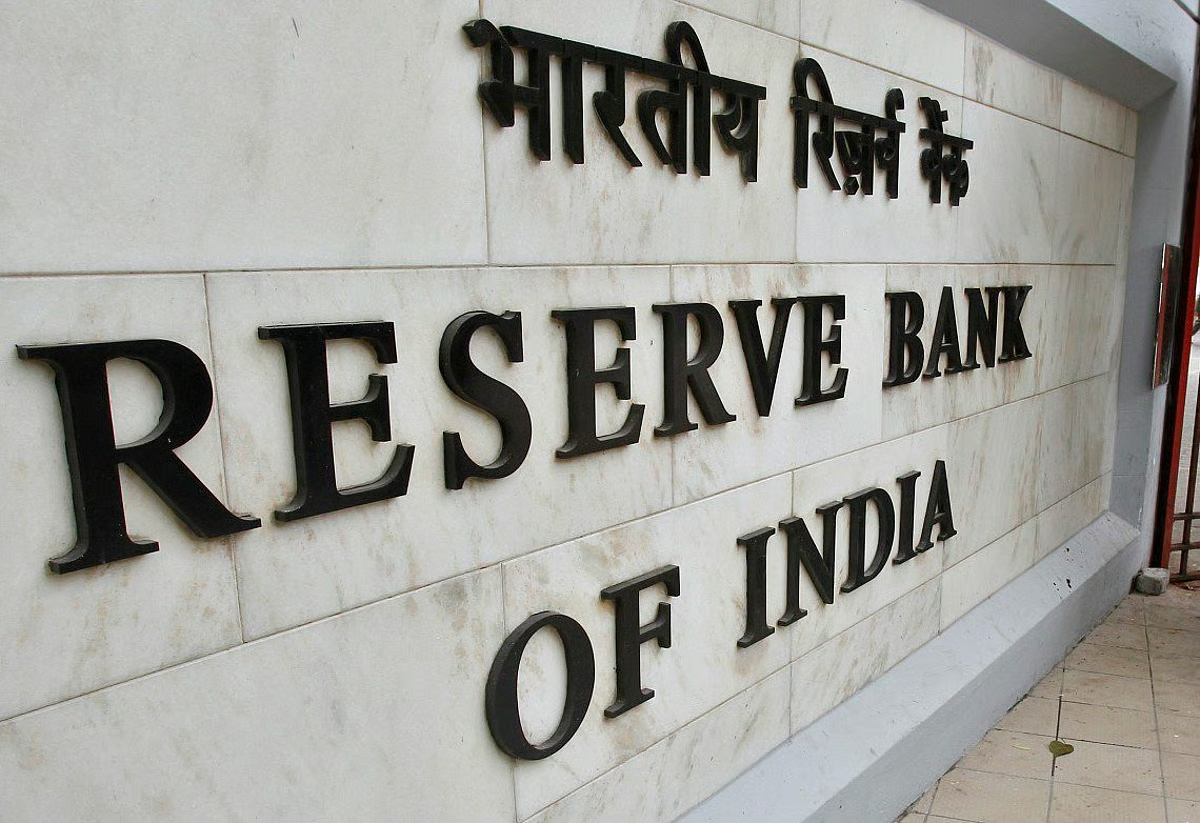

The Reserve Bank of India’s currency chest in Lucknow has detected counterfeit banknotes totaling approximately ₹1.80 lakh between 2020 and 2026. Official findings reveal a deliberate tactical shift by counterfeiters away from high-value notes toward low-denomination currency, specifically ₹20 and ₹50 bills. Enforcement agencies note that counterfeiters are exploiting low public scrutiny during routine, high-velocity cash transactions, allowing low-value fake notes to circulate freely through local markets without raising immediate suspicion.
The pattern of fake currency deposits came to light through a series of formal police complaints lodged by central banking officials. Forensic experts and law enforcement agencies have initiated technical audits of the seized bills to determine the paper quality, ink composition, and printing methods utilized by the counterfeit network, while efforts are underway to trace the supply chain behind their distribution.
Serial FIR Filings and the Mechanics of Low-Denomination Fraud
The systemic nature of the issue is documented in a detailed First Information Report filed at the Mahanagar Police Station on May 26 by Surendra Kumar Dubey, the former Assistant Manager at the RBI. The complaint detailed specific recoveries from the currency chest, including counterfeit ₹100 notes detected in April and fake bills worth ₹4,000 uncovered in February 2026. Over the six-year tracking period, the RBI has consistently registered criminal cases, filing 11 FIRs in 2020, 10 in 2021, 11 in 2022, 10 in 2023, 8 in 2024, 10 in 2025, and 4 FIRs so far in 2026.
Investigators highlight that small-value bills are uniquely effective for criminal syndicates because the general public rarely verifies security features during low-amount retail purchases. Furthermore, the optical quality of modern counterfeit notes occasionally bypasses automated commercial sorting machines at the initial point of deposit, requiring specialized physical examination by banking handlers to confirm fraudulent origin.
Forensic Diagnostics and Public Verification Protocols
Mahanagar Police Station Inspector Akhilesh Mishra confirmed that recovered banknotes have been dispatched to government security printing presses and forensic science laboratories. Authorities are analyzing physical evidence to map the distribution infrastructure and identify the syndicates manufacturing the notes. Law enforcement officials emphasize that tracking fake currency remains complex due to the multiple hands through which cash passes before reaching official banking channels.
To combat the spread of counterfeit bills, financial authorities urge citizens and merchants to inspect security features during cash transactions. Genuine Indian banknotes feature a faint Mahatma Gandhi watermark and denomination value visible against light, alongside raised intaglio printing on the Ashoka Pillar emblem and Governor’s signature. Additional verification markers include a color-shifting security thread, see-through register alignment on the lower left, and tactile diagonal bleed lines along the edges of higher-value notes designed to assist visually impaired handlers.
