

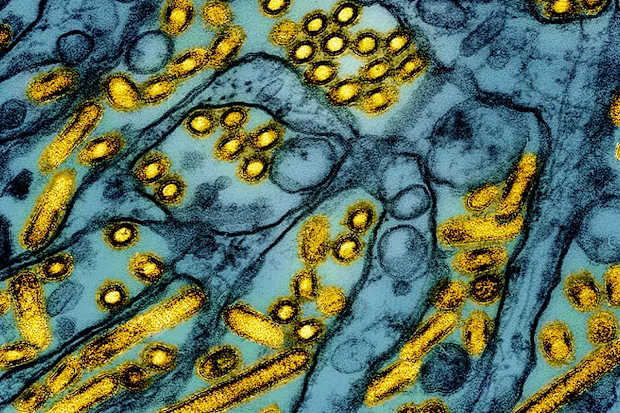
The highly contagious H5 strain of bird flu, which has caused widespread outbreaks among birds and several mammal species across the globe, has now been detected on every continent after Australia confirmed its first case. The development has heightened concerns among public health authorities, wildlife conservationists, and agricultural agencies worldwide. Australian officials said the virus was identified in a migratory seabird, ending the country’s status as the last continent free from the globally circulating H5 strain.
Australia’s Agriculture Minister Julie Collins announced that the virus had been confirmed in a brown skua, a migratory seabird found in a remote region of Western Australia. The infection was verified through testing conducted by the country’s national scientific agency. Authorities also reported that samples collected from a sick giant petrel discovered in the same area had produced a suspected positive result and were undergoing further analysis.
Registration Begins for FutureCrime Summit 2026, India’s Largest Cybercrime Conference
Global Expansion and Species Adaptation
Experts say the H5 strain has spread rapidly across numerous countries over the past several years, causing severe disease and high mortality rates among poultry and wild bird populations. While Australia had remained free from the strain despite its global expansion, the latest detection means the virus is now present on every continent, marking a significant milestone in the ongoing international outbreak.
Scientists have observed that the H5 strain has had the greatest impact on waterfowl, shorebirds, seabirds, and birds of prey. However, the virus has also been detected in a growing range of mammal species around the world. Cases have been reported in marine mammals as well as animals such as cats, goats, alpacas, and pigs, raising concerns about the virus’s ability to infect multiple species and adapt to different hosts.
The viral transit network highlights a highly volatile dissemination loop. The progression initiates with migratory pathways, where avian routes from sub-Antarctic ecosystems transport the active pathogen across vast oceanic divides. This transitions directly into wildlife intersection, causing rapid spillover from wild waterfowl and shorebirds into vulnerable marine and land mammals. The cycle concludes with domestic exposure risk, threatening commercial poultry infrastructures and demanding real-time bio-security containment.
The Vulnerability of Unique Ecosystems
Government officials emphasized that there is currently no evidence of infection in commercial poultry operations and no reports of mass bird deaths within Australia. Nevertheless, the discovery has prompted authorities to treat the situation seriously. An emergency meeting of animal health and agricultural officials has already been convened to assess the risks and coordinate a national response aimed at monitoring and containing any potential spread.
Wildlife experts warn that the arrival of H5 bird flu poses a unique threat to Australia’s biodiversity. Nearly half of the country’s wild bird species and approximately 83 percent of its mammal species are found nowhere else on Earth. As a result, any large-scale outbreak could have serious consequences for native wildlife populations, including species already facing conservation challenges.
Sub-Antarctic Origins and Local Protection Measures
Australia’s Threatened Species Commissioner, Fiona Fraser, said authorities have developed plans to help protect 35 vulnerable species through enhanced conservation measures, including captive breeding programs where necessary. Species considered particularly vulnerable include the Tasmanian devil, black swan, little penguin, and Australian sea lion. Fraser cautioned that a widespread outbreak could have population-level impacts on several native species and potentially affect long-term conservation efforts.
Officials believe the virus may have entered Australia through migratory birds arriving from sub-Antarctic regions. Earlier this week, scientists reported that the same H5 strain had killed more than 13,000 elephant seal pups on the remote Heard and McDonald Islands, an Australian external territory located in the sub-Antarctic. That outbreak highlighted the virus’s devastating potential among wildlife populations. With the first confirmed detection now recorded on the Australian mainland, health, agricultural, and environmental agencies are intensifying surveillance efforts to shield wildlife and the poultry sector.
