


New Delhi: Against a backdrop of escalating digital threats and increasingly sophisticated automated attacks, leaders from government, defense, law enforcement, and technology convened at Bharat Mandapam on Thursday for the launch of the FutureCrime Summit 2026. Organized by the Future Crime Research Foundation (FCRF), the third edition of the national conference underscored India’s shift toward building strategic cyber resilience amid economic loss. Speakers noted that cyberattacks currently cost India approximately 0.7 percent of its gross domestic product, elevating digital security from a technical issue to a national economic priority required to sustain business continuity during attacks.

Collaborative Ecosystems and Evolving Threat Vectors
Opening the inaugural session, Professor Triveni Singh, former IPS Officer, outlined how FCRF was established as a collaborative platform bringing together original equipment manufacturers (OEMs), corporate leaders, forensic experts, senior government officials, lawyers, ethical hackers, and vulnerability assessors.
The transition from isolated defense perimeters to integrated multi-stakeholder platforms highlights critical operational realities in modern threat management. By uniting law enforcement, academic researchers, and technology vendors under a single framework, national resilience strategies can keep pace with rapidly mutating digital vectors.

Quantum Computing Shifts and Legacy Infrastructure Challenges
Dr. Gulshan Rai, former National Cyber Security Coordinator and former Director General of CERT-In, highlighted the evolving complexity of digital crime compared to a decade ago. He emphasized that defense is now measured against machine speed, with attacks transitioning from simple breaches to autonomous agents and cascading threats working in tandem—fueled by the convergence of artificial intelligence and quantum computing. He noted that while the BFSI (Banking, Financial Services, and Insurance) sector remains ahead in adopting quantum security, India still faces significant hurdles due to legacy infrastructure. Addressing these gaps, he stated, requires policy action across four comprehensive pillars: technology, legal frameworks, crime prevention, and geopolitics.
The operational strategy under review relies on upgrading critical infrastructure to resist machine-speed autonomous attacks. Implementing post-quantum cryptographic standards across legacy banking and government networks addresses fundamental vulnerabilities before quantum decryption capabilities become widely operational.

Cognitive Warfare Domain and Economic Growth Imperatives
Addressing national strategic defense, Lt. Gen. Rajesh Pant raised concerns over emerging psychological vectors, referring to human cognitive exploitation as the “8th layer” beyond traditional networking models. Describing cybercrime as one of the greatest threats to global economic stability, Lt. Gen. Pant noted that safeguarding digital assets is vital for India to sustain a 7 percent growth rate and realize its vision for Viksit Bharat by 2047.

Air Marshal Jeetendra Mishra elaborated on this cognitive dimension, characterising the modern digital arena as a “cognitive battlefield” where dynamic, long-term warfare directly targets decision-makers. He called on the Indian Air Force and national bodies to establish clear doctrine around cognitive warfare, while advocating for organizational accountability and structured skilling.
Executing structured defenses against cognitive domain operations requires treating human psychological manipulation as an active attack surface. Developing formal military doctrines and civil defense frameworks ensures that decision-making bodies remain resilient against AI-driven disinformation and psychological coercion.

Post-Quantum Cryptography and Advanced Resilience Protocols
Adding to the technical outlook, Dr. Amit Sharma stressed the need to prepare for the fast-approaching intersection of AI, cybersecurity, and quantum technologies. Urging organizations to look out for unprecedented scale and speed, he emphasized the immediate necessity of deploying post-quantum cryptography and resilient quantum systems.
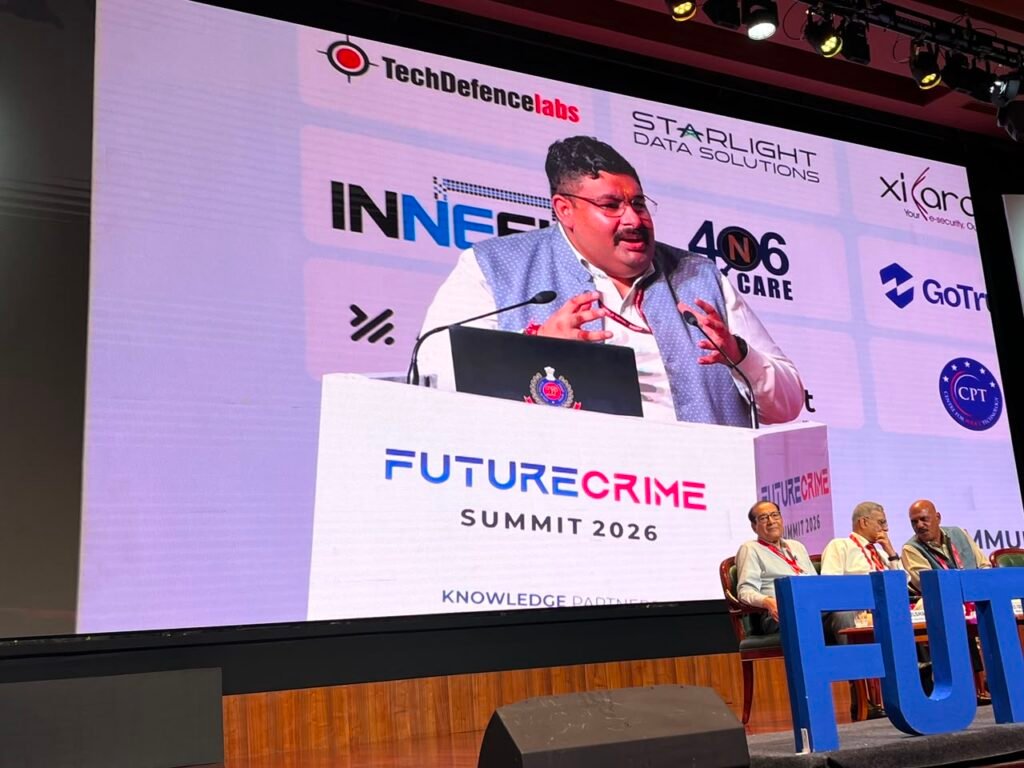
According to renowned cybercrime expert and former IPS officer Prof. Triveni Singh, national cyber resilience requires bridging the gap between technical defense capabilities and human cognitive vulnerabilities. He emphasized that protecting critical digital infrastructure demands real-time threat intelligence sharing, robust post-quantum encryption standards, and proactive public-private collaboration to neutralize autonomous cyber threats before they disrupt the national economy.
The technical management of national security infrastructure requires strict integration with next-generation cryptographic architectures. Deploying quantum-resistant encryption protocols, building AI-driven threat mitigation engines operating at wire speed, and training defense personnel in cognitive warfare countermeasures ensures that national digital assets remain protected against evolving adversary strategies.
