

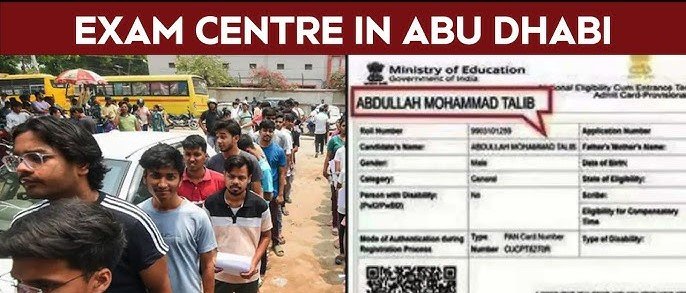
Just a day before the high-stakes NEET-UG 2026 re-examination, the National Testing Agency (NTA) faced intense scrutiny after mistakenly allotting an examination venue in Abu Dhabi, UAE, to an 18-year-old medical aspirant based in Nagpur, Maharashtra. The student, identified as Abdullah Mohammad Talib, received an online hall ticket designating the Abu Dhabi Indian School as his test location, despite having explicitly selected local regional preferences including Nagpur, Wardha, and Bhandara.
The unexpected multi-state structural glitch triggered severe distress for the candidate and his family, especially since Abdullah does not possess a valid passport, making international travel on short notice an impossibility. Following urgent intervention by public representatives and subsequent legal escalations, the NTA formally acknowledged the systemic database error, issuing a rectified local hall ticket on Saturday evening.
Registration Begins for FutureCrime Summit 2026, India’s Largest Cybercrime Conference
The Application Preference Disconnect
The administrative confusion stems from the re-test registration infrastructure set up after the primary May 3 national examination was canceled amid centralized paper leak investigations. When generating the fresh datasets, the NTA platform allowed students to log preferences to either retain their original test venues or select modified local clusters.
The allocation dataset loop processed these changes through a dynamic database flow. Initially, the process began with the student entry stage where local preferences including Nagpur, Wardha, and Bhandara were successfully submitted. This triggered an unverified system database shift where server-side modifications caused structural errors during the automated seat distribution. As a direct result, the system produced an erroneous glitch output, generating an overseas venue at the Abu Dhabi Indian School directly onto the live admit card. Finally, the engineering team executed a manual corrective script override to re-allocate the candidate to a valid domestic center before the official examination day.
Family Trauma and Widespread Center Shifts
Speaking to media teams, the candidate’s father, Mohammad Talib, stated that the sudden revelation caused immense emotional distress to his son, who was already recovering from the psychological pressure of the initial examination cancellation. The family initially panicked and began evaluating emergency documentation options before realizing the logistical impossibility of executing passport and visa processing within a 48-hour window.
The issue has highlighted broader pattern inconsistencies within the NTA’s data systems for the June 21 re-test. Multiple parents across the Vidarbha region reported that despite selecting clear commands to retain their city-center testing locations, the freshly generated hall tickets arbitrarily pushed their children to far-flung rural blocks or neighboring districts. Lecturers and student activists stated that when these data anomalies were flagged to the central command lines, agency helpdesks merely advised parents to repeatedly clear their web caches and re-download the documents daily, indicating that active live database updates were being executed simultaneously alongside the generation of admit cards.
Political Escalation and Remedial Actions
As the issue gained traction across national communication lines, former Maharashtra Education Minister Dr. Anees Ahmed personally intervened, contacting top NTA administrators to demand immediate remediation. He emphasized that administrative lapses should not penalize domestic candidates or jeopardize their career options due to systemic code failures.
Following a verification review of the student’s primary submission files, the NTA confirmed the cross-border allocation was an isolated technical glitch. The testing agency processed a manual database override to generate a fresh, corrected admit card, assigning Abdullah a local venue inside Nagpur city limits. While the swift remediation has restored the candidate’s opportunity to sit for the medical entrance test locally, the lapse has renewed calls for stronger digital auditing and stress-testing of central examination servers before large-scale student distributions are finalized.
