

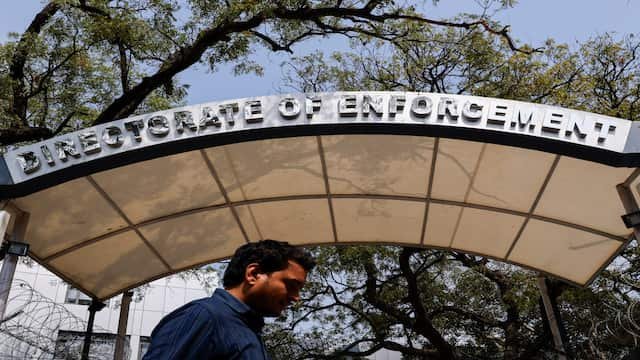
The Enforcement Directorate (ED) has provisionally attached assets worth approximately ₹3.01 crore belonging to former State Bank of India (SBI) official Anil Kumar Jain in a disproportionate assets and alleged money laundering case. Investigators claim that Jain accumulated assets exceeding his known sources of income by nearly 481 percent. The case also involves scrutiny of large cash deposits, fixed deposits (FDs), alleged hawala links, and suspicious financial transactions.
According to the ED, the attachment was carried out under the provisions of the Prevention of Money Laundering Act (PMLA), 2002. The agency issued the attachment order on June 10, freezing movable assets worth around ₹3.01 crore. The action stems from a Central Bureau of Investigation (CBI) case alleging that Jain possessed assets significantly disproportionate to his lawful income.
Registration Begins for FutureCrime Summit 2026, India’s Largest Cybercrime Conference
The Multi-Fold Wealth Explosion
Investigators said Jain served as an Assistant General Manager at SBI’s Local Head Office in Madhya Pradesh. Authorities examined his income, assets, and financial transactions between April 2017 and December 2018. During this period, the assets allegedly acquired by him were found to be several times higher than his legitimate earnings.
The ED stated that its investigation uncovered cash deposits totaling about ₹2.35 crore in bank accounts linked to Jain and his family members. These deposits were reportedly claimed to have originated from the sale of immovable properties. However, according to the agency, no credible documents or supporting evidence were produced to substantiate those claims. Investigators further alleged that the funds were later converted into various fixed deposits.
Unexplained Fixed Deposits Seized
In addition, fixed deposits worth approximately ₹66 lakh were identified during the probe and were treated as part of the alleged disproportionate assets. The agency said Jain failed to provide a satisfactory explanation regarding the source of these funds despite repeated examination of financial records and supporting documents. Based on these findings, the ED has treated the assets as suspected proceeds of crime.
The investigation has also reportedly revealed the alleged involvement of certain hawala operators and a chartered accountant. The ED claimed that some transactions were routed through a private company that investigators have described as a suspicious entity. According to the agency, financial records indicated that cash payments and director-linked transactions were used to present the movement of funds as legitimate business activity.
Layering via Private Corporate Entities
Investigators further alleged that the money was circulated through multiple financial channels in an attempt to give it a lawful appearance. The agency believes that several bank accounts and investment instruments were used to obscure the true origin of the funds. As a result, the financial investigation has been expanded to trace the complete money trail.
Experts note that asset attachment is one of the most significant legal tools available to enforcement agencies in cases involving disproportionate assets and money laundering. Such action is intended to prevent suspected proceeds of crime from being transferred, sold, concealed, or otherwise dissipated before the completion of legal proceedings. Financial records, property documents, tax filings, and transaction histories typically form the backbone of such investigations.
Unraveling Intricate Banking Channels
Renowned cybercrime expert and former IPS officer Prof. Triveni Singh said that transparency regarding the source and use of funds is critical in financial crime investigations. He noted that when large cash transactions, multi-layered fund movements, and suspicious financial structures emerge, analysing the money trail becomes essential for investigators. According to him, the possible misuse of banking channels and shell companies must be examined thoroughly to identify and dismantle networks involved in illicit financial activities.
The attached assets remain under investigation as suspected proceeds of crime. Authorities are expected to continue reviewing banking records, financial documents, and transaction trails before determining further legal action. The case underscores the increasingly aggressive approach being adopted by enforcement agencies toward alleged corruption, illicit wealth accumulation, and suspicious financial flows.
