
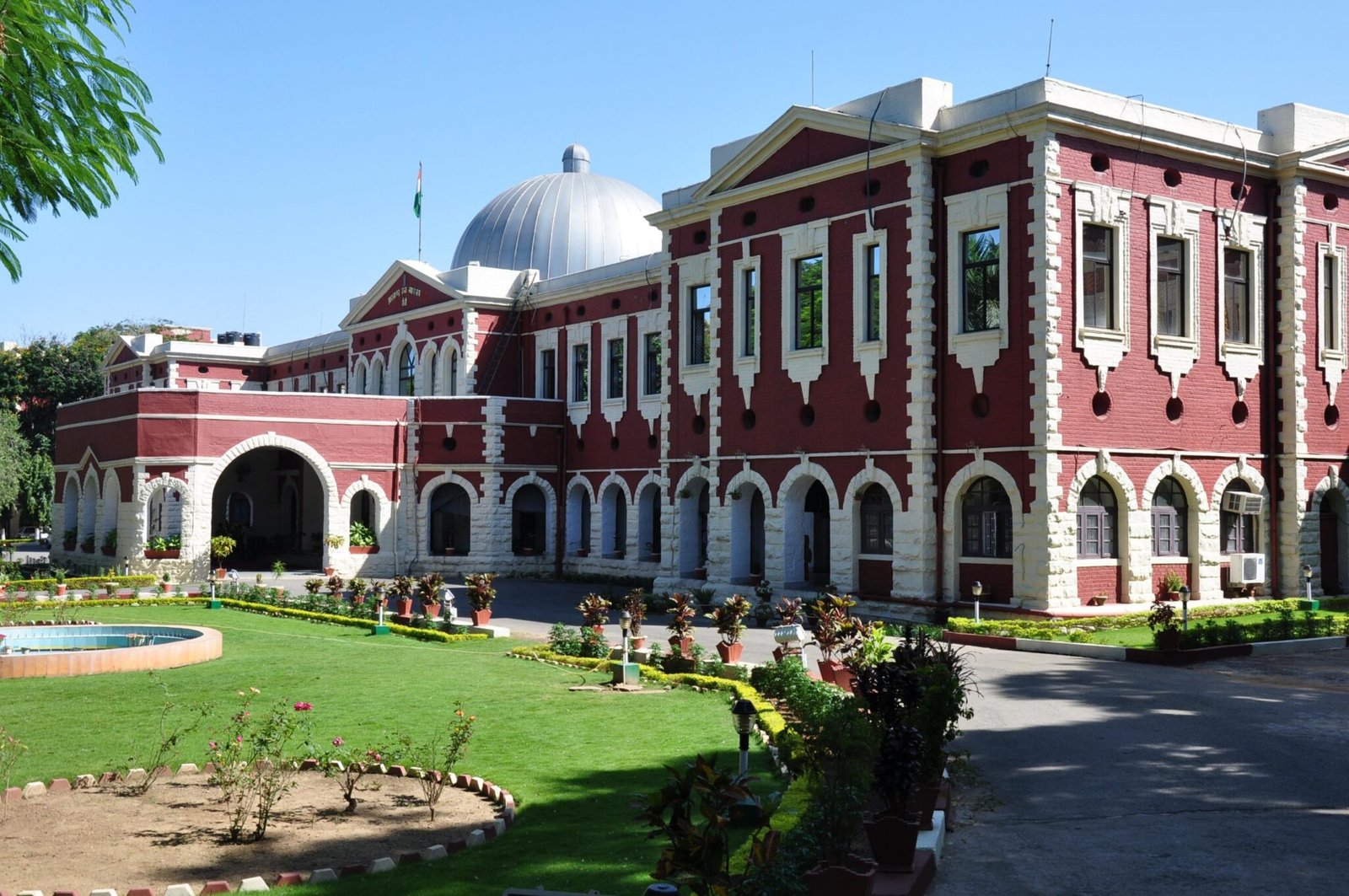
RANCHI: The Jharkhand High Court has quashed an FIR and all related criminal proceedings against Jamshedpur-based businessman Vimal Kumar Agarwal and his son Pratik Agarwal in a case involving an alleged ₹1.91 crore financial dispute. The decision provides major relief to the father-son duo, who were facing allegations of misappropriation linked to an investment arrangement in railway contracting projects.
The order was passed by a single-judge bench of Justice Anil Kumar Choudhary, who observed that the matter essentially arose out of a business transaction and did not constitute a criminal offence. The court consequently set aside Sonari Police Station Case No. 45/2025 along with all consequential proceedings in G.R. No. 966/2025, which had been initiated on the basis of a complaint filed by Shankar Lal Gupta, a resident of Bistupur.
Commercial Agreements and Repayment Disagreements
According to the complaint, Gupta had alleged that Vimal Kumar Agarwal and Pratik Agarwal, associated with M/s Shri Narsing Construction, had induced him to invest in railway contracting projects. It was claimed that the accused represented themselves as experienced contractors and informed him about a railway project worth around ₹15 crore in Rourkela, assuring profits in the range of 20 to 30 percent. Based on these assurances, an agreement was executed between the parties on January 14, 2017.
The complainant further alleged that between January and December 2017, he invested substantial sums in the project. He also claimed that after being informed of another contract opportunity worth ₹2.5 crore, he provided additional funds, taking his total investment to ₹1.91 crore. The dispute later escalated after disagreements arose regarding repayment and returns.
During the proceedings before the lower court, the accused secured bail and argued that the dispute was nearly eight years old and largely civil in nature. The defence also submitted that a significant portion of the claimed amount—₹1.73 crore—had already been repaid to the complainant, further indicating a settlement between the parties.
Registration Begins for FutureCrime Summit 2026, India’s Largest Cybercrime Conference
Challenging the Nature of Criminal Proceedings
Challenging the continuation of criminal proceedings, advocates Sudhir Kumar “Pappu”, Babita Jain, and High Court advocate Nilesh Kumar filed Criminal Miscellaneous Petition No. 1490 of 2026 on behalf of the petitioners before the Jharkhand High Court. They argued that the allegations stemmed from a contractual financial transaction and that criminal provisions were wrongly invoked to give the dispute a criminal colour.
After hearing both sides, the High Court observed that the essential nature of the dispute was rooted in a commercial arrangement and did not satisfy the ingredients of a criminal offence. The court noted that when a matter is primarily civil in nature, the continuation of criminal proceedings would amount to a misuse of the legal process. On this basis, the FIR and all consequential proceedings were quashed.
Judicial Distinction Between Civil and Criminal Liability
The judgment reinforces the judicial view that not every financial disagreement or alleged breach of contract automatically becomes a criminal case. Courts have repeatedly emphasized that civil disputes should not be converted into criminal proceedings unless clear criminal intent is established.
The ruling is expected to have implications for similar cases where business disagreements are often escalated into criminal complaints. Legal experts note that such decisions help maintain a clear distinction between civil liability and criminal wrongdoing, ensuring that criminal law is not used as a tool for recovery in purely commercial disputes.
With this order, the long-running legal battle between the parties has come to a close at the criminal stage, though civil remedies, if any, remain open for consideration. The case also highlights the importance of clearly documented agreements in investment transactions to avoid prolonged litigation and jurisdictional conflicts.
