

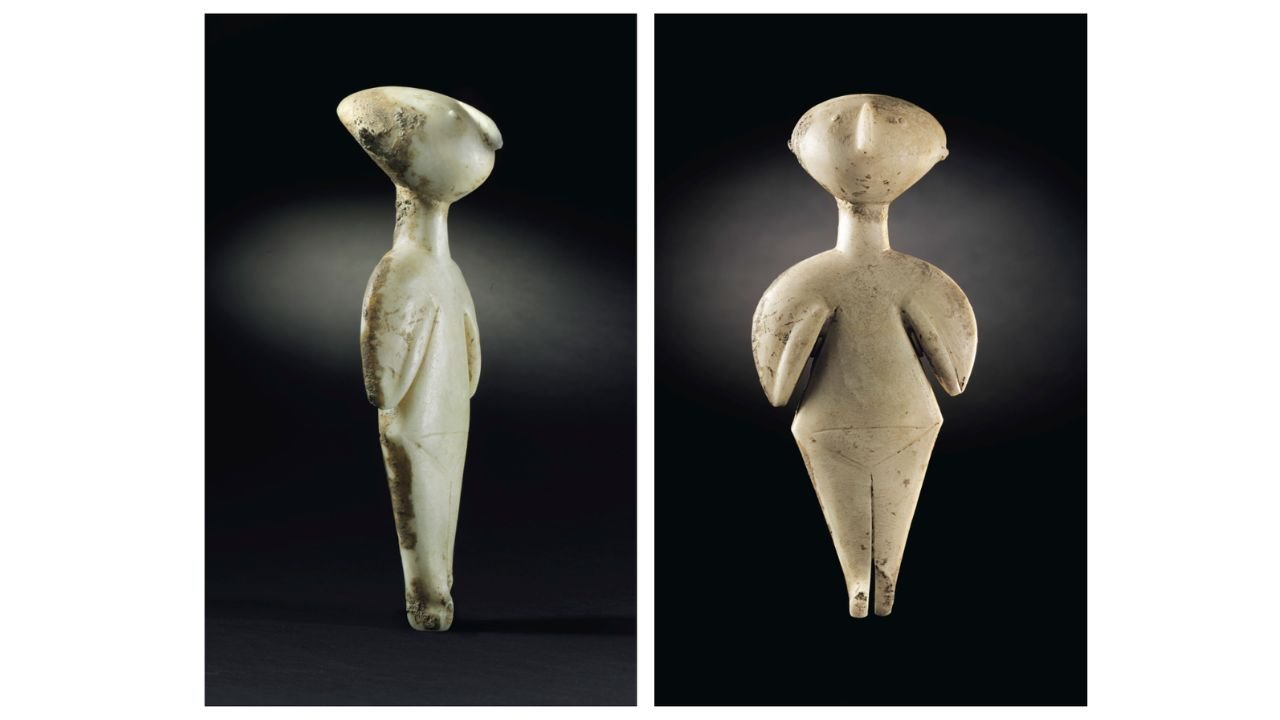

London | A British man has been convicted after allegedly attempting to sell what he claimed were ancient statues worth crores of rupees through the renowned auction house Sotheby’s using forged provenance documents. The fraud was exposed after forensic experts discovered that the supposedly decades-old paperwork had actually been produced using modern printing methods unavailable at the time mentioned in the documents.
Andrew Crowley, a 46-year-old resident of Longwell Green in Bristol, tried to sell four rare artefacts through Sotheby’s between November 2022 and July 2023. The collection included three Cycladic figures and one Anatolian Stargazer statuette. Crowley claimed the items had been inherited from his grandfather and dated back nearly 3,000 years.
FCRF’s Flagship Cyber Law Certification Returns With a New Four-Week Cohort
According to court proceedings, the statues could have fetched approximately £680,000 — around ₹7.7 crore — if they had been genuine. However, during sentencing, the judge noted that the valuation depended on several assumptions and reduced the estimated value to around £340,000, or nearly ₹3.85 crore.
The investigation centered on the documents Crowley submitted to establish the artefacts’ authenticity. These included invoices allegedly dating back to 1976, letters typed on a typewriter, embossed antique dealer logos and even an old nine-pence postage stamp intended to make the paperwork appear historically legitimate.
Despite the effort to make the documents look authentic, forensic analysis revealed that the printing methods used were invented only in 2001 — nearly 25 years after the date mentioned on the paperwork. Sotheby’s specialists also detected multiple spelling mistakes and inconsistencies in the submitted records, which quickly raised suspicion.
During the hearing, Judge Nicholas Rimmer described the scheme as a “crude attempt,” stating that Sotheby’s experts had identified the paperwork as suspicious at an early stage of the process.
The court, however, accepted that Crowley may genuinely have believed the statues themselves were authentic. According to the judge, there was no clear evidence suggesting Crowley knew the artefacts were counterfeit. The dishonesty in the case, the court said, lay primarily in the creation and use of forged provenance documents intended to increase the items’ credibility and market value.
Police stated that each Cycladic statue measured around 30 centimetres in height and weighed approximately one kilogram. Genuine Cycladic artefacts originate from the Cyclades islands in Greece and date back to the Bronze Age nearly 3,000 years ago. Such antiquities are considered highly valuable in the international art market, where provenance verification plays a critical role in determining authenticity and price.
Crowley admitted to the offence of “dishonestly making a false representation intending to make gain.” Following the guilty plea, Southwark Crown Court handed him a two-year suspended prison sentence. He was also ordered to complete 200 hours of unpaid community work and pay court costs amounting to £1,630, roughly ₹1.85 lakh.
Experts say the case highlights the growing problem of forged provenance papers in the global art and antiquities market. Fraudsters increasingly attempt to legitimise questionable artefacts using fabricated ownership histories, fake invoices, counterfeit dealer stamps and manipulated archival records. Auction houses and collectors worldwide are now relying more heavily on forensic analysis and document authentication to combat high-value art fraud.
