
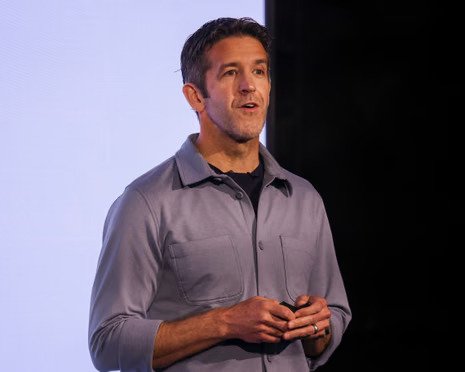
John Ternus, recently named Apple’s next chief executive, has told employees that the company will not ship artificial intelligence technology simply for its own sake, setting out an approach that emphasises practical use, internal engineering gains and a more restrained product philosophy as Apple prepares for a leadership transition later this year.
A Cautious AI Message From Apple’s CEO in Waiting
Ternus addressed employees days after being announced as Tim Cook’s successor and said Apple would not release technology merely for the sake of appearing fast in the AI race. He described an approach built on two tracks: using AI internally to improve how Apple builds products, and ensuring that whatever reaches customers feels considered, useful and aligned with Apple’s product standards.
The reports present this as a pointed contrast to broader industry trends, with rivals including Google and Microsoft described as having moved aggressively to integrate AI across products and platforms. Ternus’s comments suggest Apple intends to distinguish itself by focusing less on rapid rollout and more on restraint and product fit.
FCRF Academy Launches Premier Anti-Money Laundering Certification Program
Siri Delays Still Hang Over Apple’s AI Push
That message, however, arrives against the backdrop of Apple’s own delayed AI promises. Siri personalisation features announced at WWDC 2024 have still not shipped, and that Craig Federighi told audiences at WWDC 2025 that the upgrades needed more time without providing a timeline.
Apple is also described as having leaned on OpenAI’s ChatGPT to cover some of Siri’s shortcomings and, more recently, as having finalised a deal with Google in January to use Gemini for foundation models. The screenshots say Tim Cook, who was also present at the town hall, confirmed that a revamped Siri is expected at WWDC 2026 in June as part of iOS 27.
Decades of Internal Data Seen as Strategic Advantage
Beyond consumer-facing AI features, Ternus pointed to Apple’s internal engineering data accumulated over decades as a major opportunity. He told employees AI would help the company query that data and better understand how to improve products, framing the opportunity less as spectacle and more as a practical tool for engineering and product development.
Ternus described this as the most exciting time he could remember for building, and told staff Apple was about to change the world. Even so, the account leaves open a central question for Apple’s next leadership phase: whether a restrained AI strategy will ultimately prove to be a competitive advantage or leave the company trailing faster-moving rivals.
About the author – Ayesha Aayat is a law student and contributor covering cybercrime, online frauds, and digital safety concerns. Her writing aims to raise awareness about evolving cyber threats and legal responses.
