
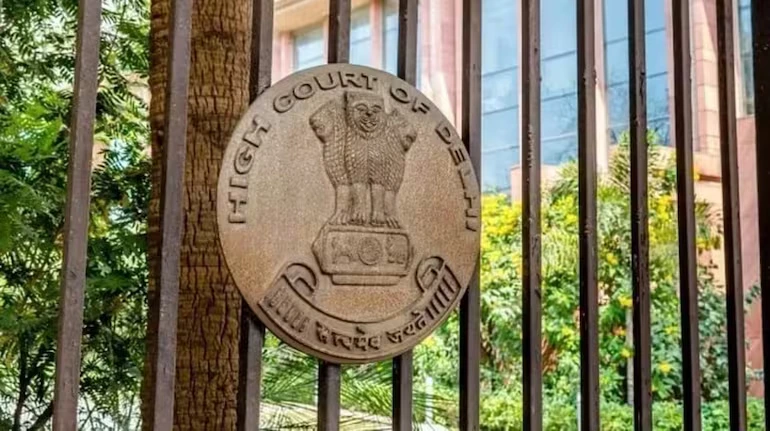
In the backdrop of rising cybercrime and digital fraud cases, the Delhi High Court has delivered a significant judgment that gives a new legal direction to the structure of online fraud and cyber cheating. In Dabur India Limited vs Ashok Kumar & Ors., the court held that large-scale misuse of a brand name is not merely cyber squatting but constitutes “systemic cyber fraud” that must be treated as a serious offence.
The case came to light after Dabur India Limited discovered multiple fraudulent domain names such as daburdistributorships.in, daburdistributor.com, and daburfranchisee.in being created using its brand identity. These websites falsely represented themselves as official portals of the company and misled users into sharing personal information and making payments under the guise of investments, franchise opportunities, or job offers.
During the proceedings, the court observed that these fake websites were actively used to defraud the public on a continuous basis. By the time complaints were raised, the fraudulent domains would often disappear and reappear in new forms, making enforcement extremely difficult. This cyclical pattern significantly complicated efforts to curb online deception.
FCRF Returns With CDPO, Its Premier Data Protection Certification for Privacy Professionals
Court Rejects Intermediary Immunity Claims
Dabur argued that “Dabur” is a well-known trademark and its misuse not only damages brand reputation but also directly facilitates financial fraud. The company further highlighted that identity masking during domain registration makes it nearly impossible to trace the actual perpetrators behind such scams.
The Domain Name Registrars (DNRs) and ICANN, on their part, submitted that they function as intermediaries under existing laws and provide only technical services. They maintained that they do not control the content hosted on domains or the actions of users registering them.
However, the court partially rejected this argument, observing that once an intermediary has knowledge of fraudulent activity, its inaction can no longer be protected under the principle of “neutral intermediary” immunity.
Justice Singh’s Directives Transform Cyber Ecosystem
Justice Prathiba M. Singh, in her judgment, emphasized that loopholes in the digital ecosystem significantly enable cybercriminals. The court issued several key directions, including mandatory KYC verification for domain registration, periodic data validation, and disclosure of the actual identity of registrants.
The judgment further stated that domain registrars cannot remain passive technical facilitators anymore; they must take an active role in preventing fraud. If a registrar fails to take timely action against fake domains, it may face legal consequences for negligence.
The court also directed that any fraudulent domain must be identified and taken down within 72 hours, and re-registration of such domains should be strictly prohibited.
Experts Predict Major Shift in India’s Cyber Law
Cybersecurity experts believe this ruling could mark a major shift in India’s cyber law framework. According to experts, the decision will improve transparency and accountability across digital platforms, thereby significantly reducing the scope of online fraud.
However, experts have also warned that cybercriminals are constantly evolving and may adopt more sophisticated techniques as regulations become stricter.
Overall, the case stands as a landmark precedent in balancing cyber law, trademark protection, and the responsibility of digital intermediaries in the rapidly expanding online ecosystem.
About the author – Ayesha Aayat is a law student and contributor covering cybercrime, online frauds, and digital safety concerns. Her writing aims to raise awareness about evolving cyber threats and legal responses.
