

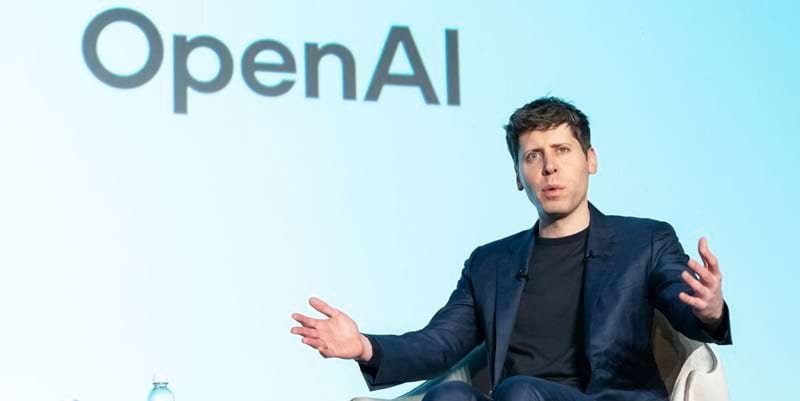
Amid the rapid rise of artificial intelligence, OpenAI has proposed a four-day work week without pay cuts, arguing that companies should rethink traditional work structures as AI begins to dramatically increase productivity.
The suggestion is part of the company’s broader “people-first” policy framework, which aims to prepare society for the economic and social disruptions expected from increasingly capable AI systems.
AI could compress months of work into days
In its policy report on the “Intelligence Age,” OpenAI highlighted how fast-evolving AI tools are already reducing the time required to complete complex tasks.
The company noted that if current progress continues, AI systems could soon handle projects that presently take weeks or even months, fundamentally changing how organisations operate and how work is distributed.
This shift, OpenAI said, will reshape not just productivity, but also how people find purpose, opportunity, and meaning in their careers.
FCRF Launches Premier CISO Certification Amid Rising Demand for Cybersecurity Leadership
Four-day week proposed as productivity dividend
To adapt to these changes, OpenAI has suggested that companies should share efficiency gains with workers by introducing shorter work weeks without reducing salaries.
The idea is rooted in the principle that if AI enables employees to accomplish more in less time, the benefits should not be limited to businesses alone. Instead, workers should receive better working conditions and improved quality of life.
The proposal also includes encouraging companies to enhance employee benefits, such as increasing retirement contributions, expanding healthcare coverage, and offering childcare support.
Push for jobs in human-centric sectors
Recognising that AI may displace certain roles, OpenAI has also recommended expanding employment opportunities in people-focused sectors like healthcare, education, and childcare, where human interaction remains essential.
The company argues that while AI may automate many technical and repetitive tasks, demand for empathetic, human-driven services will continue to grow.
Debate over feasibility and economic impact
Experts, however, remain divided on how practical these ideas are. Gina Neff of the University of Cambridge noted that while sharing productivity gains with workers is not a new concept, implementing such changes would require a major shift in economic and political priorities.
She pointed out that companies may be reluctant to simultaneously increase wages, improve benefits, and invest in AI technologies without structural changes in how labour and capital are balanced.
Job displacement fears vs long-term reality
The proposals come amid growing concerns that AI could significantly disrupt employment. Andrew Bailey has previously warned that AI-driven job displacement could mirror the scale of disruption seen during the Industrial Revolution.
At the same time, some economists caution that the impact may unfold more gradually. Studies suggest that while AI holds transformative potential, productivity gains often take years—or even decades—to fully materialise.
Public wealth fund and broader policy ideas
OpenAI has also floated the idea of creating a “public wealth fund”, allowing citizens to share in the economic gains generated by AI technologies.
This concept mirrors proposals by rival Anthropic, which has similarly emphasised the need for reskilling workers and investing in infrastructure to support the AI transition.
A turning point for the future of work
As AI development accelerates, the debate is shifting from what the technology can do to how society should adapt to it.
OpenAI’s proposals reflect a growing recognition that the benefits of AI must be distributed more equitably, balancing innovation with worker welfare.
Whether ideas like a four-day work week become mainstream will depend not just on technology, but on policy decisions, corporate priorities, and societal consensus in the years ahead.
About the author – Rehan Khan is a law student and legal journalist with a keen interest in cybercrime, digital fraud, and emerging technology laws. He writes on the intersection of law, cybersecurity, and online safety, focusing on developments that impact individuals and institutions in India.
