

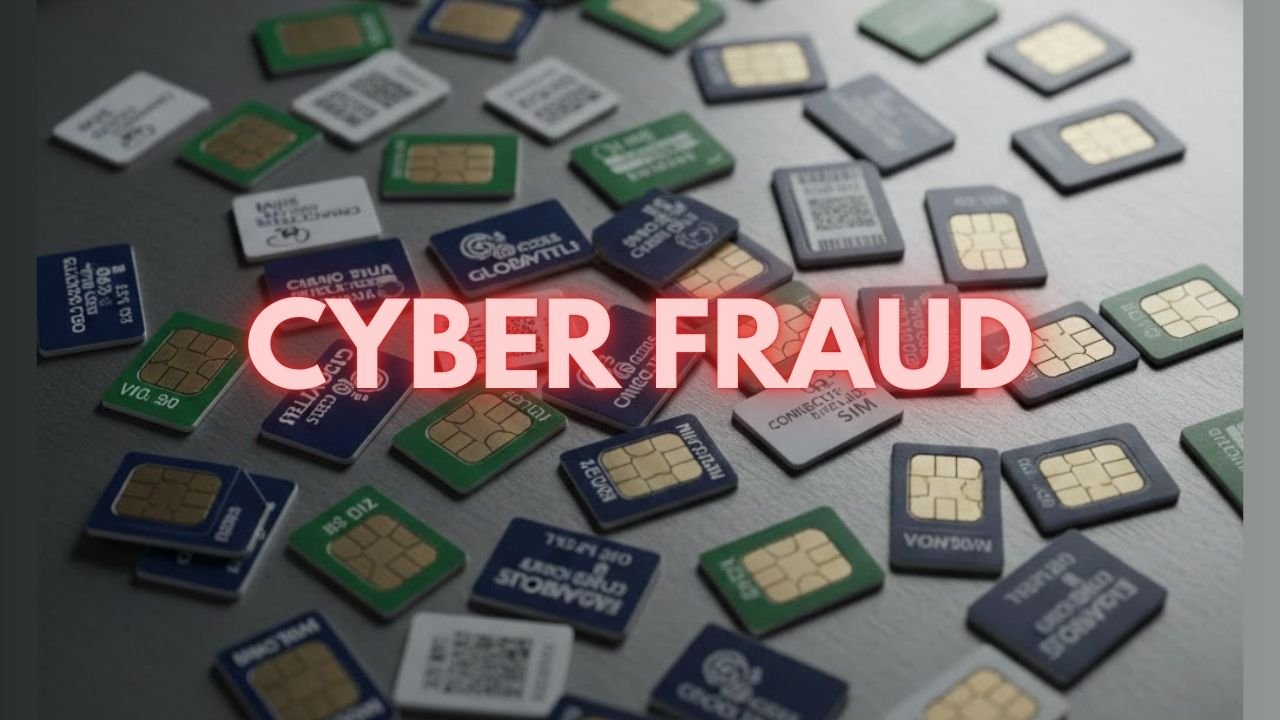

Hyderabad: In a major breakthrough against international cybercrime, Telangana’s cyber security authorities have busted a sophisticated racket that illegally routed hundreds of Indian mobile SIM cards to Cambodia, where they were allegedly used to carry out large-scale online fraud. So far, five accused have been arrested, while one more suspect remains absconding. Investigators say that since 2023, over 600 Indian SIM cards were smuggled abroad as part of this operation.
The case came to light on March 31 at the Rajiv Gandhi International Airport, when a suspicious passenger was intercepted during routine checks. A search of his luggage led to the recovery of 198 active SIM cards, which were allegedly being transported to Cambodia. During questioning, the accused revealed that he was part of a larger, well-organized network involved in supplying SIM cards to foreign cyber fraud syndicates.
FCRF Launches Premier CISO Certification Amid Rising Demand for Cybersecurity Leadership
Investigations have since uncovered a multi-layered operation with links spanning across states and international borders. The alleged kingpin of the network, a resident of Uttar Pradesh, is believed to be in direct contact with cybercrime gangs operating out of Cambodia. Local agents in different Indian cities were tasked with collecting SIM cards and arranging their covert shipment abroad.
SIM cards procured using fake identities
One of the most alarming aspects of the case is the method used to obtain these SIM cards. Officials revealed that many of the connections were activated using forged documents or by misusing identity proofs of unsuspecting individuals. In several instances, innocent citizens’ credentials were exploited to issue SIM cards without their knowledge.
Further, investigators found that some of the arrested individuals were operating point-of-sale centres of telecom companies and knowingly supplied pre-activated SIM cards to the racket. This deliberate misuse of the telecom distribution system significantly aided the network’s operations.
Experts say such SIM cards are a critical tool for cybercriminals. They enable activities like phishing calls, fake banking alerts, identity theft, and extortion scams. Since these operations are often conducted from foreign locations, tracing the perpetrators becomes far more difficult for Indian agencies.
A complex international network
Authorities described the racket as a highly structured international syndicate with multiple layers of operation. Different teams handled SIM procurement, logistics, financial transactions, and execution of frauds. This compartmentalized structure made detection and tracking particularly challenging.
Digital forensics teams are now analyzing call detail records, IP logs, and transaction trails to map the full extent of the network. Officials suspect that the SIM cards supplied through this channel may have been used in cyber frauds amounting to crores of rupees across India.
Warning issued to the public
Following the bust, cyber security agencies have issued a strong advisory urging citizens to remain vigilant about their personal data. People have been cautioned against sharing identity documents with unknown individuals or agencies and advised to periodically verify how many SIM cards are registered in their name.
Renowned cyber crime expert and former IPS officer Prof. Triveni Singh warned, “Fraudulently obtained SIM cards have become the backbone of modern cybercrime. Criminals use them to mask their identity and operate across borders. Even a small lapse in safeguarding personal documents can lead to major financial loss.”
He emphasized that in the digital age, protecting one’s identity is as important as securing financial assets, as both are increasingly interconnected.
How to stay safe
Officials have advised citizens to purchase SIM cards only from authorized vendors and ensure proper Know Your Customer (KYC) verification is completed. Users should remain cautious of suspicious calls, messages, or links, especially those seeking personal or financial information.
If anyone discovers an unknown SIM issued in their name, they should immediately report it to their telecom provider or lodge a complaint with the cybercrime helpline. Swift action in the early stages can significantly reduce potential damage.
This case once again highlights how cybercrime has transcended geographical boundaries. As fraud networks become more advanced and global, awareness, digital hygiene, and timely reporting remain the most effective defenses against such evolving threats.
