

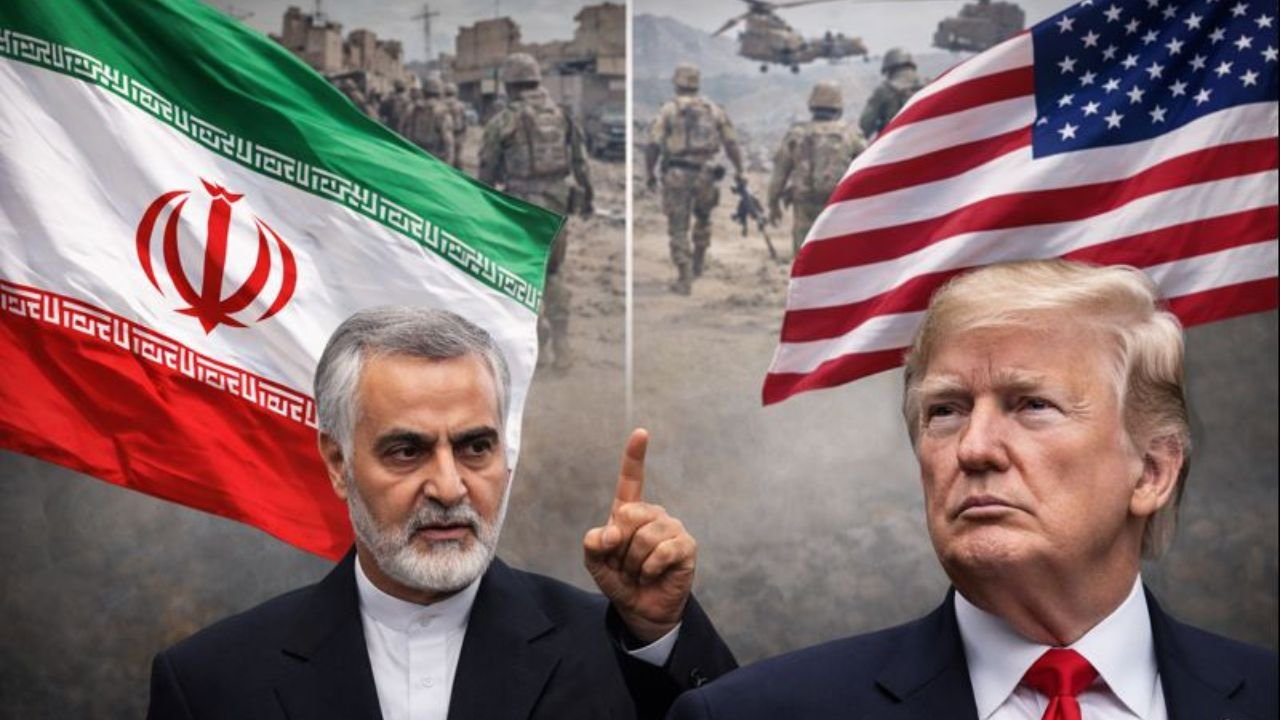

Tehran | January 2, 2026 | Iran has issued a stern warning to the United States against any form of interference in its internal affairs, asserting that national security is a “red line” and that any attempt to cross it will invite a strong and regret-inducing response. The warning comes after US President Donald Trump said Washington could intervene if Iranian authorities used force against protesters. The exchange has unfolded at a time when Iran is grappling with a severe economic crisis marked by soaring inflation and a rapidly weakening currency.
The warning was delivered by Ali Shamkhani, a senior adviser to Iran’s Supreme Leader Ayatollah Ali Khamenei. In a post on social media platform X, formerly Twitter, Shamkhani said, “Iran’s security is a red line. Any intervening hand that approaches Iran’s security under any pretext will be cut off with a response that brings regret.” His remarks were widely interpreted as a direct rebuttal to Trump’s comments.
Trump, in a post on his social media platform Truth Social, had warned Tehran against cracking down on demonstrations. He said that if the Iranian government “violently kills peaceful protesters,” the United States would “come to their rescue,” adding that Washington was “locked and loaded.” The statement triggered immediate and sharp reactions from Iranian political and diplomatic circles.
Responding to the remarks, Shamkhani dismissed Trump’s warning and pointed to the United States’ record of military and political interventions in West Asia. He said Iranians were fully aware of what American “rescue missions” had meant for other countries. Citing Iraq, Afghanistan and Gaza, he argued that US involvement had brought destruction, prolonged instability and conflict rather than peace or prosperity.
The confrontation comes against the backdrop of deepening economic stress within Iran. Years of US and Western sanctions have restricted oil exports, foreign investment and access to international banking systems. The Iranian rial has fallen close to historic lows, making imports significantly more expensive and sharply eroding household purchasing power.
In recent days, protests have been reported in Tehran and several other cities, particularly involving shopkeepers, traders and small business owners. Demonstrators have taken to the streets to protest rising prices, currency depreciation and deteriorating living conditions. Several markets were shut during the protests, with slogans directed at economic mismanagement and inflation.
Iranian officials say that at least seven people have been killed so far in incidents linked to the unrest. However, the government has denied allegations of deliberate use of lethal force against peaceful demonstrators. Authorities insist that security forces are tasked with maintaining law and order and protecting public property amid sporadic unrest.
Tehran has repeatedly accused the United States and Israel of exploiting Iran’s genuine economic difficulties to stir internal instability. Iranian state media has claimed that foreign powers are encouraging protests through social media campaigns, satellite television channels and sustained economic pressure, including sanctions.
According to Iranian officials, while economic challenges are real and serious, portraying them as a national security or human rights crisis is a “familiar foreign strategy.” A senior official was quoted by local media as saying that protests are being projected internationally as justification for political pressure and potential interference in Iran’s internal affairs.
The episode further underscores the fragile and adversarial state of US–Iran relations. With nuclear negotiations stalled, regional conflicts ongoing and mutual accusations intensifying, Trump’s remarks are seen by analysts as likely to harden positions within Iran’s political establishment.
For now, Iranian leaders appear focused on containing domestic unrest while projecting defiance on the international stage. Whether the protests expand into a broader nationwide movement remains uncertain. What is clear, however, is that Tehran has drawn its line firmly—sending a clear message that any foreign interference touching Iran’s security will not be tolerated.
