

SINGAPORE: Singapore’s escalating scam epidemic — costing citizens nearly half a billion dollars in six months — has drawn the government’s sharpest digital order yet. Under the new Online Criminal Harms Act, Meta has been directed to deploy facial recognition, AI-based message reviews, and warning alerts on WhatsApp and Messenger to counter impersonation and fraud schemes spreading across Southeast Asia.
A Nation Under Digital Siege
In an era when the line between convenience and vulnerability has blurred, Singapore is confronting an unprecedented wave of online scams. According to police figures released in August, almost $500 million (₹4439 crores) was lost to scams in the first half of 2025, with more than 20,000 cases reported — a staggering rise for a nation known for its tight digital governance.
The scale and sophistication of these scams — from job offer hoaxes to impersonation of public officials — have pushed regulators to act decisively. Earlier this year, authorities issued the first directive under the Online Criminal Harms Act, ordering Meta to introduce stronger detection and verification tools on its platforms.
Meta’s New Arsenal Against Scammers
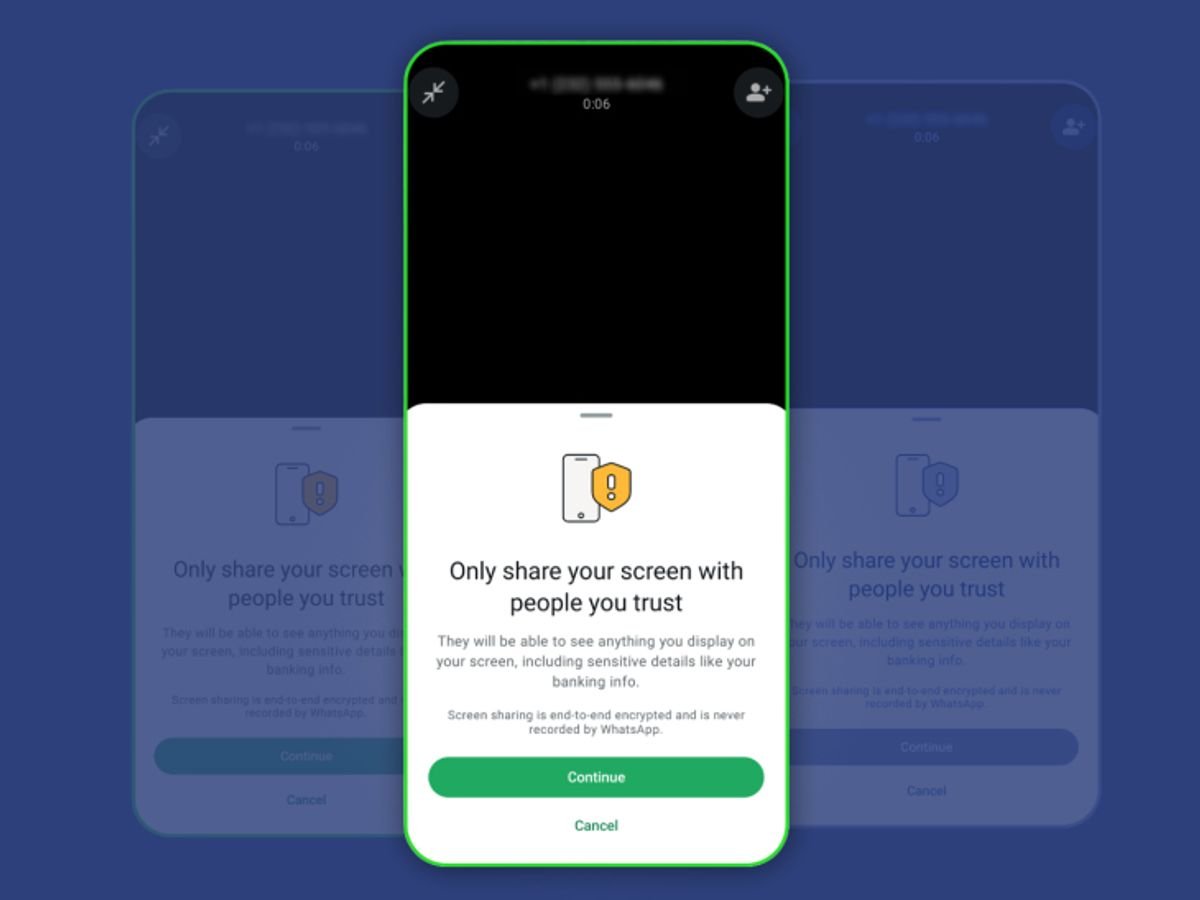
In response, Meta has begun rolling out two key anti-scam tools across its apps — starting with WhatsApp and Messenger. One feature now warns users when they attempt to share their screen during a video call with an unfamiliar contact — a measure designed to stop scammers from stealing login credentials, banking details, or Singpass information visible on the victim’s device.
The second, scam detection for suspicious Messenger chats, uses artificial intelligence to identify conversations that may contain fraudulent cues. Users are prompted to submit messages for AI review — temporarily suspending end-to-end encryption — to detect signs of deception. If a potential scam is found, the system explains why and suggests next steps, such as blocking or reporting the user.
Meta says an example of a red flag could be a work-from-home offer paying $50 (₹4439) an hour but requiring a $200 (₹17,758) “background check fee.” The company plans to make these features global, though no firm rollout date has been given.
Facial Recognition, AI Review, and the Law
Singapore’s directive compels Meta to deploy enhanced facial recognition systems and prioritize reviews of impersonation complaints involving government officials. A company spokesperson said trained human reviewers are also being used to detect fake accounts, ads, and fraudulent content — especially those impersonating public figures and political office-holders.
These steps follow Meta’s earlier government order in mid-2025 to implement such measures by September 30. The company, under scrutiny for lagging responses, removed over 68,000 Facebook accounts and 3,000 Instagram accounts in the first half of 2025 for violating anti-fraud and deceptive practices policies. Of these, three-quarters were proactively detected before users flagged them.
A Wider Regional Effort — and a Race Against Scammers
Singapore’s crackdown on digital crime has galvanized other players. TikTok launched a “Scam Prevention Edition” resource hub to educate users on evolving online threats. E-commerce platform Carousell began verifying sellers against government-issued IDs to reduce marketplace fraud.
For Meta, the regional stakes are high. Scam centres in Southeast Asia have been linked to millions of fraudulent WhatsApp and Facebook accounts, prompting the company to ramp up cooperation with law enforcement and advertisers to trace illicit networks.
“We’re not stopping people from sharing their screens or connecting online,” said Clara Koh, Meta’s Head of Public Policy for Singapore and ASEAN. “But we want to remind people that you should do it only with those you trust.”
