
Stay ahead with our breaking stories and exclusive coverage prioritized on Google.
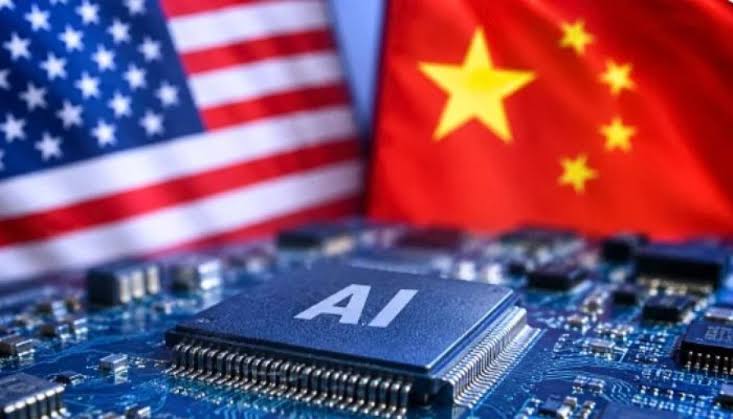
Add The420 on Google →The Netherlands has warned that proposed American restrictions on semiconductor equipment exports to China could seriously damage European technology companies, opening a new dispute between Washington and one of its closest allies.
Dutch Foreign Trade Minister Sjoerd Sjoerdsma told parliament on Thursday, November 26, 2026, that the proposed US legislation goes too far and threatens Europe’s ability to make independent decisions about technology exports.
The warning centres on the Multilateral Alignment of Technology Controls on Hardware (MATCH) Act, a bill being considered by the US Congress.
If adopted, the legislation could force countries such as the Netherlands and Japan to impose tougher restrictions on advanced chipmaking equipment supplied to China.
Sjoerdsma said his government would ask Washington not to enforce the measures if the bill becomes law.
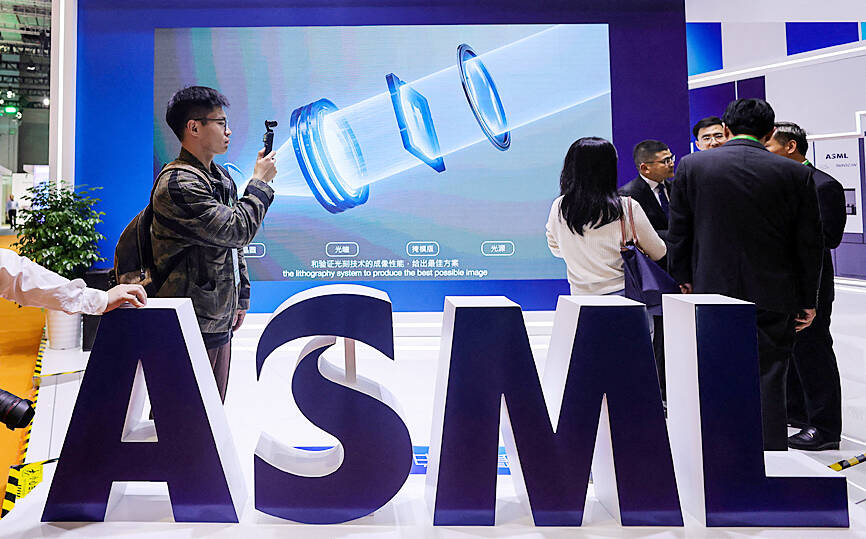
The dispute could have major consequences for Dutch semiconductor equipment manufacturer ASML, which supplies some of the world’s most advanced chipmaking machines.
FCRF Launches Certified Chief Risk Officer (CRO) Program for India’s Risk Leaders
Why The Netherlands Is Opposing Washington’s Semiconductor Plan
The MATCH Act seeks to prevent China from acquiring equipment needed to manufacture advanced semiconductors.
American lawmakers argue that restricting such technology is essential to protecting US national security and maintaining an advantage in artificial intelligence.
The proposed legislation would encourage allied countries to introduce export controls comparable to those imposed by Washington.
Countries that refuse could face additional American restrictions affecting equipment produced by their own companies.
The Netherlands considers this approach an intrusion into its authority to decide which products Dutch businesses can export.
Sjoerdsma said the government was coordinating with the European Commission, Germany and France to prevent the legislation from advancing.
He also indicated that European authorities would examine possible measures to limit its consequences if Washington proceeded.
The Netherlands has previously cooperated with US-led semiconductor export restrictions. However, Dutch officials argue that cooperation should not mean automatically accepting American demands.
Foreign Minister Tom Berendsen raised similar concerns during a visit to Beijing on November 25, saying the Netherlands intended to retain independent control over export decisions.
How ASML Could Be Affected By The Proposed Restrictions
ASML is one of the world’s most important suppliers of equipment used to manufacture computer chips.
Its machines help semiconductor manufacturers create extremely small patterns on silicon wafers, allowing billions of electronic components to fit onto a single chip.
The technology is essential for producing processors used in smartphones, data centres, electric vehicles and artificial intelligence systems.
ASML’s most advanced extreme ultraviolet lithography machines are already restricted from export to China.
The latest American proposal could expand restrictions involving immersion deep ultraviolet lithography equipment, commonly known as DUV machines.
These machines use light to print microscopic circuit patterns onto silicon. Although they are less advanced than extreme ultraviolet systems, they remain important for producing sophisticated semiconductors.
ASML expects China to account for approximately 20% of its sales in 2026.
Further restrictions could therefore affect a substantial market for the company.
ASML declined to comment on Thursday’s political developments.
However, Chief Executive Christophe Fouquet previously warned that tougher American restrictions could encourage China to accelerate development of competing semiconductor technologies.
That creates a difficult situation for Western policymakers. Restrictions intended to slow China’s technological progress could also encourage Chinese companies to reduce their dependence on foreign suppliers.
A Wider Dispute Over American Technology Controls
The disagreement follows several years of tightening restrictions on semiconductor exports to China.
In October 2022, Washington introduced extensive controls intended to limit Chinese access to advanced chips and manufacturing equipment.
Subsequent measures expanded restrictions and increased pressure on international suppliers to align with American policy.
The MATCH Act represents another attempt to close perceived gaps in that system.
Dutch lawmakers had already urged their government to resist the proposal on November 24.
A day later, Foreign Minister Berendsen discussed export controls during his visit to China.
Thursday’s statement represents a further escalation, with the Dutch government explicitly warning that it could seek measures to counter the proposed restrictions.
Sanne van der Lugt, director of the China programme at the Global Trade Policy Observatory, suggested that Europe could consider its Blocking Statute.
The regulation is designed to protect European businesses against certain foreign laws with effects beyond the countries that introduced them.
However, using such measures against American restrictions could create a wider trade dispute.
Van der Lugt warned that disregarding the proposed law would require Europe to accept the possibility of serious economic confrontation with Washington.
The US Congress is expected to consider the MATCH Act in December as part of negotiations over its annual defence legislation.
For now, the dispute remains political rather than an enacted change in export law.
Its outcome could influence not only ASML’s Chinese business but also how Europe manages its technological relationship with the United States.
What this means for you
Businesses dependent on imported chips or semiconductor equipment should monitor changes to US and European export rules before making major purchasing commitments. The proposed restrictions are not yet law, but they could affect future technology supply chains.