
Stay ahead with our breaking stories and exclusive coverage prioritized on Google.
Add The420 on Google →A promise of well-paid employment in India allegedly turned into captivity and forced online fraud for 164 young foreigners. Delhi Police have uncovered a suspected international cyber slavery network linked to a call centre in Noida, where workers were allegedly forced to cheat people in their home countries.
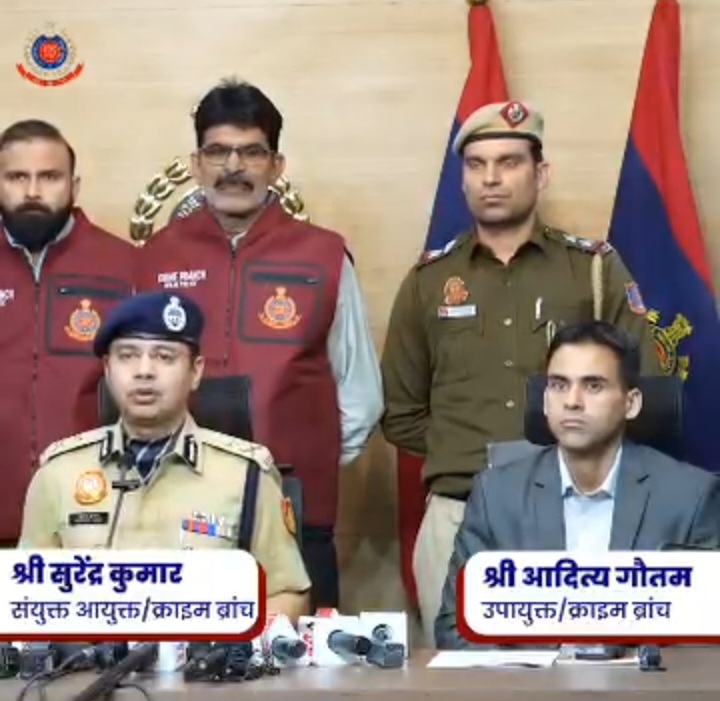
The Delhi Police Crime Branch announced the operation on November 26, 2026. The rescued group includes 92 Indonesian and 72 Malaysian nationals, most aged between 19 and 25.
Police seized 355 mobile phones, 168 desktop computers, 26 laptops, 53 SIM cards and 174 passports. A 25-year-old Malaysian national, identified as Tan Guan Wei, has been arrested in connection with the alleged racket.
The investigation has raised serious questions about how a large operation involving foreign workers, accommodation facilities and dozens of vehicles could function without earlier detection.
FCRF Launches Certified Chief Risk Officer (CRO) Program for India’s Risk Leaders
Job Offers, Confiscated Passports And Restricted Movement
According to investigators, the foreign nationals were recruited with promises of attractive salaries and employment opportunities in India.
They allegedly entered the country on business visas. However, their passports were taken away after arrival, leaving them dependent on the people controlling the operation.
Police said the workers were housed in paying guest accommodations and transported to the suspected fraud centre under supervision.
Around 40 cabs were reportedly used to move them between their accommodation and workplace. They were allegedly prevented from travelling independently.
Investigators also received accounts of intimidation and physical assault against workers who resisted instructions or refused to participate in fraudulent activities.
The operation reportedly came to police attention after a foreign national sent an email describing the alleged confinement and forced cyber fraud.
Acting on the information, the Crime Branch investigated the network and carried out the rescue operation.
Reports identify the suspected call centre as operating in Noida’s Sector 136, while other accounts describe police action in Delhi’s Dwarka area. The precise locations involved in each stage of the operation require further official clarification.
Fake Female Profiles Used To Trap Investment Victims
The alleged operation was not limited to ordinary fraudulent phone calls.
Investigators said workers were trained to create fake social media identities, including profiles pretending to belong to women.
They allegedly used these accounts to approach people in Indonesia and Malaysia, develop personal relationships and gradually persuade them to invest money.
Once trust was established, victims were directed towards suspicious online investment platforms promising attractive returns.
Police reports identify Zenttrix and Quantvoro among the platforms allegedly used by the network.
Such scams commonly rely on fabricated investment dashboards. Victims may see apparently growing profits on a website or application even when no genuine investment has been made.
The figures displayed on these platforms can be manipulated to encourage further deposits.
Police have not yet disclosed the total amount allegedly stolen, the number of overseas victims or the financial accounts receiving the money.
These details remain central to establishing the network’s actual scale.
What Is Cyber Slavery And Why Is It Difficult To Detect?
Cyber slavery refers to situations where people are trafficked, coerced or unlawfully confined and forced to participate in online criminal activities.
Unlike conventional cyber fraud cases, individuals found operating the computers may themselves be victims.
Organisers can control workers by confiscating passports, restricting movement, threatening violence or demanding money before allowing them to leave.
Similar operations have previously been reported in Southeast Asia, particularly in Cambodia and Myanmar, where people recruited through deceptive job advertisements were allegedly forced into online investment scams.
The420.in has also reported a separate Noida trafficking investigation involving victims allegedly sent to Southeast Asia for cyber fraud operations.
The latest case is notable because police suspect that foreign nationals were brought into India for similar activities.
It also presents investigators with two connected challenges: identifying those responsible for the financial fraud and protecting individuals allegedly forced to participate.
Police Investigate Indian Handlers And Financial Links
Investigators are examining the suspected involvement of Indian facilitators in arranging accommodation, managing expenses and supporting the operation.
Reports identify Sunil Kumar and Sushil Bhati as individuals being sought in connection with the network.
Police are also examining electronic records, financial transactions and communication devices recovered during the searches.
The seized passports could help establish recruitment patterns and travel histories, while digital evidence may identify overseas victims and other organisers.
However, the financial scale of the alleged operation remains unconfirmed.
The case also raises questions about oversight of large commercial premises and accommodation facilities. But no evidence has yet established that local police officials were aware of the operation or deliberately ignored it.
The investigation remains ongoing, and the allegations against those accused have not been proven in court.
What this means for you
Before accepting overseas employment, independently verify the recruiter and employer. Never surrender your passport to an employer, and treat restrictions on movement or demands to conduct suspicious online transactions as serious trafficking warning signs.